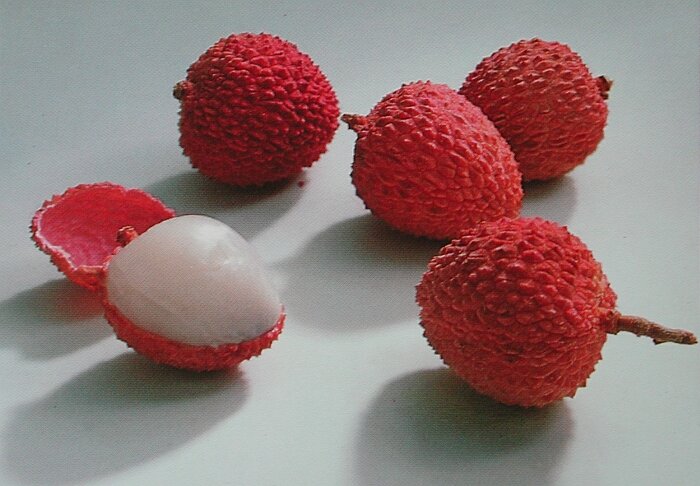
Lychee, A Favorite Fruit of Chinese Emperors, Would be Largely Unavailable Without Fungicides

Litchi (lychee)

Litchi (lychee)

The lychee, also known as litchi, grows on a tropical and subtropical fruit tree native to southern China, Taiwan, Bangladesh and Southeast Asia, and now grown in many parts of the world. The lychee has a history and cultivation going back as far as 2000 BC. In the 1st century, fresh lychees were in such demand at the Imperial Court that a special courier service with fast horses would bring the fresh fruit from Guangdong. It was first introduced to the west in 1782. The fresh fruit has a delicate, whitish pulp with a floral smell and a fragrant, sweet flavor. Dried lychee are often called lychee nuts, though, of course, they are not a real nut. Litchi downy mildew is a devastating disease of litchi plants in China. Control of litchi downy mildew requires numerous fungicide applications.

“Litchi (Litchi chinensis Sonn.) is a tropical and subtropical fruit of high commercial value. Most litchi fruits are produced in China, India and Vietnam. In 2001, the world litchi production was approximately two million tons, and approximately 1.26 million tons were produced in China… However, the fruits are very susceptible to many diseases with significant losses in quality and yield. One of the most prevalent diseases is litchi downy blight caused by the peronosporomycete Peronophythora litchii.

P. litchii damages fruit, panicles and new shoots, causing panicle rot and withering, as well as watery brown spots on fruits which later produce snowy mildew. More than 60% of commercial losses have been reported after successive rainy and overcast days in the growing season.

The primary components of all commercial management programmes for this disease are applications of organic and/or inorganic fungicides.”

Authors: Wang, H., et al.
Affiliation: College of Plant Protection, Nanjing Agricultural University, China.
Title: Fungicide effectiveness during the various developmental stages of Peronophythora litchii in vitro
Source: Journal of Phytopathology. 2009. 157:407-412.

High Quality Spanish Greenhouse Vegetables Depend on Fungicides

Greenhouse Industry, Almeria

Greenhouse Industry, Almeria

Almeria is located in the region of Andalucia in southeastern Spain. It has an average temperature of 68° and about 3000 hours of annual sunshine. Vegetable production in greenhouses has increased dramatically in Almeria. At present, about half of the total production from this area is exported to the European Union, especially Germany, France and the Netherlands. Almeria has become very competitive because it is relying on selling via high quality and not on low prices. Spain will try to improve its export position by increasing its market share in other parts of the world. Not only are prices competitive from Spain, but also the quality of Spanish produce is excellent. Needless to say, moldy vegetables are not acceptable for export from Spain and the greenhouse crops are intensively sprayed with fungicides.

Botrytis cinerea, is the causal agent of grey mould, one of the most important diseases of crops in Almeria, a region in south-east Spain where unheated plastic greenhouses cover an area of approximately 33.560 ha. Botrytis cinerea attacks a wide range of plant species in temperate zones and causes grey mould on many economically important crops such as vegetables, ornamentals, bulbs and fruit. Chemical control is the primary method for grey mould control, with alternative fungicides applied every 10 days, from November to March.”

Authors: Moyano, C., V. Gomez, and P. Melgarejo.
Affiliations: Department of Plant Protection, INIA, Ctra. De la Coruna, Spain.
Title: Resistance to pyrimethanil and other fungicides in Botrytis cinerea populations collected on vegetable crops in Spain.
Source: Journal of Phytopathology. 2004. 152:484-490.

Very Few Pear Growers in the Netherlands Dare to Go Organic

Pear Scab

Pear Scab

Organic growers face the same potentially severe pest problems as non-organic farmers. By contrast, the organic farmers have a very limited range of approved products with which to control these problems. In many countries, very few fruit farmers even dare trying to grow with the less effective organic pest control methods.

“The demand for organic pears in North-western Europe is high compared to the limited production. In spite of the good market perspective there are very few pear growers in the Netherlands who dare convert to organic production. The most prominent reason for this is their fear of scab (Venturia pirina). And indeed it is the experience of those who are growing organically that it is very hard to control this important disease. This is even more so since Copper based products were banned as fungicides in the Netherlands.”

Author: Jansonius, P. J.
Affiliation: Louis Bolk Institute, Hoofdstraat, NL
Title: Conference pears; work on system changes to enable better scab control in organic orchards in the Netherlands.
Source: Ecofruit Proceedings. 2008.

New Fungicides Take the Worry out of Controlling Mildew on Lettuce

Lettuce

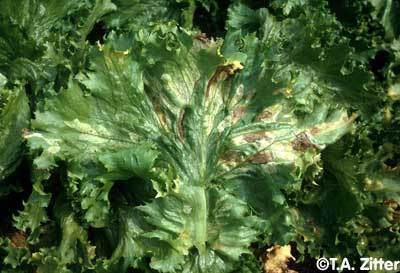
Lettuce Downy Mildew

Downy mildew is a common fungus in most lettuce growing regions, especially during cool, moist weather.  Spores can be blown long distances.  Under favorable conditions, downy mildew is a very explosive disease, capable of appearing at high incidence in a field overnight.  When spores land on lettuce foliage, they germinate and can penetrate the lettuce leaf within three hours.  Lettuce is susceptible at all growth stages to the downy mildew pathogen.  Following penetration and establishment in the leaf, fruiting stalks grow through the leaves and branch repeatedly producing several spores on each tip, resulting in a whitish mat of millions of spores on each plant.  Affected tissues turn brown.  The fungus can penetrate to leaves internal to the wrapper leaves.  Relatively low levels of infection can downgrade a crop, cause significant trimming losses at harvest and promote decay by bacterial organisms during postharvest transport and storage.  During transit, lesions become soft and slimy as secondary decay organisms gain entrance through the tissues infected with the downy mildew fungus. High levels of disease can render a crop unmarketable.

“Incited by the obligate parasite Bremia lactucae, downy mildew is one of the most devastating diseases of lettuce worldwide. Attempts to manage this fungal disease using host-plant resistance have frequently failed due to the development of new races of the pathogen. Therefore, chemical control is of the utmost importance in humid areas where environmental conditions are very favorable for disease development.

Since the year 2000, a number of new fungicides targeting the Oomycetes, the class of fungi to which downy mildew belongs, have come to the market or are being considered for registration. It was the objective of these studies to investigate a select number of these for potential use in Florida for lettuce downy mildew control.

Of those investigated, mandipropamid and fenamidone consistently provided for high levels of control. Fluopicolide, dimethomorph, dimethomorph plus ametoctradin, cyazofamid, and propamocarb also provided significant control. With the majority of these fungicides already being labeled or close to being labeled on lettuce, it would appear that lettuce growers now have a wide array of efficacious downy mildew fungicides with differing modes of action from which to choose. This is a far cry from the situation that existed during 1989, when the EBDC fungicides were being threatened with cancellation and metalaxyl insensitivity was becoming widespread.”

Authors: Raid, R. N., and D. D. Sui.
Affiliation: University of Florida, IFAS, Everglades Research and Education Center.
Title: Management of lettuce downy mildew with fungicides.
Source: Proc. Fla. State Hort. Soc. 2012. 125:218-221.

More Sugar from Michigan Thanks to Fungicides

Fungicides: Used (left); Not Used (right)

Fungicides: Used (left); Not Used (right) (Rhizoctonia Control)

Rhizoctonia root rot is a serious disease problem in several sugarbeet-growing regions, with the result sometimes being dramatic—and expensive—reductions in tonnage and quality. Low levels of infections can easily cause yield losses in excess of a ton per acre while high infection levels can cut yields by more than 10 tons per acre. The quality of surviving beets can also be impacted, sometimes resulting in significant losses in recoverable sugar.

“During 2009 and 2010, the Michigan Sugarbeet Advancement Initiative established a study to determine the efficacy and economic impact of various application strategies for the use of Quadris flowable fungicide to control Rhizoctonia root rot.

On average (four trials in each of two years), even with low to moderate levels of Rhizoctonia infection, the per-acre net return of Quadris over the check trials ranged from $94 to $209, depending on the rate, timing and method used. The best treatment in these trials improved recoverable sugar per ton by 14 pounds and percent sugar by 0.7%. Even the “worst” treatment increased RST by 8 pounds and sugar content by 0.3%.”

Authors: Poindexter, S., and Wenzel, T.
Affiliation: Michigan Sugarbeet Advancement, Michigan State University
Title: Rhizoctonia control with quadris—update on Michigan research.
Source: The Sugarbeet Grower. April/May 2011. Pgs. 16-17.

Moldy Oranges Not Acceptable in Europe

Green mold and blue mold

Green mold and blue mold

Green mold is caused by a fungus which is ubiquitous to all citrus growing regions. Spores of this organism are airborne and large numbers are produced by the fungus on the surface of infected fruit. These spores will contaminate the packinghouse and its equipment, storage rooms, transit containers, and even the retail marketplace. Spores accumulate in water used in drenches and soak tanks. The fungus survives in the field on soil debris and produces spores that infect split and injured fruit in the tree and on the ground.

“Satsuma mandarin, one of the most economically important citrus crops in Izmir (Turkey). The most widely grown cultivar is primarily exported to European markets. Postharvest green mould caused by Penicillium digitatum and blue mould P. italicum are the most significant postharvest diseases of Satsuma mandarins. Control of the postharvest decay of mandarin is most commonly achieved by applications of synthetic fungicides.”

Authors: Yildiz, F., et al.
Affiliation: Department of Plant Protection and Horticulture, Ege University, Turkey.
Title: Effects of preharvest applications of CaCl2, 2,4-D and benomyl and postharvest hot water, yeast and fungicide treatments on development of decay on Satsuma mandarins.
Source: Phytopathology. 2005. 153:94-98.

Tight Market Standards For Sweet Corn Necessitate Insecticide Sprays

Bugs in corn

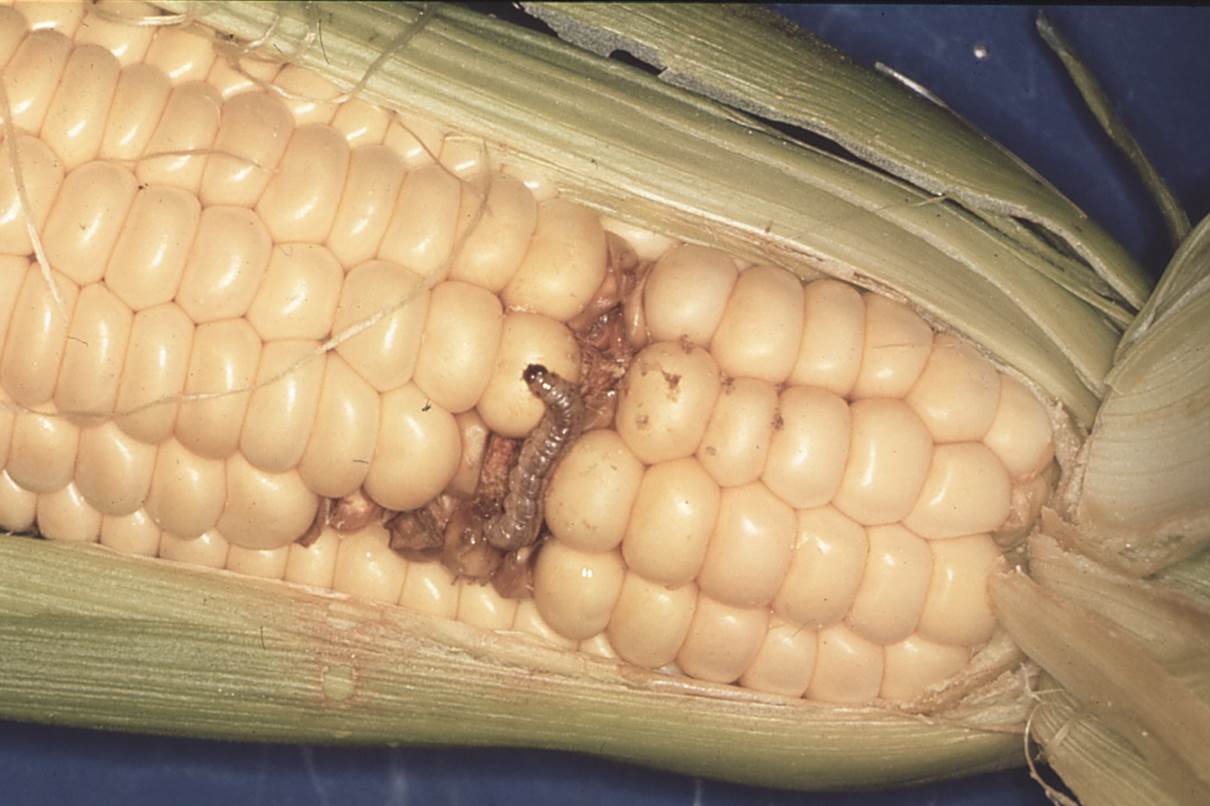
Worms in sweet corn

Consumer surveys show that the lack of insect damage is the most important factor when deciding which sweet corn to buy. Processors and stores require larval infestations to be < 5-10% of sweet corn ears. To meet those standards, sweet corn growers throughout the U.S. must use insecticides.

[1]
”Minnesota is the second largest producer of processing sweet corn, Zea mays L., in the United States with an annual production of >53,000 ha; the state also produces ≈4,000 ha for fresh market. The European corn borer, Ostrinia nubilalis (Hübner), and corn earworm, Helicoverpa zea (Boddie), continue to be the most important insect pests of sweet corn in the upper Midwest. To minimize economic risks associated with insect damage in sweet corn, most growers rely on insecticides to manage these pests.

Most processors and fresh market growers require larval infestations and brown kernel incidence to be <5-10% of harvested ears.”

[2]
”Sweet corn is the most commonly grown vegetable crop in Pennsylvania. Most is grown for fresh-market. Stringent control is required to meet market standards and most acreage (~80%) is sprayed to control corn earworm, fall armyworm, and European corn borer.”

[1]
Authors: O’Rourke, P. K., and W. D. Hutchison.
Affiliation: Department of Entomology, University of Minnesota.
Title: Binomial sequential sampling plans for late instars of European corn borer (Lepidoptera: Crambidae), corn earworm (Lepidoptera: Noctuidae), and damaged kernels in sweet corn ears.
Source: J. Econ. Entomol. 2004. 97[3]:1003-1008.

[2]
Author: Fleischer, S.
Affiliation: Department of Entomology, Penn State University.
Title: Regional patterns in corn borer and fall armyworm populations: implications for management.
Source: 58th New Jersey Agricultural Convention and Trade Show. 2013 Proceedings. February 5-7. Pgs. 118-119.

French Apple Production Requires Dozens of Pesticide Sprays every Year

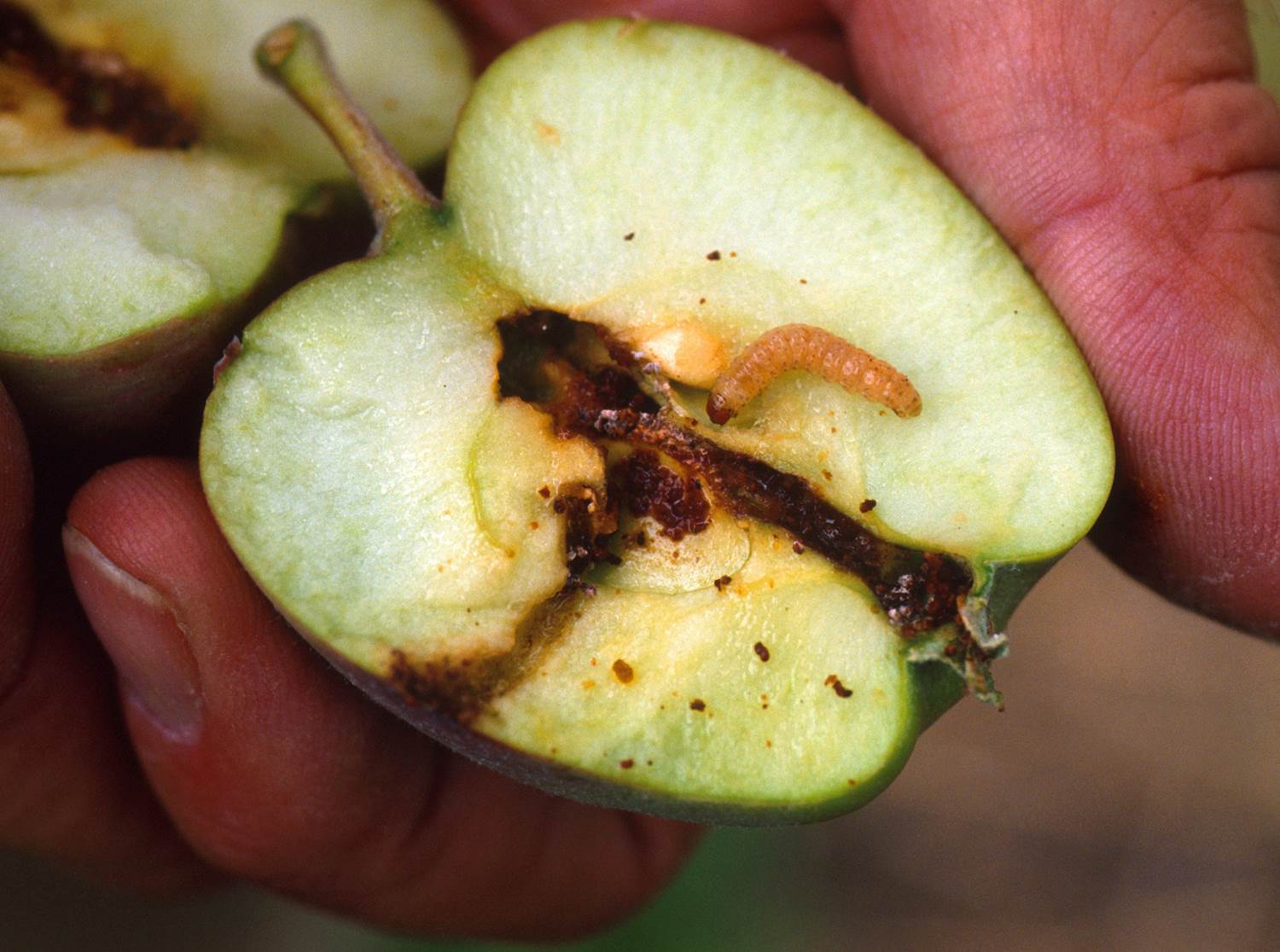
Codling Moth

Codling Moth

Apple Scab

Apple Scab

French apple production totals about 1.9 million tons worth approximately $750 million annually. French apple orchards are plagued with the same major pests that infest orchards worldwide: the fungal disease, apple scab, and the insect, codling moth. Both pests would seriously damage most of the apple crop in France without the dozens of pesticide sprays that are made.

[1]
“In Southern France, over 35 pesticide treatments are applied yearly in apple orchards, among which 8-15 are targeted against the codling moth.”

[2]
“Codling moth is a major pest of pome fruit orchards throughout their area of cultivation…. Two or three larval generations are present in southern France and insecticide applications are needed from the beginning of the first larval generation in May until fruit harvest.”

[3]
”Chemical control of apple scab represents a considerable part of the pest control measures necessary to protect an apple orchard when it is planted with one or several cultivars susceptible to the disease. In France, as many as 15-20 fungicide treatments per year may be necessary to control the disease.”

[1]
Authors: Monteiro, L. B., Lavigne, C., Ricci, B., Franck; P., Toubon, J-F
Affiliation: UFPR, Parana Federal University; INRA Plantes et Systemes de Culture Horticoles
Title: Predation of codling moth eggs is affected by pest management practices at orchard and landscape levels.
Source: Agriculture, Ecosystems and Environment. 2013. 166:86-93.

[2]
Authors: Simon, S., et al.
Affiliation: Unite Experimentale Gotheron, Institut National de la Recherche Agronomique.
Title: Effect of codling moth management on orchard arthropods.
Source: Agriculture, Ecosystems and Environment. 2007. 122:340-348.

[3]
Authors: Brun, L., et al.
Affiliation: INRA, UMR Pathologie Vegetale.
Title: Effects of apple cultivar susceptibility to Venturia inaequalis on scab epidemics in apple orchards.
Source: Crop Protection. 2008. 27:1009-1019.

Organic Cherry Growers Spray Fungicides More Often

Defoliated Cherry Trees

Leaf spot is the most important fungal disease of cherry.  The disease is caused by a fungus known as Coccomyces hiemalis which lives over the winter in the old leaves on the ground.  The first infection of new foliage in the early summer is caused by spores which are discharged from these old leaves.  After the fungus develops on the new leaves, more spores are produced and they may cause further spread of the disease.  Defoliation from leaf spot reduces the number of flower buds and subsequent fruit set for the following year.  Defoliated trees are less cold hardy and may be killed by low temperatures in winter.  Conventional and organic growers who spray regularly and thoroughly every year seldom suffer any serious loss from leaf spot. However, since the spray materials available for organic growers are not as effective as the synthetic chemicals used by conventional growers, the organic growers have to spray more often.

“Cherry leaf spot (CLS)… occurs worldwide and is the most prevalent disease of sour cherry in temperate zones. Epidemics caused by ascospore followed by repeated conidial cycles cause defoliation by midsummer, resulting in low fruit quality. Early defoliation delays acclimation of fruit buds and wood to cold temperatures in the fall, and reduces fruit bud survival during severe winters and fruit set the following spring.

In integrated sour cherry orchards, CLS management typically involves four to eight fungicide treatments per year, starting at petal fall and continuing until late summer. In organic orchards, only a few approved fungicides are available for CLS control, such as sulfur and copper compounds. These compounds are often less effective and more phytotoxic than synthetic fungicides used in integrated fruit growing. Therefore, in Hungarian organic sour cherry orchards, 7 to 12 sprays are applied against CLS in each season.”

Author: Holb, I. M.
Affiliation: University of Debrecen, Hungary.
Title: Effect of sanitation treatments on leaf litter density and leaf spot incidence in integrated and organic sour cherry orchards.
Source: Plant Disease. 2013. 97[7]:891-896.

Florida is Great for Growing Sweet Corn in the Winter, Insects Love Florida in the Winter Too

Florida sweet corn, w/o insecticides

Florida sweet corn, w/o insecticides

Florida Sweet Corn Production

Florida Sweet Corn Production

Florida is the #1 state in the production of fresh sweet corn with production occurring in winter months when the crop cannot be grown in states further north. Many insect species survive the winter and thrive in Florida. 98-99% of Florida’s sweet corn would be damaged by insects if insecticide sprays were not made. The importance of insecticides for Florida sweet corn is underscored by the realization that the crop was not grown in the state until synthetic chemical insecticides were introduced in the 1940s.

[1]“Florida ranks #1 nationally in the production and value of fresh market sweet corn, typically accounting for approximately 20 percent of both national sweet corn production and of U.S. cash receipts for fresh sales. A total of 589 million pounds of fresh sweet corn, valued at $189 million, was produced on 42,100 acres in Florida during the 2009-10 season. Nearly 20 percent of sweet corn producers overall total direct expenses are invested in pesticides and pesticide application costs. Florida’s warm, humid climate is ideal for the development of pest populations. Sweet corn grown in Florida is subject to damage from numerous insect, weed, disease, and nematode pests. Pesticide use is high and the crop may be sprayed daily in some cases.”

[2]”The first commercial production of sweet corn in Florida was reported in the 1947-48 season. The establishment of sweet corn as one of the major crops produced in Florida is attributed largely to successful control of insects with the newer insecticides. “

[1]
Author: McAvoy, G.
Affiliation: Regional Vegetable Extension Agent IV, University of Florida
Title: Sweet corn production in south Florida
Source: Proceedings of the 2012 Atlantic Coast Ag Convention & Trade Show, pp 66-68

[2]
Authors: Hayslip, N. C., et al.
Affiliation: Florida Agricultural Experiment Station, Ft. Pierce
Title: Corn earworm investigations in Florida
Source: Journal of Economic Entomology. 1953. 46[4]:574-583.