Growing Berries in Germany Requires Fungicides to Prevent Mold

Gray Mold

Gray Mold

The German population has access to high quality strawberries, blueberries and raspberries that are grown in the country every year. However, the climate in Germany is conducive for the growth of mold in the berry fields making fungicide use necessary.

“Small-fruit production is an important component of Northern German agriculture, covering some 4,000 ha of strawberry, 100 ha of raspberry, and 1,500 ha of highbush blueberry as well as smaller acreages of redcurrant, gooseberry, and blackberry. Under the cool and humid regional climatic conditions, several fungicide treatments at bloom are essential in order to control phytopathogenic fungi, notably the gray mold pathogen Botrytis cinerea.”

Author: R.W.S. Weber
Affiliation: Esteburg Fruit Research and Advisory Center, Jork, Germany
Title: Resistance of Botrytis cinerea to multiple fungicides in Northern German small-fruit production.
Publication: Plant Disease. 2011. 95(10):1263-1269.

European Consumers Demand Perfect Oranges Making Fungicide Use Necessary

Alternaria Brown Spot

Alternaria Brown Spot

Spain is a major producer of fresh oranges which are consumed throughout Europe. Disease infections in the citrus orchards can result in spots on the orange peel with no damage to the fruit inside. However, consumers will not pay top price for spotted oranges making fungicide use necessary.

“Alternaria brown spot (ABS) is a severe fungal disease of some mandarins and their hybrids in rainy and semiarid citrus-growing areas. … The presence of ABS in Spain has become a serious problem for ‘Fortune’ mandarin production.”

“Defoliation due to spring infections weakens trees and has an important impact on yield. However, fruit damage causes the most important economic losses. Fruit symptoms include light brown, slightly depressed spots to circular and dark brown areas on the external surface.”

“Although cultural practices that improve ventilation and prevent the growth of lush foliage can greatly reduce disease severity in the orchard, fungicide applications are essential to produce quality fruit for the fresh market. One or two sprays generally are needed to protect spring flush foliage to reduce defoliation and prevent inoculum build-up.”

Authors: A. Vicent, J. Armengol and J. García-Jiménez
Affiliation: Instituto Agroforestal Mediterráneo, Universidad Politécnica de Valencia, Valencia, Spain
Title: Rain fastness and persistence of fungicides for control of Alternaria brown spot of citrus.
Publication: Plant Disease. 2007. 91(4):393-399.

Japanese Consumers Have High Standards for Rice Quality Making Insecticide Use Necessary

Damaged Rice

Damaged Rice

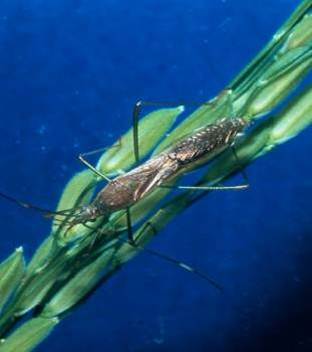
Rice Bug

Rice Bug

The feeding of rice bugs on rice plants results in black marks on the rice grains. Japanese consumers demand perfect rice, which means that farmers must prevent the insects from feeding.

“A complex of Hemiptera, commonly referred to as rice bugs, are considered to be important insect pests in rice-growing regions of the world. Many species of Hemiptera, from families including Alydidae, Pentatomidae, Coreidae, and Miridae, have been reported as rice bugs.”

“Rice bugs cause yield loss, decrease the quality of grain, and reduce the germination rate. Among these problems, decrease in the quality of grain is considered to be the most important problem in Japanese rice. Infestations cause brown or black marks on the grain. Contamination of as little as 0.1% of such stained grain has reduced commercial value according to Japanese rice quality regulations, and thus the economic injury level is very low. This has led rice farmers to a dependence on insecticide use for rice bug control.”

Authors: H. Takeuchi1,2 and T. Watanabe1
Affiliation: 1Department of Entomology and Nematology, National Agricultural Research Center, Tsukuba, Japan; 2National Agricultural Research Center for Kyushu Okinawa Region, Kumamoto, Japan.
Title: Mortality factors of eggs of Leptocorisa chinensis (Hemiptera: Alydidae) in rice fields.
Publication: Journal of Economic Entomology. 2006. 99(2):366-372.

Insect Saliva Lowers the Quality of Italian Bread Wheat

Damaged Grain

Damaged Grain


Sunn Pest

Sunn Pest

Italian bread dough is famous for its high quality. Several insect species feed on the wheat plants in the field and when they do, they leave a little saliva behind, which would lower the quality of the bread if insecticides aren’t used.

“Several species known as sunn pests or cereal bugs, have long been recognized as detrimental to wheat bread-making quality in south central Europe, western Asia, and northern Africa. … In Italy, severe infestations of sunn pests have been reported in southern regions and also, although seldom, in the Po Valley.”

“For a long time, it has been recognized that damaged grains can show a discolored area around the point of stylet penetration and that flour derived from damaged kernels produces sticky dough and poor bread. The detrimental effect on baking quality is obvious even in presence of 3-5% damaged kernels and dramatically increases for values higher than 10%. The quality depletion is due to proteolytic enzymes injected in the kernels by insects via their saliva that persist in the flour after milling and cause breakdown of gluten structure in the dough.”

“Presently, no sources of resistance to E. Maura in Italian germplasm are known; thus the only way of reducing the damage is chemical pest control in the field.”

Authors: P. Vaccino1, M. Corbellini1, G. Reffo1, G. Zoccatelli2
, M. Migliardi3 and L. Tavella3
Affiliation: 1Instituto Sperimentale per la Cerealicoltura, Angelo Lodigiano, Italy; 2Dipartmento Scientifico e Tecnologico, University of Verona, Italy; 3University of Torino, Grugliasco, Italy.
Title: Impact of Eurygaster maura (Heteroptera: Scutelleridae) feeding on quality of bread wheat in relation to attack period.
Publication: Journal of Economic Entomology. 2006. 99(3):757-763.

Pecan Weevils Feast on Pecans in Orchards

Pecan Weevil Larva

Pecan Weevil Larva

Pecan Weevil Adult

Pecan Weevil Adult

The pecan weevil is a late season nut pest that feeds only on pecans and hickory. The female drills a hole in the nut with her snout and places one to four fertilized eggs within the kernel. The pecan weevil larvae are creamy, white legless grubs with soft fleshy bodies. Heavy populations of weevils can destroy all nuts on a tree.

“The pecan weevil is a major pest of pecans throughout the southeastern United States, as well as portions of Texas and Oklahoma. … Adults emerge from soil in late July-August to feed on and oviposit in developing nuts. Larval development is completed within the ripening kernel of the nut.”

“Current control recommendations for pecan weevil consist mainly of aboveground applications of chemical insecticides (e.g., carbaryl) to suppress adults. Application of chemical insecticides is recommended every 7-10 days during peak weevil emergence (generally up to at least a 6 week period).”

Authors: D.I. Shapiro-Ilan1, W.A. Gardner2, T.E. Cottrell1, R. W. Behle3 and B.W. Wood1

Affiliation:
1USDA-ARS, Southeastern Fruit and Tree Nut Research Laboratoy, Byron, GA; 2Department of Entomology, University of Georgia, Griffin, GA; 3USDA-ARS-NCAUR, Peoria, IL
Title: Comparison of application methods for suppressing the pecan weevil (Coleoptera: Curculionidae) with Beauveria bassiana under field conditions.
Publication: Environmental Entomology. 2008. 37(1):162-171.

Zero Tolerance for Maggots in Cherries Means Growers Must Spray

Cherry Maggot

Cherry Maggot

Pairs of cherry fruit flies have been observed copulating for 18 hours at a time. Each female may deposit 100 to 300 eggs under the fruit skin over a period of thirty days. Eggs hatch in 3-7 days and young maggots feed on cherry flesh, mainly around the pit. Maggots and their frass within the fruit render the product unsalable.

“Insecticides continue to be vital in efforts to control the western cherry fruit fly, the most serious insect pest of commercial sweet and sour cherries in the western United States. … The zero tolerance for fly larvae in cherries has necessitated the use of these highly toxic insecticides in commercial orchards. Isolated homeowner or abandoned trees can be heavily infested and also need to be treated with these insecticides to reduce chances of flies dispersing to commercial orchards.”

Authors: W.L. Yee1 and D.G. Alston2
Affiliation: 1USDA-ARS, Yakima Agricultural Research Laboratory, Wapato, WA; 2Department of Biology, Utah State University, Logan, UT
Title: Effects of spinosad, spinosad bait, and chloronicotiny insecticides on mortality and control of adult and larval western cherry fruit fly (Diptera: Tephritidae).
Publication: Journal of Economic Entomology. 2006. 99(5):1722-1732.

Fungicides Result in Mangoes Suitable for Export

Mango - Anthracnose

Mango – Anthracnose

Commonly known as the “King of Fruits,” the mango is the most important fruit of Asia. It is grown throughout the tropics and subtropics. Until recently, mango fruit was considered an exotic, specialty item in import markets such as the U.S. and Europe. Today a million tons of mangoes are exported. Among the diseases of mango, anthracnose is the most prevalent in humid growing regions. The incidence of this disease can reach almost 100% in fruit produced under wet or very humid conditions.

“Diseases are primary constraints to production in virtually all areas where mango is grown. … In humid regions, anthracnose is most destructive. … Pesticides are used in most commercial production situations, especially where anthracnose [is] important.”

“…irregular, dark brown to black lesions develop that are somewhat depressed and can crack the fruit surface. Under humid conditions, large areas may be involved and orange to pinkish masses of conidia are formed on the decaying surface. … Lesions on fruit are initially superficial, and penetrate deeper than 5 mm into the flesh only late in development. Anthracnose is caused by three closely related fungi. … Although some mango cultivars are moderately tolerant, none are sufficiently resistant to be produced without fungicides in humid areas.”

“In general, mango production currently has a heavy dependence on chemical disease control measures, especially where disease-conducive environments exist and when export quality fruit are desired.”

Author: R.C. Ploetz
Affiliation:
University of Florida Tropical Research and Education Center, Homestead, FL
Title: The major diseases of mango: strategies and potential for sustainable management.
Publication: Proceedings of the VIIth International Symposium on Mango. 2004. 137-150.

Chinese Farmers Must Kill an Insect Native to America in Order to stay as the #1 Potato-Growing Country in the World

Colorado Potato Beetle

Colorado Potato Beetle

The native home of the Colorado Potato Beetle is the American West from which it has spread around the world eating potato plants. After adult beetles mate, each female deposits 500 eggs on a potato leaf. The larvae emerge and eat the leaves for about three weeks. Feeding by the beetles can defoliate plants, killing them, or significantly reducing their yields.

“The Colorado potato beetle (CPB), native to the south-west United States and Mexico, is the most important agricultural insect pest throughout North America, Europe and parts of Asia. … The beetle invaded China in the 1990s from Kazakhstan. Since then, it has spread eastwards by more than 40 km per year and is currently distributed throughout most of the northern Xinjiang Uygur Autonomous Region. Foliage damaged by the CPB is a serious threat to potato crops in northern Xinjiang.”

“The beetles consume the leaves of the potato plants, causing a 30-50% reduction in yield each year, with no gain at all in some fields. … Insecticide treatments are currently indispensable and effective in CPB control.”

“Increasing the scale of potato farming is now seen as an important measure in resolving the food crisis and overcoming poverty in provinces such as Gansu, the Inner Mongolia Autonomous Region and the Ningxia Hui Autonomous Region… where the acreage of potato crop reaches over 1 million ha. Therefore, controlling the damage and spread of the CPB has become an important issue in China.”

Authors: Zhaoxu Zhou, Jinhuan Pang, et al.
Affiliation: State Key Laboratory of Plant Genomics, Chinese Academy of Sciences, Beijing, China
Title: Evaluation of the resistance of transgenic potato plants expressing various levels of Cry3A against the Colorado potato beetle (Leptinotarsa decemlineata Say) in the laboratory and field.
Publication: Pest Management Science. 2012. 68(12):1595-1604.

Numerous Fungicide Sprays Needed in Brazil to Prevent Tomatoes and Potatoes from Rotting

Late Blight Tomatoes

Late Blight Tomatoes

The late blight fungus infects both tomatoes and potatoes. The fungus attacks all the aboveground parts of the plant. Infected foliage becomes brown, shrivels, and soon dies. When severe, all the plants in a field may be killed in a week. On tomato fruit, greenish brown greasy spots develop and can cover the entire tomato. Decaying vines can be identified by a foul odor. Environmental conditions in Brazil are ideal for the development of the disease.

“Tomato and potato are the most important vegetable crops in Brazil. During 2002, production of tomato and potato in Brazil totaled 3.6 and 3.1 million tons, respectively. The major producing areas are the south and southeast regions, in which 57.2% of the tomato and 92.3% of the potato are produced. Late blight, caused by Phytophthora infestans, occurs in both regions and is the most serious foliar disease of these crops. The environmental conditions in these regions also are highly favorable to late blight development, leading to severe crop losses if no control measures are adopted.”

“Due to favorable environmental conditions and high susceptibility to late blight, up to 20 and 15 fungicide sprays commonly are used in tomato and potato crops, respectively.”

Authors: A. Reis, F.H.S. Ribeiro, L.A. Maffia and E.S.G. Mizubuti
Affiliation: Departamento de Fitopatologia, Universidade Federal de Viçosa, Viçosa-MG, Brazil
Title: Sensitivity of Brazilian isolates of Phytophthora infestans to commonly used fungicides in tomato and potato crops.
Publication: Plant Disease. 2005. 89(12):1279-1284.

The Worst Fruit Pest in the World is Even Worse in South Africa

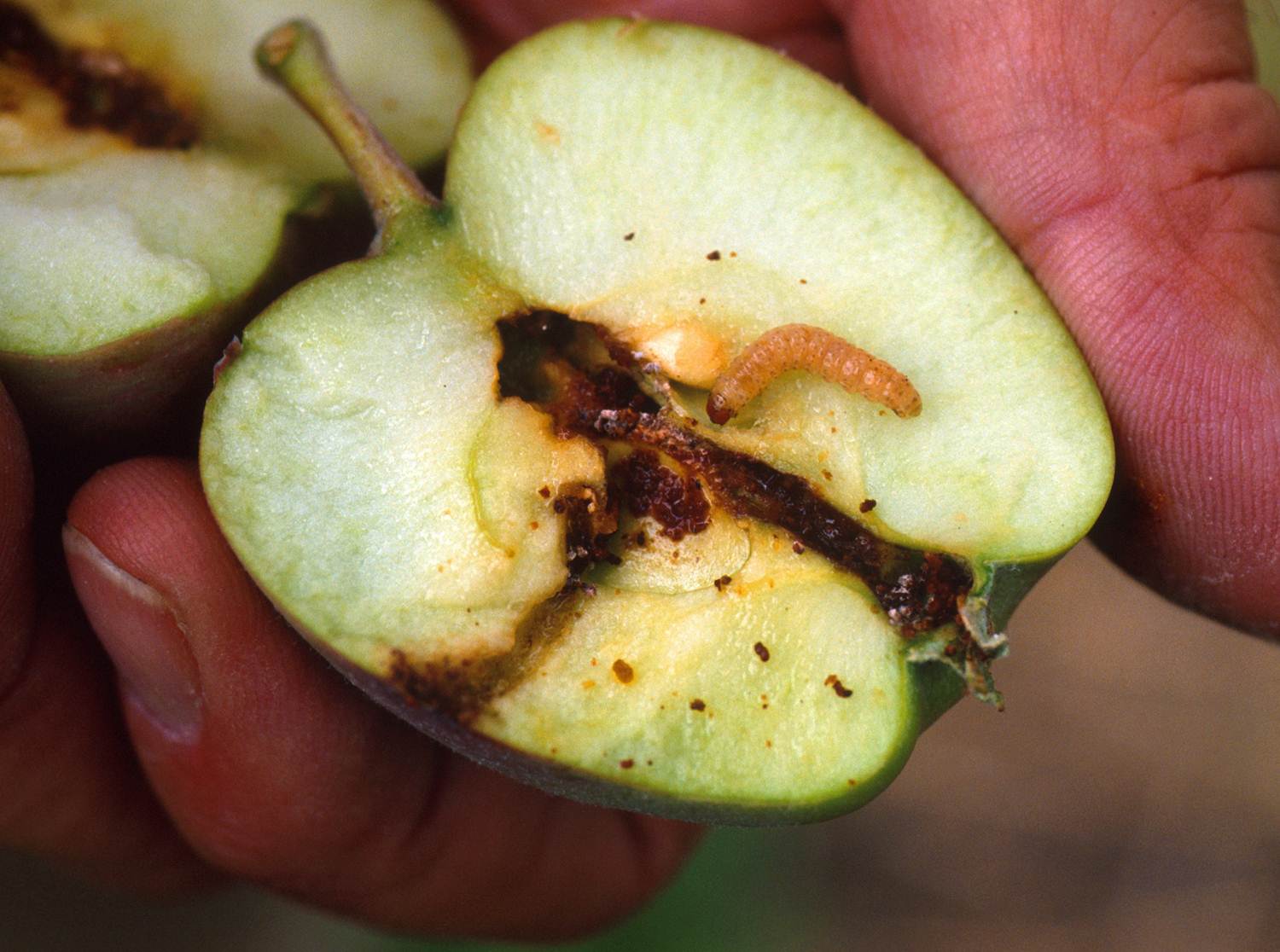
Codling Moth

Codling Moth

The codling moth is the most destructive insect pest of pears and apples worldwide. Females deposit eggs on or near fruit and the hatched larvae bore into the fruit and tunnel to the core. As they near development, they eat out an exit hole which they plug with frass. Fruit attacked by codling moth cannot be used for fresh shipment or for commercial canning.

“The codling moth has been the key pest in South African pome fruit orchards since the species was first reported in the country in 1885. The infestation potential of codling moth in South Africa is one of the highest in the world, and moths may be active over as much as 8 months of the year. Codling moth causes extensive damage to apples and pears, with stone fruit being only occasionally attacked. The use of insecticides remains the primary means of controlling codling moth in South African pome fruit orchards, with up to 11 different insecticides being used for control.”

Authors: A.E. Timm1, H. Geertsema1 and L. Warnich2

Affiliation:
1Department of Entomology and Center for Agriculture Biodiversity, University of Stellenbosch, South Africa; 2Department of Genetics, University of Stellenbosch, South Africa
Title: Gene flow among Cydia pomonella (Lepidoptera: Tortricidae) geographic and host populations in South Africa.

Publication: Journal of Economic Entomology. 2006. 99(2):341-348.