Europe’s Wheat Yields Are the World’s Highest Due to Fungicide Use

Septoria leaf blotch

Septoria leaf blotch

In the EU, where high levels of subsidy supports are available, wheat crops are grown in an intensive manner. In Europe, 11% of the world cereal production comes from only 6% of the world’s cereal acreage. Since the 1990s, more than 95%of wheat acres in the UK, France, Germany, Denmark, Belgium, and the Netherlands have been treated with fungicides. Average responses to treatment usually range between 0.5t/ha and 2.5 t/ha though where Septoria tritica blotch pressure is particularly high, yield responses of 5 t/ha are sometimes seen.

Article 01:

“Mycosphaerella graminicola is the causal agent of Septoria leaf blotch (SLB), an important foliar disease of wheat in Europe. Due to a lack of durable host resistance, disease control relies predominantly on the use of fungicides.”

Article 02:

“Yields of cereal crops in Europe are among the highest in the world and the levels and consistency of these yields is in no small part due to the use of fungicides to control the major fungal pathogens.”

Article 01:

Author: Bean, T. P.
Affiliation: Rothamsted Research
Title: Amino Acid Alterations in CYP51 Contribute Toward Reduced Triazole Sensitivities in a UK Field Population of Mycosphaerella graminicola
Publication: The BCPC International Congress – Crop Science & Technology 2005

Article 02:

Author: Redbond, A.
Affiliation: Market Scope Europe Ltd
Title: Cereal Disease Control in Europe
Publication:  International Pest Control, September/October 2006
A Late Blight Pandemic Struck Northeast Tomatoes in 2009

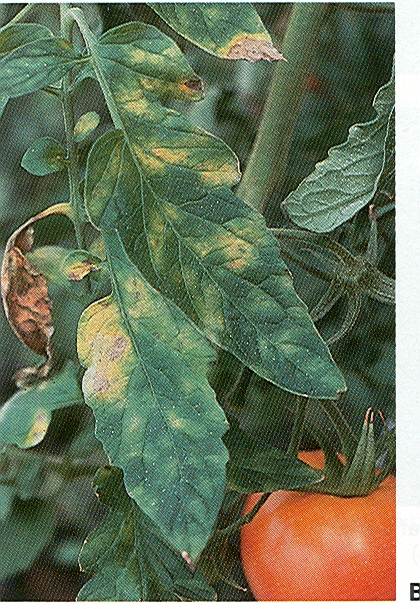
Untreated Tomatoes

Untreated Tomatoes

Treated Tomatoes

Treated Tomatoes

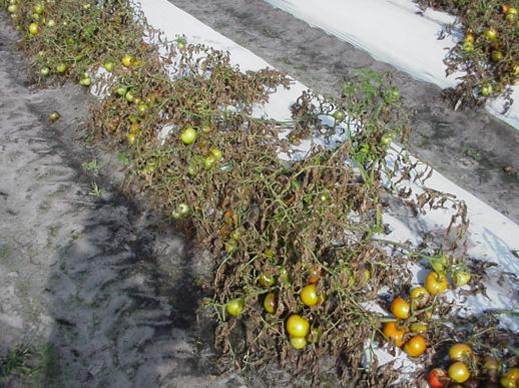
The late blight fungus attacks all aboveground parts of the tomato plant. Infected foliage becomes brown, shrivels and soon dies. When severe, all plants in a field may be killed in a week or two. The spores can be disseminated up to 30 or 40 miles by wind or over short distances by dew and rain. Each spore may swim in a film of water on plant surfaces to initiate a new infection. A recent article summarizes the effects of a severe late blight outbreak in the U. S…

“Indeed, the tomato late blight pandemic of 2009 made late blight into a household term in much of eastern USA. Many home gardeners and many organic producers lost most, if not all, of their tomato crop. Some CSAs (Community Supported Agriculture) could not provide tomatoes to their members. …This pandemic was unusual. It started synchronously in mid to late June over much of the northeastern USA. The pathway was via infected tomato transplants shipped to the garden centers in large retail stores throughout the Northeast. …Many homeowners and organic growers lost crops when fungicide was not applied soon enough, and because they lacked highly effective curative fungicide options. (Conventional commercial growers, who have more fungicide options, were more successful in delaying the epidemic and subsequent yield loss.) …Later in the year other issues arose. Consumers were alarmed to see fungicide residues on tomatoes at farmers markets, especially on organically produced fruit. (Some copper-based fungicides are allowed in organic production in some states.)”

Authors: W. E. Fry, et al.
Affiliations: Cornell University
Title: The 2009 Late Blight Pandemic in Eastern USA.
Publication: APSnet Features. 2012. http://www.apsnet.org/publications/apsnetfeatures/Pages/2009LateBlight.aspx

Zebra Stripes on Potato Chips? No Way.

Zebra Chip Disease

Zebra Chip Disease

5.4 billion pounds of potatoes are used to make potato chips in the U.S. every year. 50% of the potatoes grown in the U.S. come from the Pacific Northwest states of Washington, Oregon, and Idaho. The first appearance of a new potato disease known as “zebra chip” in the Pacific Northwest in 2011 caused great concern. The bacterium that causes zebra chip is transmitted to potato by an insect, the potato psyllid which transmits the bacterium within hours of colonizing a potato plant. Thus, psyllid controls must begin immediately upon detection of the insect in a field. The disease is not harmful to humans when they eat a potato chip, but the bacterium discolors the chips making them unmarketable. In regions where zebra chip has been a problem (Texas, New Zealand, Mexico, Honduras) entire fields have been abandoned.

“Potato producers and researchers, alike, were caught by surprise in late summer 2011 when zebra chip showed up for the first time in Washington, Oregon and Idaho, affecting most of the major cultivars grown in the region. Zebra chip, a disease spread by potato psyllids infected with the liberibacter bacterium, causes dark streaks in the tuber flesh. The discoloration is intensified when the infected tubers are processed into chips or fries. …At this point, the only way you’re going to control zebra chip is to manage your potato psyllids. …Nowhere where this thing has shown up, has it gotten better except by huge applications of insecticides.”

Authors: D. Keller
Affiliation: Field Editor, Potato Country.
Title: Zebra Chip Strikes Pacific Northwest.
Publication:  Potato Country. January 2012. 28-31.

EPA Recognizes Value of Fumigants in Peanut Fields

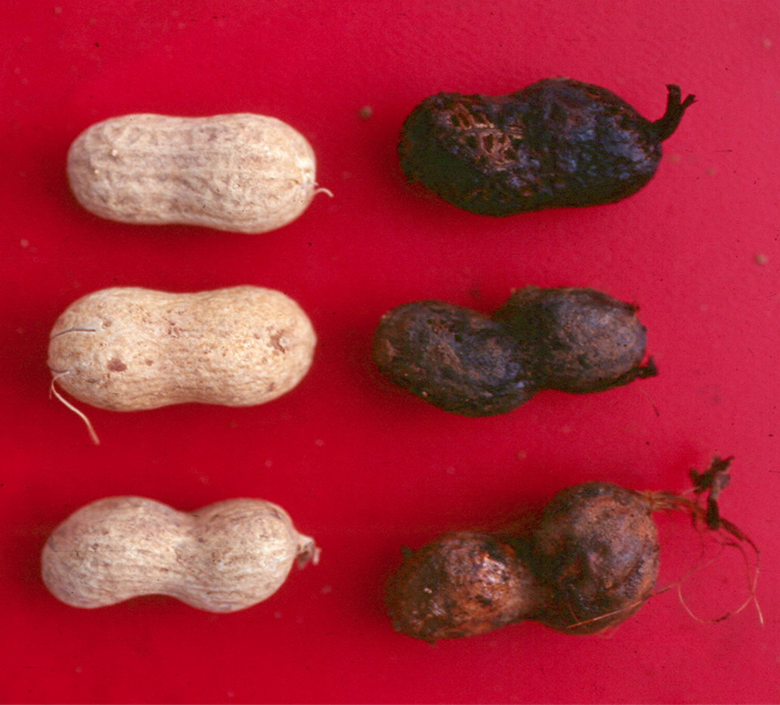
Normal Peanuts and Black Rot Peanuts

Fumigated and Non-Fumigated

The disease known as cylindrocladium black rot (CBR) grows best in cool soils and is a major problem in the Virginia and North Carolina peanut regions. Entire pods may turn black and rot. The fungus may survive several years in the soil. Disease incidences in excess of 80% have occurred. The soil fumigant, metam sodium applied 8-10 inches below rows at least two weeks prior to planting has been the standard recommendation for control of CBR since 1985. Recently, the USEPA conducted a study of the value of metam sodium for peanuts and concluded that…

“Thus, the main benefit of metam sodium is that it permits cultivation of peanuts that would otherwise not be economically viable. …a large proportion of peanut acreage in the North Carolina-Virginia region depends on metam sodium simply to make production economically viable.”

Authors: A. Chiri, and T. J. Wyatt
Affiliations: EPA, Office of Pesticide Programs, Biological and Economic Analysis Division.
Title: Assessment of the Benefits of Soil Fumigation with Metam Sodium in Peanut Production.
Publication: U.S. EPA. (2007). Assessment of the benefits of soil fumigation with metam sodium in peanut production (DP#337490). Available at http://www.regulations.gov/#!home

Mildew Causes Sunburned Tomatoes

Mildew on tomato leaves

Mildew on tomato leaves

Powdery mildew on tomatoes is restricted to warm, arid and semiarid climatic regions. A fine talcum-like powder growth develops on the leaves resulting in the loss of 30-40% of the leaf canopy. Defoliation predisposes fruit to sunscald and reduced quality. The tomatoes become soft or are burned before they reach maturity.

“Powdery mildew is a serious economic problem in Mediterranean tomato production. The disease is currently controlled by fungicides (especially sulfur) in both conventional and organic production. In addition to causing reductions in yield and quality, it may make plants vulnerable to secondary infections by other fungal pathogens (e.g., Botrytis cinerea). Fungicides are used to control tomato powdery mildew, even in organic production, where sulfur fungicides are permitted and widely used.”

Authors: N. G. Dafermos, et al.
Affiliation: School of Agricultural Technology, Technological Educational Institure of Crete, Heraklion-Crete, Greece.
Title: Integration of Elicitors and Less-Susceptible Hybrids for the Control of Powdery Mildew in Organic Tomato Crops.
Publication: Plant Disease. 2012. 96(10):1506-1512.

Onion Plants Die Without Insecticide Treatments

Onion Maggot Damage

Onion Maggot Damage

100,000-300,000 onion maggots overwinter on every acre of onions in northern states. The average number of eggs laid by a single female in the spring is about 50. The emerging maggots seek out the roots and bulbs of onions and tunnel into the bulb. Maggots feed for two to three weeks. Damaged plants are usually so severely injured that they wilt, dry out and soon disappear.

“Management of onion maggot Delia antiqua is an integral component of onion production in the northern United States and Canada. There are three generations of D. antiqua per year in the northern United States and infestations of first-generation D. antiqua typically cause the most serious damage because maggot feeding kills seedlings. If onion seedlings are not protected with an insecticide applied during planting, D. antiqua can reduce plant stands by one-half to near 100%.”

Authors: B. Nault, J.Z. Zhao, R. Straub, J. Nyrop and M.L. Hessney.
Affiliation:  Department of Entomology, NYSAES, Cornell University.
Title: Onion Maggot (Diptera: Anthomyiidae) Resistance to Chlorpyrifos in New York Onion Fields.
Publication: Journal of Economic Entomology. 2006. 99(4):1375-1380.

30 million Insects per Acre in Chinese Rice Fields Means Growers Must Spray

Rice Stripe on Leaf

Rice Stripe on Leaf

Insects often transmit diseases when they fed on a crop plant. Rice is fed on by planthoppers which transmit viruses. In one outbreak in China, 30 million planthoppers were estimated to infest each of 50 million acres. Major losses were prevented thanks to insecticide sprays.

“Laodelphax striatellus Fallén (Hemoptera: Delphacidae) is an economically important sap-sucking pest in rice. The leaves infested by L. striatellus turn yellow, wilt, and even die, resulting in yield loss and quality reduction. In addition, L. striatellus transmits rice viral diseases such as Rice black-streaked dwarf virus and Rice stripe virus, which are two of the most serious diseases and often cause major yield losses. In recent years, the damage caused by L. striatellus feeding injury and the diseases transmitted by this planthopper has been increasing in China. When the outbreak occurred in Jiangsu and Anhui provinces in 2004 and 2005, the density of L. striatellus reached 30 million per acre, and 50 million acres of rice was infested, causing 30% of yield reduction in areas without pesticide treatment.”

Authors: C-X Duan1, J-M Wan1, H-Q Zhai2, Q Chen1, J-K Wang1, N Su1 and C-L Lei1
Affiliation:
1Institute of Crop Sciences, Chinese Academy of Agricultural Sciences, Beijing, China; 2Chinese Academy of Agricultural Sciences, Beijing, China
Title: Quantitative trait loci mapping of resistance to Laodelphax striatellus (Hemoptera: Delphacidae) in rice using recombinant inbred lines.
Publication: Journal of Economic Entomology. 2007. 100(4):1450-1455.

Chilean Apple Growers Must Use Insecticides to Control Quarantine Pests

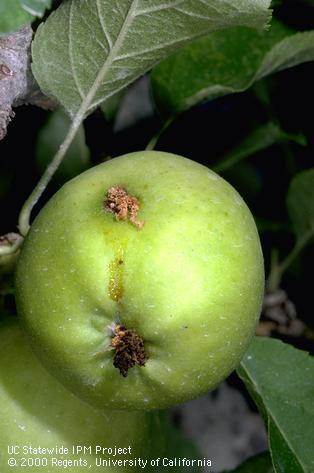
Codling Moth Frass

Codling Moth Frass

Chile is a major exporter of apples to other Latin American and Asian countries. Some of these countries do not have populations of the codling moth and they want to keep the insect out. Codling moth is present in Chilean apple orchards which means that growers must spray insecticides to assure that their export fruit shipments will not be rejected.

“Regular applications of insecticides have been the main management practice against codling moth in Chile. … Pest management in Chilean apple orchards with fruit grown for export is dependent on intensive pesticide use, mainly because of strong quarantine restrictions toward the codling moth from Asian and Latin America countries. In this production scenario, even low levels of fruit damage at harvest (<0.5%) are a major concern for growers. To avoid quarantine rejection of exports, an increase in the frequency of insecticide sprays has been observed.”

Authors: E. Fuentes-Contreras1, M. Reyes2, W. Barros1 and B. Sauphanor2

Affiliation:
1Department de Producción Agrícola, Universidad de Talca, Talca, Chile; 2PSH-Ecologie de la Production Intégrée, INRA Site Agroparc, Avignon Cedex, France
Title: Evaluation of azinphos-methyl resistance and activity of detoxifying enzymes in codling moth (Lepidoptera: Tortricidae) from central Chile.
Publication: Journal of Economic Entomology. 2007. 100(2):551-556.

Fungal Growth on Sugarbeet Leaves Would Lower U.S. Sugar Production

Fungicide Treatment (Left: Treated - Right: Untreated)

Fungicide Treatment (Left: Treated – Right: Untreated)

The Red River Valley in North Dakota and Minnesota is a major sugarbeet production area. About ½ of U.S. sugar comes from sugarbeets. A disease on the leaves damages the plant’s ability to produce extractable sucrose in the roots. Fungicides kill the fungus before the damage is done to the plants.

“Cercospora leaf spot is the most economically damaging foliar disease of sugarbeet in Minnesota and North Dakota. The disease reduces root yield and sucrose concentration, and increases impurity concentrations resulting in reduced extractable sucrose and higher processing losses.”

“It is difficult to combine high levels of Cercospora leaf spot resistance with high recoverable sucrose in sugarbeet. Consequently, commercial varieties generally have only moderate levels of resistance and require fungicide applications to obtain acceptable levels of protection against Cercospora leaf spot under moderate and high disease severity.”

Authors: M.F.R. Khan1 and A.L. Carlson2
Affiliation:
1North Dakota State University & University of Minnesota; 2Plant Pathology Department, North Dakota State University
Title: Efficacy of fungicides for controlling Cercospora leaf spot on sugarbeet.
Publication: Sugarbeet Research & Education Board of Minnesota and North Dakota. 2011 Research report available at: http://www.sbreb.org/Research/research.htm.

Nobody Wants an Orange with a Worm Inside

Med Fly

Med Fly

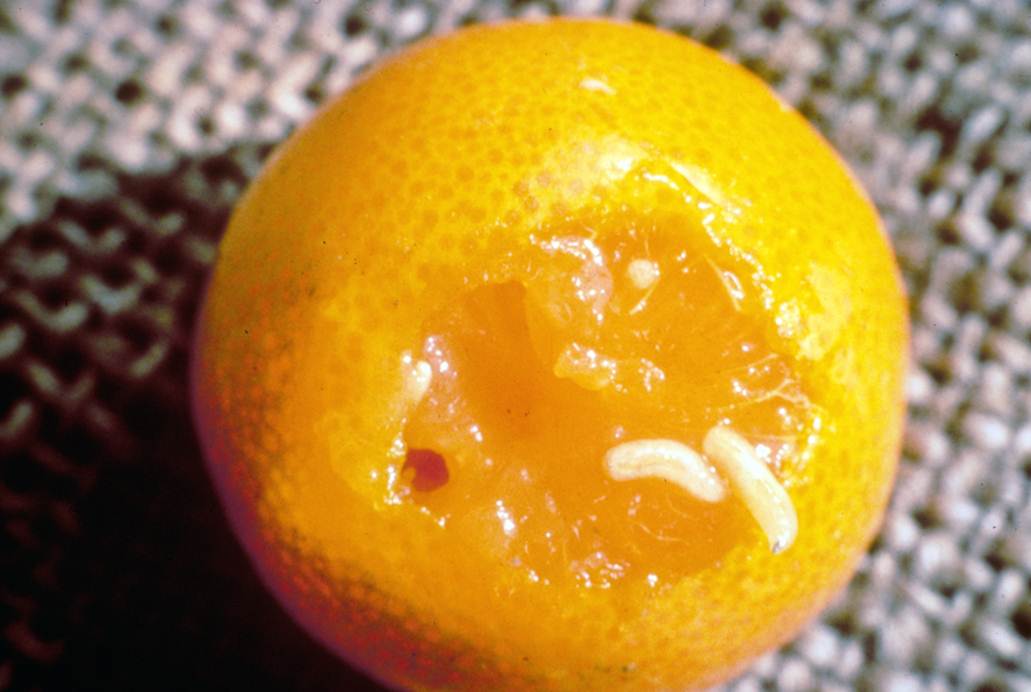
Medfly females lay their eggs inside many different fruit and vegetable crops, including oranges. When the eggs hatch, small Medfly worms begin eating inside the fruit. In order to keep Spain’s oranges free from these worms, growers have to spray.

“The Mediterranean fruit fly is one of the most destructive pests of fruit in the world, attacking >250 species of fruits and vegetables. In Spain, this fly is considered one of the most economically damaging pests of citrus orchards. Direct losses result from the oviposition in fruits, larval activity, and eventual infection by fungi. In addition, quarantine measures are required for exportation to fly-free areas.”

(2)”The Mediterranean fruit fly is one of the most serious pests affecting cultivated plants in the world… Its life strategy includes changes of host species throughout the year, because larvae develop inside fruits only when they are mature.
Eastern Spain has a heterogeneous fruit growing area which extends all along the coast of Iberian Peninsula, from north to south… The most important damage to citrus fruits is produced between September and November, when satsuma and clementine mandarins reach maturity and suffer heavy attacks. Traditional control methods for reducing medfly populations and damage in citrus groves rely on the use of chemical sprays applied to fruits near harvest.”

(1)
Authors: C. Magaña, P. Hernández-Crespo, F. Ortego and P. Castañera
Affiliation: Departamento de Biología de Plantas, Centro de Investigaciones Biológicas, CSIC, Madrid, Spain
Title: Resistance to malathion in field populations of Ceratitis capitata.
Publication: Journal of Economic Entomology. 2007. 100(6):1836-1843.

(2)
Authors: Martinez-Ferrer M.T., et al.
Affiliation: IRTA Amposta. Ctra. de Balada, km. 1. 43870 Amposta (Tarragona). Spain.
Title: Seasonal and annual trends in field populations of Mediterranean fruit fly, Ceratitis capitata, in Mediterranean citrus groves: comparison of two geographic areas in eastern Spain.
Publication: Spanish Journal of Agricultural Research. 2010. 8(3):757-765.