Numerous Fungicide Options a Boon for California Peach Growers

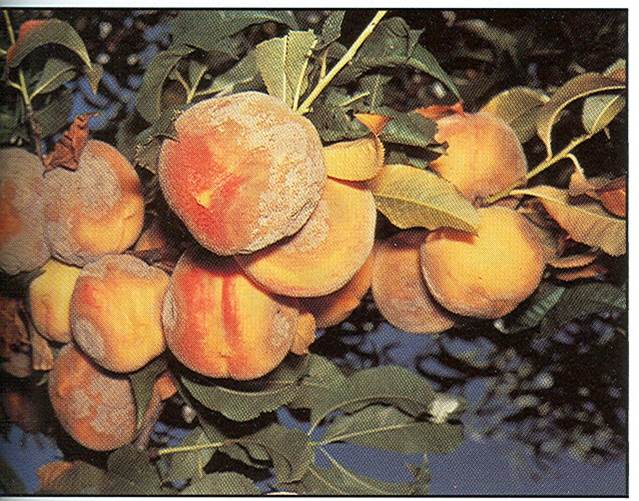
Brown Rot on Peaches

Brown Rot on Peaches

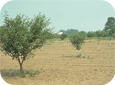
The University of California’s IPM Guidelines list 37 fungicide products available for controlling diseases in peach orchards. Major flower, foliar and fruit diseases of peach include peach leaf curl, shot hole, brown rot, powdery mildew and rust. The key is to select the best fungicide product with the broadest spectrum of activity against these pathogens and time the application at a critical stage.

“Fungicides are the most effective and safe way for managing diseases of cling peach. Fortunately, there are numerous choices because multiple fungicides with different modes of action (MOA) are registered for each disease. This may appear to make a decision more difficult, but having multiple active ingredients available allows for competitive pricing, development of highly effective management programs that target problematic diseases at individual orchard sites, and resistance management. …In recent years, many active ingredients have become available as generic products under different trade names. This has further increased the complexity but also allows for reducing fungicide costs to the grower.”

Author: Adaskaveg, J. E.
Affiliation: UC Riverside
Title: Effective and Economical Management of Flower, Foliar, and Fruit Diseases of Cling Peach
Source: Orchard Notes. January 2014. Pgs. 2-4.

Cowpea, A Major Source of Protein in Africa, Requires Insecticide Applications.

Nematodes!

Cowpea Damage From Insects

Cowpea (also known as black-eyed pea) originated in Africa and is the major source of plant proteins in the diet of rural populations in sub-Saharan Africa. Insect pests pose the greatest threat to cowpea production. The crop is attacked at every stage of its growth by insects. Since the late 1970s, extensive studies on insect pests of cowpeas have been conducted at the International Institute of Tropical Agriculture (IITA). IITA’s Guide to Cowpea Production in West Africa states that generally, 2-3 sprays are required for a good crop of cowpea.

“Cowpea is one of the most important food and forage legumes in the semi-arid tropics.

Despite cowpea’s importance and high yield potential in the Nigerian savannas, insect pest attack is a major constraint upon production. Severity can vary, and sometimes lead to total yield loss.

High levels of insect resistance are not available in current cultivars.

Insecticide application is the most widely known means of a pest control method in cowpea; it is not otherwise feasible to grow cowpea commercially. Farmers can improve yield 10-fold if insecticides are used.”

Authors: Kamara, A. Y., et al.
Affiliation: International Institute of Tropical Agriculture, Nigeria.
Title: Integrating planting date with insecticide spraying regimes to manage insect pests of cowpea in north-eastern Nigeria.
Source: International Journal of Pest Management. 2010. 56[3]:243-253.

Nematicide Applications Could Increase Food Production in Africa

Roots

Nematodes are invertebrate roundworms that are second only to insects in the number of species in the animal kingdom. One cubic foot of soil may contain millions of individual nematodes. Nematodes feed on plant roots. Damage and low yields caused by nematodes frequently go unrecognized or are attributed to other causes. Research in Africa has demonstrated that controlling plant-parasitic nematodes can increase crop yields dramatically.

“Sweet pepper, the second most important vegetable crop in Niger, after onions is grown all over the country, but the region of Diffa alone accounts for over 85% of national production. The area planted in 2008 exceeds 7000 ha with a production estimated at 120000 t.

The production is mainly exported to Nigeria and procures substantial income to the people of the region of Diffa.

The average fruit yield of the crop is about 17 t/ha. This is very low compared to the potential of the crop. This low yield is partly due to diseases and pests pressure, namely the damage caused by plant-parasitic nematodes. …Yield losses caused by these nematodes can reach up to 60% in heavily infested sandy soils.

The study assessed the effectiveness of Savanem 20 EC (Ethoprophos, 200g/l), a newly introduced nematicide on the plant-parasitic nematodes associated with sweet pepper.

Savanem increased the average yield by 37.1% and Furadan by 20.6%.

Savanem 20 EC, at the dose of 50 L/ha is effective against the community of parasitic nematodes on sweet pepper.”

Authors: Adamou, H., et al.
Affiliation: Institut National de la Recherche Agronomique du Niger (INRAN)
Title: On-farm testing of savanem 20 EC (ethoprophos) for control of plant parasitic nematodes associated with pepper (Capsicum annuum) in tillaberi (Niger).
Source: Asian Journal of Agricultural Sciences. 2013. 5[4]:83-87.

Apple Rots Reappear Because of Fungicide Cancellations


Core rot

Core rot


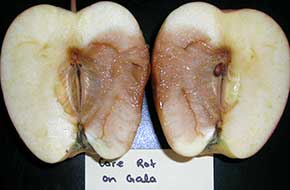
Many storage rots of apples are actually initiated in the orchard. There are often no pre-harvest symptoms. Core rot is a wet rot that spreads into the flesh of the apple. Core rot can be controlled with spring fungicide sprays in the orchard. However, core rot has reappeared in some Australian apples in storage due to cancellation of some key fungicides.

“In the last couple of months I have attended to a couple incidences of core rot in apples that have arrived in their destination market. This is not a pretty sight and costs the packer/marketers both in financial and brand terms, not to mention degradation of Australia’s reputation as a supplier of quality fruit.

This situation has probably arisen due to low levels of core rots being encountered in the last 15 or so years. This has meant that this problem has slipped from our memories and we have forgotten that in the 1980s core rot could be present in up to 20 per cent of our fruit. This level of infection cannot be tolerated in today’s marketing environment. Its re-appearance is probably due to the de-registration of both Benlate and Rovral for spraying onto the apple flowers, a treatment in common use in the 1990s and 2000s for the control of core rots.”

Author: Brown, G.
Affiliation: Technical Editor.
Title: Getting to the core of the problem: Core rots.
Source: Australian Fruitgrower. September 2012. Pgs. 12-15.

Seed Treatments Could Increase Food Production in Africa

Roots

Seedling Disease: no treatment (L) seed treatment (R)

Seeds may be attacked by insects and pathogens once planted in the soil. Treating seed with insecticides and fungicides is commonplace in the U.S. and other developed countries. Contact insecticides and fungicides coated on the seed create a protective barrier on the seed that slows or stops the insects and pathogens from attacking the seed. In Africa, seed treatments are not widely-used to protect seeds planted by small-scale farmers and crop losses occur. Research shows that the use of seed treatments could substantially increase African crop production.

“Disease and insect attacks are an important constraint for crop productivity in the drylands of West Africa. A test was therefore included to find out whether treating seeds with a combined fungicide/insecticide could increase yields. The results showed that the treatment of seeds increased yields by 17% on average, compared with untreated seeds. A previous study showed that the average yield increase due to seed treatment with fungicide/insecticide was 30% for pearl millet in West Africa.

This study shows how low-cost options can increase agricultural productivity in the millet-producing areas of Mali.”

Authors: Aune, J. B., C. O. Traore, and S. Mamadou
Affiliation: Norwegian University of Life Science.
Title: Low-cost technologies for improved productivity of dryland farming in Mali.
Source: Outlook on Agriculture. 2012. 41[2]:103-108.

Consumers Want Perfect Sunflower Seeds as Snack Foods: Insecticides Make It Happen

Seed Weevil

Seed Weevil

The sunflower is the only row crop in North America that coexists with its native ancestors. When extensive commercial planting of sunflower began in the 1970s, many of the insects which evolved in native perennial sunflower seed species transferred to the cultivated crop. Red sunflower seed weevils deposit eggs in sunflower seeds and larvae feed on the developing sunflower kernels destroying a portion of the kernel. The larvae make an exit hole and exit the seeds in late summer. Research indicates that most seeds are only partially fed upon.

“Several years ago, a set of trade standards were developed for nonoil sunflower kernels. These standards stipulate there should be no more than 10 percent broken kernels; not more than 0.5 percent heat damage; and not more than two percent insect damage.

Economic populations of seed feeders such as the red and gray seed weevils, head moth and banded sunflower moth can inflict very serious damage if not controlled. But they commonly consume just a portion of the kernel, so those seeds often are not separated from other seeds during combining. “It’s very difficult to remove all insect damage from in-shell sunflower,” affirms Jim Krogh, president of Agway, Inc., of Grandin, N.D. “Yet it’s also difficult to explain to today’s consumer why there’s a hole in the seed they bought. The hole is unsightly; the kernel tastes bad. It’s a bad deal all around.”

Since it is an edible product, economic thresholds for confection flowers are much lower than for oil-types. One to two weevils per plant should trigger prompt insecticide treatment, based on current recommendations.”

Author: Lilleboe, D.
Affiliation: Writer
Title: Optimizing the quality of your confection crop
Source: The Sunflower. April/May 1998. Available online at: https://www.sunflowernsa.com/magazine/details.asp?ID=77&Cat=10

Good News for Organic Apple Growers: An Insecticide that Kills the Flea Weevil

Weevil damage

Apple Flea Weevil damage

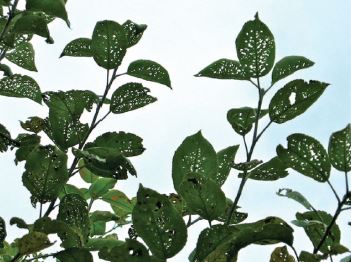
In 2008, the apple flea weevil emerged as a serious pest in Michigan’s organic apple orchards with some growers experiencing >90% crop loss. The organic apple growers were spraying insecticides later in the season to kill major pests like the codling moth and the flea weevil emerged as an early season pest. The weevils feed on developing buds and leaves. Heavy populations cause significant defoliation of leaf tissue resulting in a lacelike pattern which leads to decreased productivity and possible tree death. Research at Michigan State University led to a solution for the organic growers- spray an insecticide…..

“Organic apple growers in the Midwest appear to have a relatively simple solution to their problems with apple flea weevil, which appeared suddenly as a problem in Michigan two years ago and took out 90 percent of the fruit in some orchards.

The best solution, entomologists say, is to spray Entrust (spinosyn) very early in the season, at green tip to pink… The apple flea weevil adult does its most serious damage by feeding on and destroying fruit buds before they have a chance to emerge in the spring.

John Pote, a graduate student at Michigan State University working with Dr. Matt Grieshop and Dr. Anne Nielsen in the organic pest management laboratory, gave the good news to organic growers during a session at the Great Lakes Fruit, Vegetable, and Farm Market Expo in Grand Rapids, Michigan, in December.

Pote noted that the weevil emerged as a problem for organic growers, who normally do not apply insecticides that early in the season, since few insects become active so early.

In conventional apple management programs, the weevil is likely incidentally controlled by insecticide applications made to kill other insects either in April—when overwintering weevils emerge—or in early July—when the summer generation emerges from leaf mines.”

Author: Lehnert, R.
Affiliation: Writer.
Title: Organic control for flea weevil.
Source: Good Fruit Grower. March 15, 2012. Available: http://www.goodfruit.com/Good-Fruit-Grower/March-15th-2012/Organic-control-for-flea-weevil/

Sustaining Water Resources in Asia Means Rice Growers Must Use Herbicides

Rice Fields

Rice Fields

Flooding rice fields prevents certain weed species from developing and rice fields in Asia are major users of water resources. However, a looming water shortage in Asia means that rice growers will have to cut back on water use. Herbicides are being tested as a replacement for flooding for weed control in rice fields.

Currently, sustainability of water resources is of major concern, and declining water availability threatens the sustainability of traditional flood-irrigated rice ecosystems. In Asia, it is predicted that 17 million ha of irrigated rice areas may have “physical water scarcity” and 22 million ha areas may be subject to “economic water scarcity” by 2025. It is, therefore, no longer feasible to flood rice fields for better crop establishment and weed control.

“Aerobic rice, growing rice in non-saturated and non-puddled aerobic soil, is a promising water-wise technique of rice cultivation under the context of ever-mounting water scarcity. But weed menace continues to be a severe problem in aerobic rice systems resulting in up to 90% reduction in grain yield. When direct seeded, rice seeds germinate simultaneously with weed seeds without any “head start” over germinating weed seeds, and the initial flush of weeds is not suppressed by flooding. …Therefore, effective weed management in aerobic rice has become a serious challenge for researchers and farmers.

Eight commercial herbicide products were applied singly or as tank-mix or in sequence to evaluate their efficacy, rice selectivity and cost-effectiveness in aerobic rice. …Most of the herbicide treatments provided excellent weed control, and produced much higher net benefit than weedy or weed-free check. …Among the herbicide treatments, sequential application of Cyhalofop-butyl + Bensulfuron at early growth stage followed by Bentazon/MCPA at mid growth stage provided the highest weed control efficiency, productivity and net benefit. …Since manual weeding was not economic, herbicide rotation using the above chemicals may be recommended for effective weed management in aerobic rice.

In the present study, cost of different herbicide treatments ranged from RM 167 to RM 469 ha-1 depending upon the price and rate of application, while manual weed control required a high investment of RM 2500 ha-1 for season-long weed-free checks.

In our study, the net benefit of the herbicidal weed control was two to three times higher than that obtained from manual weed control. Hence, manual weeding is less remunerative than herbicidal control, and keeping aerobic rice field weed-free manually throughout the season is a losing concern, confirmed by many others.”

Authors: Anwar, P., et al.
Affiliation: Institute of Tropical Agriculture, Universiti Putra Malaysia
Title: Efficacy, phytotoxicity and economics of different herbicides in aerobic rice.
Source: Acta Agriculturae Scandinavica Section B – Soil and Plant Science. 2012. 62:604-615.
774,000 Cockroaches in Eden: Insecticides Protect the Lunchroom

Duke And Duchess Of Cornwell Visit The Eden Project

Duke And Duchess Of Cornwall Visit The Eden Project

Established in 1999, the Eden Project, near St Austell in Cornwall, has been an overwhelming success, attracting visitors from the UK and overseas to view some 3,000 plant species in three biomes.

The Eden project’s mission is to promote the understanding and responsible management of the vital relationship between plants, people and resources leading to a sustainable future for all.

Cockroaches were introduced into the RFB with some of the earliest plantings. The biome provided ideal living conditions for cockroaches with abundant leaf litter, temperatures of 25-30°C and mean relative humidity (RH) of 60% during daylight hours, rising to >90% overnight. From the start, cockroach control was contracted out to a pest control company, but by 2003 cockroach numbers were escalating and it was recognized that the control strategy was not effective.

“…populations of both cockroach species continued to increase overall. …the numbers of cockroaches had grown so large that rare young epiphytic plants such as orchids and many annual seedlings were being badly damaged on planting out. A survey using pre-baited cockroach traps was implemented, placing traps at 130 locations in the biome. From the resulting catches, the population was estimated at 774,000 individuals. …Of particular concern was P. australasiae being caught on traps placed in the catering areas adjacent to the RFB.

The only viable alternative was to use pesticide-fortified baits, two of which were available for immediate use in the UK: fipronil and hydramethylnon. …Baits were first applied in the RFB in November 2005 and in the first six months 3350g of bait were used. The treatment had an immediate and dramatic impact on the population of P. australasiae, whilst gradually reducing the population of P. surinamensis to manageable levels. In addition to the baiting programme, monthly sprays of lambdacyhalothrin were applied to an ‘exclusion zone’ consisting of the boundaries between the RFB and the catering areas and the entrance footbridge that connects RFB to a large café where the presence of cockroaches would be unacceptable.

With reduced cockroach populations, control treatments were switched in 2008 from baits to spot spray treatments using lambda-cyhalothrin applied when needed to population hot-spots, usually of 5-10m radius around the ‘hot’ traps, identified using the population distribution maps. The monthly treatment of the ‘exclusion zone’ has remained unchanged.”

Author: Treseder, K., et al.
Affiliation: Eden Project.
Title: Evolution of Pest-Management Strategies in the Rain-Forest Biome at the Eden Project, the First 10 Years.
Source: Outlooks on Pest Management. February 2011. Pgs. 22-31.

Herbicides Help to Control Nematodes in Orchards

Nematode Damage

Nematode Damage (R)

Prior to the 1950s farmers of orchard crops in California had plenty of new land available as an alternative to replanting land that had previously been in production. However, with growing population and increased land values, a greater proportion of fruit and nut production has been on land where older orchards have been removed. Farmers frequently encounter growth problems when they replant. In severe situations, new plants die. Plant parasitic nematodes that are present on old roots are a common cause of the replant problem.

“Orchard removal and site preparation for walnuts can be extensive and expensive, but worth the time and expense to get new plantings off to the best start, according to Joe Connell, University of California Cooperative Extension farm advisor for Butte County.

Nematodes are a main concern, and the first thing that a grower should do is collect a soil sample from the feeder roots in the old orchard and have a nematode analysis done, Connell said.

After the soil testing, the next step is to cut down the trees, and then treat the stump with a herbicide, Connell said. Treating the stumps kills the entire root system, and it will kill out the nematode population that is attached to that root system, he added.”

Author: Coatney, K.
Affiliation: Reporter
Title: Walnut site preparation is essential for healthy orchards.
Source: Ag Alert. January 30, 2013.