Michigan Tart Cherry Orchards Rely On Fungicide Protection Every Year

Cherry Leaf Spot Infection

Cherry Leaf Spot Infection

Michigan is the leading producer of tart cherries in the United States, with annual yields of 90.9-127.3 million kg, which represents approximately 75% of the total US production.

Leaf spot is the most important fungal disease of cherry trees in Michigan. The appearance of numerous spots on the leaf is usually followed by rapid yellowing and dropping. In experiments, it has been demonstrated that poor control of leaf spot can result in 72% of the tree branches dying during the winter months.

“Cherry leaf spot (CLS) is the most damaging pathogen of tart (sour) cherry trees. All commercial tart cherry cultivars grown in the Great Lakes region of the United States are susceptible to CLS, including the widely grown cultivar Montmorency, which accounts for more than 90% of the tart cherry acreage in Michigan. Left unmanaged, CLS infection causes significant defoliation by mid-summer, resulting in fruit that is unevenly ripened, soft, poorly colored and low in soluble solids. Early defoliation also delays acclimation of fruit buds and wood to cold temperatures in the fall, increases tree mortality during severe winters and reduces fruit bud survival and fruit set the following year.

The almost complete reliance of the tart cherry industry on the cultivar Montmorency has driven a strict dependence on fungicides for disease management. Typically, 6-8 fungicide applications per year are required, beginning at petal fall and continuing through to late summer after harvest.”

Author: Proffer, T. J., et al.
Affiliation: Michigan State University
Title: Evaluation of dodine, fluopyram and penthiopyrad for the management of leaf spot and powdery mildew of tart cherry, and fungicide sensitivity screening of Michigan populations of Blumeriella jaapii.
Source: Pest Management Science. 2013. 69:747-754.
Toxins Appear in Apple Juice Due to Fungicide Cancellations

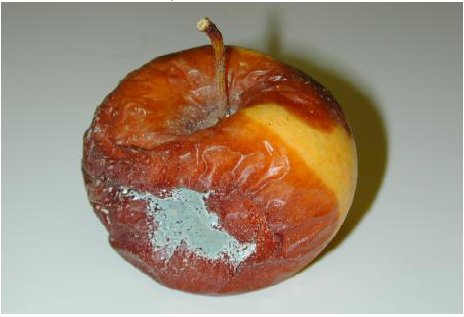
Contaminated Apple

Apple Contaminated by Penicillium expansum

Patulin is a mycotoxin that is produced by certain species of molds that may grow on a variety of foods. Patulin does not appear to pose a safety concern with the exception of apple juice; patulin present in apple juice survives the pasteurization process.

The US FDA conducted a review of the toxicological studies on patulin and this found that patulin is toxic upon repeated administration of oral doses around 1.5 mg/kg body weight (bw), which caused premature death in rats.

“In March this year, a consignment of Australian apple juice was tested in Japan and found to have unacceptably high levels of the toxin patulin in it.

The initial critical control point for reducing the risk of patulin contamination of apples is the control of P. expansum in the orchard.

In recent times P. expansum has been well controlled in the orchard and in postharvest by applications and drenches of Benomyl and its related fungicide carbendazim. Unfortunately these products have been removed from the market due to pesticide safety concerns such that the risk of high levels of mycotoxins on the fruit has increased.”

Author: Brown, G.
Affiliation: Technical Editor.
Title: Are your fruit safe for juice? Patulin – the toxic substance found in juice fruit.
Source: Australian Fruitgrower. June 2012.

Fungicides Protect Sunflowers From Rust

Sunflower Rust

Sunflower Rust

North Dakota, South Dakota, and Minnesota account for two-thirds of U.S. acreage of commercial sunflowers. 1.8 million acres of sunflowers produce an annual crop of nearly 2.8 billion pounds valued at $700 million. This valuable crop was recently threatened by a plant pathogen.

“Since 2008, sunflower rust has been a huge issue across the Northern Plains, increasing every year in severity and incidence.

The good news is that research trials conducted at North Dakota State University locations over the past two years demonstrate fungicides do work and in most cases, only one application of fungicide applied at the right time gives effective control .

“About three years ago, rust became an increasingly big issue,” said Sam Markell, NDSU plant pathologist, at the National Sunflower Association’s annual summer seminar in Bismarck. “When it comes really early, it causes a lot of yield loss.”

And that is precisely what began happening.

Previous to 2007, rust was typically found in late July and early August when it is less likely to cause an epidemic. But an NDSU Extension agent found rust in the aecia stage (which indicated the rust pathogen had completed its sexual cycle) three years ago in mid-June, which was very rare, Markell said.

“This may have been a result of favorable environment or it could be that a resistant sunflower was no longer resistant,” he said.

For example, when the NDSU scientist found rust in the aecia stage, he had the field aerially sprayed twice with fungicide except for one untreated test strip. In the treated field, the yield was 1,400 pounds, but in the untreated strip, the yield was 200 pounds, Markell said.”

Author: Roesler, S.
Affiliation: Farm & Ranch Guide.
Title: Type of fungicide on sunflowers not as vital as timing.
Source: Farm and Ranch Guide. July 16, 2010.

Insect Pests in Eden: Sprays Are Mandatory

The Eden Project

The Eden Project

The Eden Project was designed as a world class visitor destination to celebrate the interdependence of plants and people and to educate people about the need to care for the world that cares for them.

The project site, located in a recently decommissioned china clay quarry near St Austell, Cornwall, UK, is 105 hectares in size and consists of two large enclosed biomes set in gardens (outdoors biome) along with an educational resources building (the core) and a visitor reception building.

With two large indoor biomes covering the humid tropics and warm temperature climates, the outdoor biome with a range of temperate environments, plus several catering facilities, a warehouse and a waste recycling yard, pest management at Eden is very broad with many challenges in all areas.

Despite the procedures put in place for interception, a steady stream of introductions of pest and non-pest invertebrate species has occurred in the RFB.

“Unfortunately, during the early years of the project a number of non-indigenous pest species were introduced into the Rain Forest Biome (RFB) and not successfully eliminated. Currently there are five species that are the subjects of a containment notice issued by DEFRA; banana borer, banana aphid, atratus white fly, coconut mealybug and latin aphid. The containment notice dictates that the Eden Project has to monitor the populations of these pests and maintain pesticide programmes to control their populations.

In January 2002, adults of Tobacco White Fly were detected on leaf samples collected from the RFB. This discovery instigated the placement of an eradication order by DEFRA which initiated the immediate implementation of monitoring and a chemical control programme.

Eradication was achieved after a two year intensive spray programme involving repeated biome-wide sprays using a range of chemicals including buprofezin, thiacloprid, pymetrozine and nicotine.”

Author: Treseder, K., et al.
Affiliation: Eden Project.
Title: Evolution of Pest-Management Strategies in the Rain-Forest Biome at the Eden Project, the First 10 Years.
Source: Outlooks on Pest Management. February 2011. Pgs. 22-31.

Chewing Gum Will Lose Its Flavor Without Herbicide Use In Mint Fields

Weedy Mint Field (Foreground)

Weedy Mint Field (Foreground)

Peppermint and spearmint are grown in the U.S. commercially on close to 100,000 acres with peppermint comprising 70% of the acreage. Mint crops are grown to extract the oil produced in glands on the plant’s leaves. The U.S. produces about 9 million pounds of mint oil which is used to flavor chewing gum, toothpaste, pharmaceuticals and liqueurs. One drum of mint oil weighing 400 pounds can flavor more than 5 million sticks of chewing gum or 400,000 tubes of toothpaste. Mint crops are harvested mechanically and any weeds in the field are harvested along with the mint. If the weeds are processed along with the mint, the mint oil loses its flavor; as a result, mint growers use herbicides to prevent weeds from contaminating the mint oil with off-flavors.

“Mint oil yield is reduced when weeds compete with mint for light, nutrients, and water. Mint oil quality is reduced when weeds impart off-flavors and odors to mint oil during distillation.

The demand for mint oil is based on its desirable flavor and odor. Mint oil is used to flavor medicines, toothpaste, candy, and chewing gum. If mint oil is contaminated with undesirable flavors or odors then its quality is downgraded.

Unfortunately, many weeds harvested with mint hay impart off-flavors to mint oil during distillation. This results in a reduction of mint oil quality and price.

In one study, the oil from hay containing 5% pigweed was not marketable.

3.2 Horseweed plants per square yard would make the mint oil unmarketable.

Mint oil severely contaminated with objectionable weed odors is not marketable and is therefore valueless. Infestations of horseweed, pigweed, western goldenrod, common lambsquarters, and prickly lettuce at 7 or more plants per square yard are likely to make mint oil unmarketable.”

Author: Heap, I.
Affiliation: Dept. of Crop and Soil Science, Oregon State University.
Title: The Effect of Weeds on Mint Oil Yield and Quality. 1993.

Herbicides Improve Dove Hunting in the Southeast

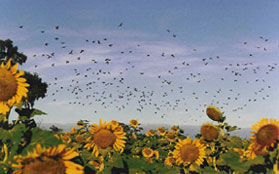
Doves over a sunflower field

Doves over a sunflower field

The mourning dove is one of the most numerous, widely hunted, and economically valuable game birds in Mississippi and the Southeast. For decades, landowners and wildlife managers have planted fields in agronomic crops to attract doves for sport hunting—a practice that led to these types of fields being known more simply as “dove fields.”

“…dove fields traditionally have been planted in one or more grain crops such as corn, sorghum, millets, wheat, and sunflowers. Although the concept of planting sunflowers to attract doves is nothing new, their use as a dove field crop has been limited over the years. However, when environmental conditions permit, a well-managed stand of sunflowers can be one of the most productive dove fields in the Southeast.

Weed control is a key component of managing sunflowers for dove fields. Doves prefer to feed in areas of clean, open ground. An effective weed control program will render fields more attractive to doves.

Herbicide applications are the most practical and cost-effective means of weed control in sunflower fields. For many years, only a few herbicides were labeled and marketed for use with sunflowers. However, because sunflower production is on the rise, more herbicides are labeled for sunflowers than ever before. Weed control via herbicide applications is essential for maximizing sunflower seed yields.”

Author: Nelms, K., et al.
Affiliation: Natural Resources Conservation Service & Mississippi State University Extension Service.
Title: Growing and Managing Sunflowers for Dove Fields in the Southeast.
Source: Mississippi State University Extension Service Publication 2725. 2012.

Stopping the Nematode Threat to Potatoes with Fumigation

Roots

PCN Damage (right)

Bugs

PCN cyst hatching

Cyst nematodes are a huge potential threat to potato production in the US. Nematodes are microscopic unsegmented worms. Roots of infected plants contain minute, white bodies of females. When a female dies, its cuticle forms a protective cyst containing 200 to 500 eggs. Cysts containing viable eggs can persist in the soil for up to 20 years. When potatoes are planted, root exudates stimulate juvenile nematodes to emerge from eggs. The juveniles locate and enter potato roots. They cut through cell walls and feed. Infection with nematodes reduces root biomass, which can lead to stunting of plants, yellowing and wilting of foliage and small tubers. Heavy infestations often results in total crop loss. Potato cyst nematodes are widespread in many countries, but only two localized infestations have occurred in the US. The latest infestation, found in Idaho in 2006, has led to a strict treatment program with fumigants.

“Two species of potato cyst nematode are found in the United States: Globodera pallida, the pale cyst nematode (PCN), was first found in Idaho in 2006, whereas the golden nematode, G. rostochiensis (GN), was first found in New York in 1941. Both species are regulated under a Federal Domestic Quarantine Order (USDA-APHIS) and parallel State Rules (Idaho State Dept. of Agriculture, New York State Dept. of Agriculture), and eradication effects are underway.

While some resistance to PCN is present in potato varieties grown in Europe and elsewhere in the U.S., there is no resistance in most of Idaho’s signature russet varieties.

The presence of G. pallida in Idaho has been viewed with alarm by other states and countries that import Idaho potatoes and other farm products. After the initial Idaho PCN detection in 2006, markets for Idaho fresh potato products and nursery stock were lost for Canada, Mexico, and Korea. Japan temporarily closed the market for all U.S. potatoes, and continues to disallow Idaho shipments. Consequently, eradication of PCN is a top priority for the Idaho potato industry, including the Idaho Potato Commission, the Idaho State Department of Agriculture, and USDA-APHIS. Millions of dollars have been spent in Idaho in eradication efforts. A critical component of this work has been treatment of infested fields with the fumigant methyl bromide (MeBr), which has been ongoing since the spring of 2007. Lab tests conducted after each treatment indicate a 95% viability reduction after one year’s fumigation, and over 99% viability reduction after successive treatments.”

Author: Dandurand, L. M.
Affiliation: University of Idaho, Moscow
Title: Novel Eradication Strategies for Pale Cyst Nematode
Source: Potato Progress. September 16, 2013. Volume XIII, Number 10.

Herbicides Prevent Blindness in Sheep

Sheep - NZ Pasture

Sheep – New Zealand Pasture

Eye Damage From Barley Grass

Eye Damage From Barley Grass

New Zealand is well-known for its lamb. Sheep and lambs feed in pastures. Barley grass is a common problematic weed in New Zealand pastures. The barbed spikes on barley grass seed can penetrate the eyes of sheep and can cause painful lesions, infections and blindness. Weight loss in lambs is attributed to their reluctance to feed in pastures infected with barley grass. Herbicides are used to remove the barley grass and early research in New Zealand demonstrated the benefits.

“An area of uniform barley grass (Hordeum murinum) infestation, in Waikato, was divided into twenty-four 0.2ha paddocks. Three chemicals… were used to control barley grass and the paddocks were grazed by lambs throughout the summer at two stocking rates.

All the chemicals reduced the barley grass content of the sward by over 96%, with pronamide giving 99% reduction, and significantly reduced Poa spp.

During the first month of the grazing period, the lambs on all chemical treatments at both stocking rates gained weight at approximately twice the rate of those on the untreated paddocks. …The control lambs (untreated paddocks) stopped gaining weight in mid-January and started to lose weight at the higher stocking rate.

The sudden growth check among the control lambs in mid-January coincided with maximum seed shed of the barley grass and is almost certainly attributable to the physical damage caused by the barley grass seed, especially to the eyes.

Initially the eye damage recorded was barley grass seed in the eyes but, at later stages, conjunctivitis and keratitis resulting from seed puncture and abrasion of the cornea.

During late January and throughout February, many of the control lambs were completely blind and were a pitiful sight. …this paper gives a clear indication of the benefits to stock and pasture that can arise from herbicide treatment.”

Authors: Hartley, M. J., and G. C. Atkinson.
Affiliation: Ruakura Agricultural Research Centre, Hamilton.
Title: Effect of chemical removal of barley grass on lamb growth rates.
Source: Proceedings of the New Zealand Plant Protection Society. 1972.

Consumers Want Perfect Avocados: Growers Must Spray

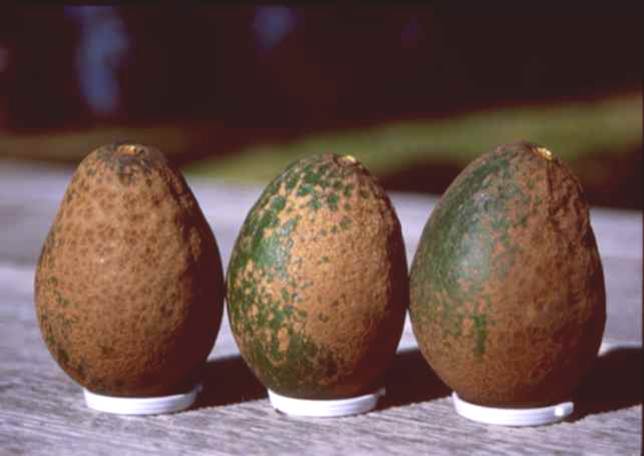
Infected Avocados

Avocado Thrip Fruit Scarring

Historically, the production of avocados in California required little usage of insecticides. Avocado pests were kept under commercially acceptable control by a variety of beneficial organisms. This situation changed in 1996 with the appearance of avocado thrips which feed on the surface of the fruit. Feeding scars develop while the flesh of the fruit is a healthy green. Even partial fruit scarring results in downgrading of fruit in packinghouses because of cosmetic damage unacceptable to consumers .

“The California avocado industry is under increasing threat from the introduction of arthropod pests. The avocado thrips, was first detected in California avocado groves in June 1996, and it has since spread to most of the major production areas within the state where it has become the primary insect pest. The main source of economic loss arises from feeding damage that causes scarring of immature fruit, leading to a reduction in fruit quality at harvest.

In California avocado groves, the use of foliar insecticides is the predominant tactic adopted by growers for the management of arthropod pests, including the avocado thrips. Aerial applications by helicopter are needed for the majority of California avocado groves because most are grown on steep hillsides.”

Author: Byrne, F. J., et al.
Affiliation: University of California
Title: Field evaluation of systemic imidacloprid for the management of avocado thrips and avocado lace bug in California avocado groves.
Source: Pest Management Science. 2010. 66:1129-1136.

USDA Research Shows That Soil Erosion is Higher in Organic Systems

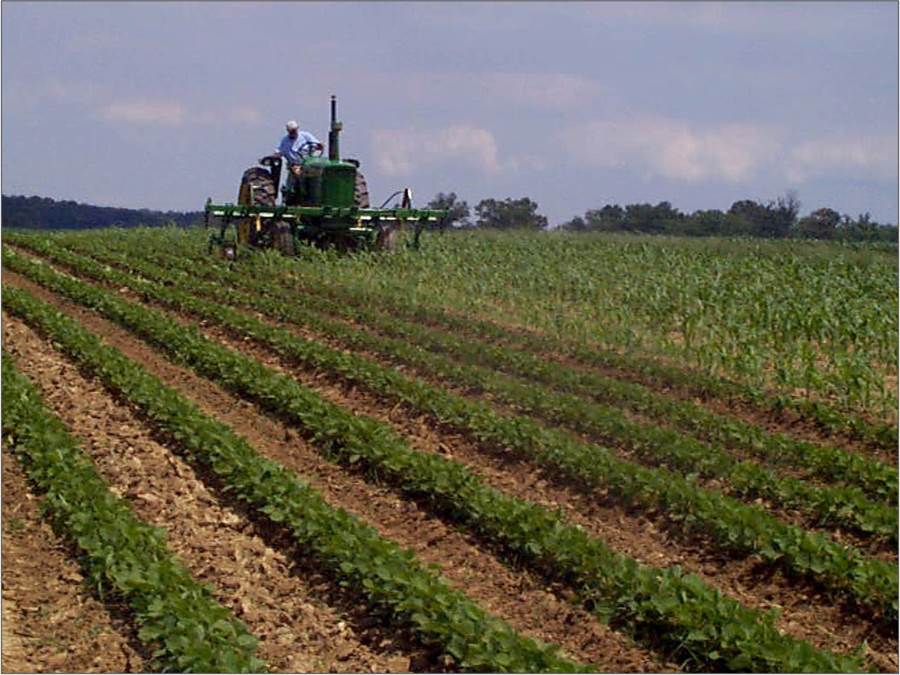
Time to replace the plow?

Cultivation: ARS-Beltsville

In 1996, The Farming Systems Project was established at the USDA ARS Beltsville Agricultural Research Center in Beltsville, Maryland to compare the performance of conventional and organic production systems. In the conventional systems, herbicides are used to kill weeds while in the organic systems, up to seven tillage operations are used to kill weeds. Tillage equipment loosens the soil and leaves it bare and susceptible to erosion when it rains. The USDA researchers estimated that the organic plots lost five times more eroded soil than the plots that were not tilled and where herbicides were used. A point made in a recent highlight article…..

“Tillage is used to bury the previous year’s crop residue and destroy weeds. But in no-till farming, herbicide removes the weeds and the new seed is sown directly into the stubble of the last crop.

No-till systems also win hands-down when it comes to hanging on to soils. An 11-year farming experiment by the U.S. Department of Agriculture in Beltsville, Maryland, compared crops grown in three ways: conventional tillage, organic methods, or no-till. Compared to the conventionally tilled plot, the organic plot was likely to hang on to 30 percent more soil. But compared to the organic plot, the no-till plot hung on to 80 percent more soil.

David Pimentel is a Cornell University entomologist who has written much about the negative environmental impacts of pesticides. Nevertheless, “I’d take chemicals over soil erosion any day,” he says.”

Author: Finkel, E.
Affiliation: Writer
Title: Is It Time to Replace the Plow?
Source: Conservation Magazine. 2008. 9[3]:32-33.