Apple Scab Would Almost Completely Destroy Dutch Apple Orchards Without Fungicide Sprays

Apple Scab

Apple Scab

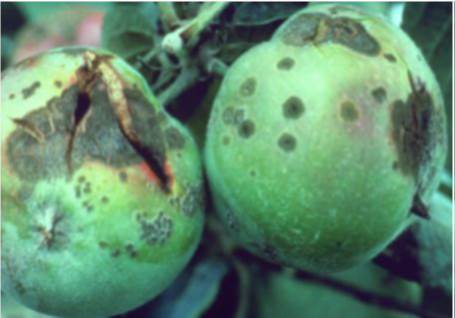
Apple scab is caused by a fungus Venturia inaqualis, which overwinters in infected leaves on the orchard floor.  Mating among different strains of the fungus occurs shortly after leaf fall and spores develop in the fallen leaves during the winter.  Spring rains cause spores to be forcibly discharged. Spores continue to mature and are discharged over a period of 5-9 weeks. If the surface of apple tissue is wet and temperatures are suitable, the spores germinate and penetrate the cuticle and outer layers of the plant, causing an infection.  The fungus grows beneath the cuticle and eventually ruptures it and forms dark green lesions.  Masses of spores are produced asexually within the lesions and become detached during rain.  Water splashes and redistributes these spores, causing secondary infections. Each leaf scab lesion is capable of producing 50,000-100,000 spores. Assuming 50,000 leaves per tree have 2% scab infection, about 50 million spores would be present on a single tree.  One spore can cause an infection. Infections early in the season can kill tissues near the fruit surface and the fruit develops unevenly as uninfected portions continue to grow.  Cracks appear in the skin and flesh and the fruit may become deformed.  Heavily infected fruit fall from the tree resulting in yield losses.  Scab lesions on harvested apples result in a lower price for growers since the commercial tolerance for scab damage approaches zero.

“Apple scab [Venturia inaequalis (CKE.) Winter] is one of the most important diseases of apple, causing considerable losses every year in many countries. Crop losses in the Netherlands caused by apple scab would be about 80% if no control measures were taken; therefore, 15-22 conventional spray applications per season are used to prevent apple yield loss under Dutch weather conditions.”

Authors: Holb, I. J., et al.
Affiliation: Department of Plant Protection, Centre of Agricultural Sciences, Debrecen University.
Title: Summer epidemics of apple scab: the relationship between measurements and their implications for the development of predictive models and threshold levels under different disease control regimes.
Source: Journal of Phytopathology. 2003. 151:335-343.
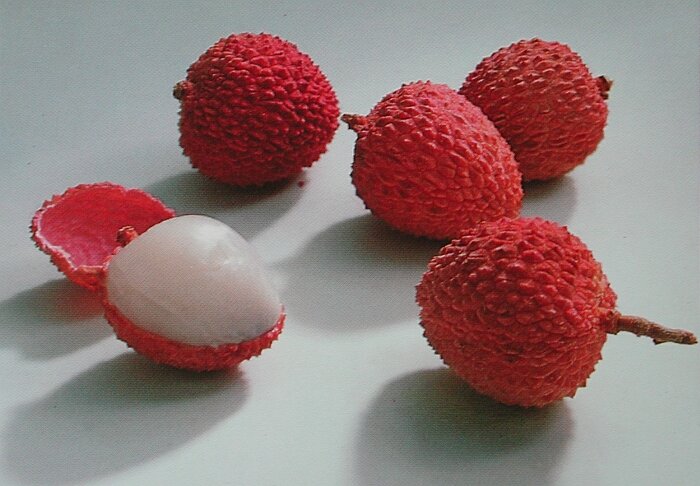
Lychee, A Favorite Fruit of Chinese Emperors, Would be Largely Unavailable Without Fungicides

Litchi (lychee)

Litchi (lychee)

The lychee, also known as litchi, grows on a tropical and subtropical fruit tree native to southern China, Taiwan, Bangladesh and Southeast Asia, and now grown in many parts of the world. The lychee has a history and cultivation going back as far as 2000 BC. In the 1st century, fresh lychees were in such demand at the Imperial Court that a special courier service with fast horses would bring the fresh fruit from Guangdong. It was first introduced to the west in 1782. The fresh fruit has a delicate, whitish pulp with a floral smell and a fragrant, sweet flavor. Dried lychee are often called lychee nuts, though, of course, they are not a real nut. Litchi downy mildew is a devastating disease of litchi plants in China. Control of litchi downy mildew requires numerous fungicide applications.

“Litchi (Litchi chinensis Sonn.) is a tropical and subtropical fruit of high commercial value. Most litchi fruits are produced in China, India and Vietnam. In 2001, the world litchi production was approximately two million tons, and approximately 1.26 million tons were produced in China… However, the fruits are very susceptible to many diseases with significant losses in quality and yield. One of the most prevalent diseases is litchi downy blight caused by the peronosporomycete Peronophythora litchii.

P. litchii damages fruit, panicles and new shoots, causing panicle rot and withering, as well as watery brown spots on fruits which later produce snowy mildew. More than 60% of commercial losses have been reported after successive rainy and overcast days in the growing season.

The primary components of all commercial management programmes for this disease are applications of organic and/or inorganic fungicides.”

Authors: Wang, H., et al.
Affiliation: College of Plant Protection, Nanjing Agricultural University, China.
Title: Fungicide effectiveness during the various developmental stages of Peronophythora litchii in vitro
Source: Journal of Phytopathology. 2009. 157:407-412.

High Quality Spanish Greenhouse Vegetables Depend on Fungicides

Greenhouse Industry, Almeria

Greenhouse Industry, Almeria

Almeria is located in the region of Andalucia in southeastern Spain. It has an average temperature of 68° and about 3000 hours of annual sunshine. Vegetable production in greenhouses has increased dramatically in Almeria. At present, about half of the total production from this area is exported to the European Union, especially Germany, France and the Netherlands. Almeria has become very competitive because it is relying on selling via high quality and not on low prices. Spain will try to improve its export position by increasing its market share in other parts of the world. Not only are prices competitive from Spain, but also the quality of Spanish produce is excellent. Needless to say, moldy vegetables are not acceptable for export from Spain and the greenhouse crops are intensively sprayed with fungicides.

Botrytis cinerea, is the causal agent of grey mould, one of the most important diseases of crops in Almeria, a region in south-east Spain where unheated plastic greenhouses cover an area of approximately 33.560 ha. Botrytis cinerea attacks a wide range of plant species in temperate zones and causes grey mould on many economically important crops such as vegetables, ornamentals, bulbs and fruit. Chemical control is the primary method for grey mould control, with alternative fungicides applied every 10 days, from November to March.”

Authors: Moyano, C., V. Gomez, and P. Melgarejo.
Affiliations: Department of Plant Protection, INIA, Ctra. De la Coruna, Spain.
Title: Resistance to pyrimethanil and other fungicides in Botrytis cinerea populations collected on vegetable crops in Spain.
Source: Journal of Phytopathology. 2004. 152:484-490.

New Fungicides Take the Worry out of Controlling Mildew on Lettuce

Lettuce

Lettuce Downy Mildew

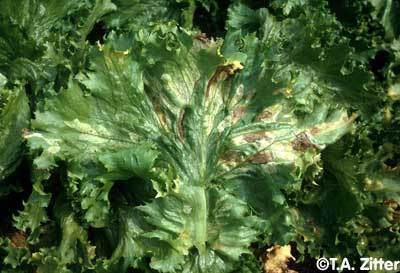
Downy mildew is a common fungus in most lettuce growing regions, especially during cool, moist weather.  Spores can be blown long distances.  Under favorable conditions, downy mildew is a very explosive disease, capable of appearing at high incidence in a field overnight.  When spores land on lettuce foliage, they germinate and can penetrate the lettuce leaf within three hours.  Lettuce is susceptible at all growth stages to the downy mildew pathogen.  Following penetration and establishment in the leaf, fruiting stalks grow through the leaves and branch repeatedly producing several spores on each tip, resulting in a whitish mat of millions of spores on each plant.  Affected tissues turn brown.  The fungus can penetrate to leaves internal to the wrapper leaves.  Relatively low levels of infection can downgrade a crop, cause significant trimming losses at harvest and promote decay by bacterial organisms during postharvest transport and storage.  During transit, lesions become soft and slimy as secondary decay organisms gain entrance through the tissues infected with the downy mildew fungus. High levels of disease can render a crop unmarketable.

“Incited by the obligate parasite Bremia lactucae, downy mildew is one of the most devastating diseases of lettuce worldwide. Attempts to manage this fungal disease using host-plant resistance have frequently failed due to the development of new races of the pathogen. Therefore, chemical control is of the utmost importance in humid areas where environmental conditions are very favorable for disease development.

Since the year 2000, a number of new fungicides targeting the Oomycetes, the class of fungi to which downy mildew belongs, have come to the market or are being considered for registration. It was the objective of these studies to investigate a select number of these for potential use in Florida for lettuce downy mildew control.

Of those investigated, mandipropamid and fenamidone consistently provided for high levels of control. Fluopicolide, dimethomorph, dimethomorph plus ametoctradin, cyazofamid, and propamocarb also provided significant control. With the majority of these fungicides already being labeled or close to being labeled on lettuce, it would appear that lettuce growers now have a wide array of efficacious downy mildew fungicides with differing modes of action from which to choose. This is a far cry from the situation that existed during 1989, when the EBDC fungicides were being threatened with cancellation and metalaxyl insensitivity was becoming widespread.”

Authors: Raid, R. N., and D. D. Sui.
Affiliation: University of Florida, IFAS, Everglades Research and Education Center.
Title: Management of lettuce downy mildew with fungicides.
Source: Proc. Fla. State Hort. Soc. 2012. 125:218-221.

More Sugar from Michigan Thanks to Fungicides

Fungicides: Used (left); Not Used (right)

Fungicides: Used (left); Not Used (right) (Rhizoctonia Control)

Rhizoctonia root rot is a serious disease problem in several sugarbeet-growing regions, with the result sometimes being dramatic—and expensive—reductions in tonnage and quality. Low levels of infections can easily cause yield losses in excess of a ton per acre while high infection levels can cut yields by more than 10 tons per acre. The quality of surviving beets can also be impacted, sometimes resulting in significant losses in recoverable sugar.

“During 2009 and 2010, the Michigan Sugarbeet Advancement Initiative established a study to determine the efficacy and economic impact of various application strategies for the use of Quadris flowable fungicide to control Rhizoctonia root rot.

On average (four trials in each of two years), even with low to moderate levels of Rhizoctonia infection, the per-acre net return of Quadris over the check trials ranged from $94 to $209, depending on the rate, timing and method used. The best treatment in these trials improved recoverable sugar per ton by 14 pounds and percent sugar by 0.7%. Even the “worst” treatment increased RST by 8 pounds and sugar content by 0.3%.”

Authors: Poindexter, S., and Wenzel, T.
Affiliation: Michigan Sugarbeet Advancement, Michigan State University
Title: Rhizoctonia control with quadris—update on Michigan research.
Source: The Sugarbeet Grower. April/May 2011. Pgs. 16-17.

A Crop Variety May Resist a Disease but May not be Desired by Consumers.

Blight on stems

Blight lesions on chickpea stems

The planting of disease-resistant varieties is often promoted as an alternative to the use of fungicides. If a plant variety is produced through traditional crop breeding and is able to somehow resist penetration and infection by fungi, then fungicides are not needed. Right? The problem is that when new varieties are produced through crop breeding, they often lose quality traits that are desired by consumers. In Turkey, the best quality chickpeas are susceptible to blights and require fungicide treatments in contrast to the lower quality resistant chickpea varieties.

“Chickpea is one of the most extensively grown legume crops in Turkey, the area and production being 622,214 ha and 548,000 tons, respectively. Chickpea blight, is one of the most important diseases affecting this crop wherever it is grown. The disease, which originates from infected seeds and diseased plant debris remaining in the field, mainly affects all the above-ground parts of the plants, causing lesions mostly on stems and stem breakage. Chickpea blight can be effectively controlled by using tolerant or resistant cultivars, but none of them has good quality or sells for high prices in Turkey; unfortunately, high-value cultivars are susceptible to the disease. Seed transmission is especially important where crop rotation is practiced. For this reason, effective chemical control is needed for seed and foliage treatments.”

Authors: Demirci, F., et al.
Affiliation: Department of Plant Protection, Ankara University, Turkey
Title: In vitro and in vivo effects of some fungicides against the chickpea blight pathogen, Ascochyta rabiei.
Source: Journal of Phytopathology. 2003. 151:519-524.

What’s a Cucurbit? Downy Mildew Knows.

Cucumber Downy Mildew

Cucumber Downy Mildew

Cucurbits are a plant family consisting of squashes, melons and gourds, including crops such as cantaloupes, cucumbers, pumpkins and watermelons. Most of the plants in the cucurbit family are annual climbing or trailing vines. Downy mildew of cucurbits is caused by a fungus which infects only cucurbit crops. Downy mildew symptoms are almost exclusively confined to the leaves. The tiny spores of the fungus fall on a leaf, germinate and force food absorbing organs into the leaf. These rootlike structures remove nutrients from the plant. Downy mildew can defoliate an entire watermelon field in 10 to 14 days.

“Clemson University plant pathologist Anthony Keinath urges South Carolina farmers to scout and spray after downy mildew infection was found June 18 on non-sprayed sentinel watermelon at Clemson’s Coastal Research and Education Center (REC) in Charleston. It is the earliest in the growing season that the watermelon strain of the disease has been found in South Carolina.The mildew also was found on cucumber, cantaloupe and several different varieties of squash over the past two weeks.

“The rainy, cloudy weather we’ve been having favors rapid outbreaks of downy mildew. Early detection is critical to controlling outbreaks,” said Keinath, professor of plant pathology in Clemson’s School of Agricultural, Forest, and Environmental Sciences (SAFES).

Keinath advises all South Carolina growers of cucurbits, a family of plants that includes various squashes, melons and gourds, to immediately apply preventative fungicides and walk their fields twice per week to scout for the mildew.”

Author: Clemson University
Affiliation: Clemson University
Title: South Carolina cucurbit growers advised to treat for downy mildew
Source: Southeast Farm Press. June 20th, 2013.

Highest Sugarbeet Yields Ever in the UK Thanks to Fungicides

Where Sugar Comes From

Where Sugar Comes From

The sugarbeet industry expanded dramatically in the UK in the 1920s to make Britain more self-sufficient in sugar production after severe shortages in World War 1 and after it lost most of its sugar-producing colonies. Until the introduction of new fungicides in the 1990s, UK sugarbeet growers relied on sulfur sprays for controlling diseases. The new fungicides provide better disease control and have a direct physiological effect on the plants which leads to higher yields. Refining the spray schedule with these new fungicides has resulted in the highest sugarbeet yields ever in the UK.

“In 2011, the UK sugar industry celebrated its highest ever national yield of 75.6 t/ha. A number of factors contributed to this excellent achievement, but a major contributor was the widespread and appropriate use of fungicide spray regimes across the vast majority of the sugar beet crop. These products control diseases including powdery mildew and rust, but also provide physiological benefits such as green leaf retention and early frost protection.”

Authors: Stevens, M., and E. Burks.
Affiliation: Rothamsted Research-Broom’s Barn
Title: Fungicide strategies for maximizing yield potential: lessons from 2011.
Source: British Sugar Beet Review. Summer, 2012. 80[2]:10-13.

Fungicides Cover for Failure of Crop Breeding for Rust Control in Dry Beans

Bean Rust

Bean Rust

Bean rust usually is observed first as discrete pustules which are filled with cinnamon-brown spores, which leave a dusty brown streak when rubbed. The last bean rust epidemic in North Dakota in the 1990s caused in excess of $10 million in crop losses. Following the introduction of rust-resistant dry bean varieties produced through crop breeding, rust was not a problem until 2008 when a new race appeared which could overcome the resistance. Since the new race was first detected, rust has re-appeared every year. However, the disease has caused little damage due to frequent fungicide applications for white mold (most of the fungicides applied for white mold have some efficacy against rust).

“Between 1996 and 2008, bean varieties with resistance to rust made the threat of a bean rust epidemic in North Dakota very low. However, in 2008 a new race of the pathogen was identified in North Dakota. The new race has the ability to cause disease on the only commonly used effective resistance gene in common varieties. In 2010, the new race spread throughout North Dakota and into northwestern Minnesota. With the spread of the new race, the region is at risk again for the multimillion dollar yield losses caused by bean rust decades ago.

A fungicide application can be a very effective tool for rust management… In rust trials conducted between 2009 and 2011, all fungicides tested reduced rust severity… Because of this, a secondary benefit to a fungicide for white mold (which occurs at early bloom, R1-R2) is that the application may offer some measure of rust protection.

A fungicide application is most effective soon after the disease is found, making scouting for the disease critical.”

Authors: Markell, S., Olson, L., and Acevedo, M.
Affiliations: NDSU Department of Plant Pathology
Title: Dry edible bean rust
Source: Plant Disease Management. NDSU Extension Service. January 2012. Available at: http://www.ag.ndsu.edu/pubs/plantsci/pests/pp1601.pdf

Fungicides Enhance the Economic Viability of Southeast Asian Refugee Farmers in California

Local Food

Roadside Stand

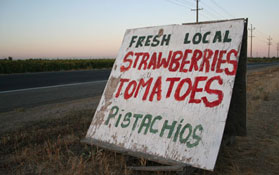
Most of the 95 strawberry farm stands in and around the Sacramento region are owned and operated by Mien and Hmong refugees from Laos, a small country in Southeast Asia that neighbors Vietnam. When the U.S. left Southeast Asia in 1975, hundreds of thousands of Hmong and Mien fled to the U.S. Most of the refugees were farmers in Laos and turned to farming in the U.S. Most growers lease small plots of land and grow strawberries for sale. A group of University of California researchers received a USDA grant to work with these refugee farmers. It became apparent that fungicide use is a critical element in improving the economic viability of the refugee farmers.

“Sacramento County Southeast Asian strawberry growers are very limited-resource growers who sell almost strictly at their roadside stands. UC Cooperative Extension has been working with these growers for 14 years and holding an annual meeting every March. This year’s meeting was held on March 24, 2010, and was supported by the California Strawberry Commission… A total of 52 growers attended the meeting, including several from nearby counties. In 2009-10, we received funding from the USDA to work with Sacramento County growers on food safety education, pest and nutrient management education, variety trials and market expansion.

Two of the most challenging and consistent pest problems facing Southeast Asian strawberry growers are spider mites and fruit rot… Fungicides are rarely used, and botrytis fruit rot caused by pre-Mother’s Day 2009 rains decimated all growers’ crops just before the busiest time of year. A leading grower did spray fungicide and estimated that he saved 50% of his crop.

Four treatments were compared to evaluate their effectiveness in reducing fruit rot, as well as their effects on yield.

The amount of rot per plant in the tunnel and fungicide treatments was significantly less than that of the untreated control.”

Author: Ingels, C.
Affiliation: UC Cooperative Extension
Title: Spider mite and botrytis rot trials
Source: California Strawberry Commission Annual Production Research Report. 2009-2010 Research Projects. Pgs. 99-103