To Increase Income and Competiveness, Public Policy Should Educate African Maize Farmers About the Benefits of Using Herbicides

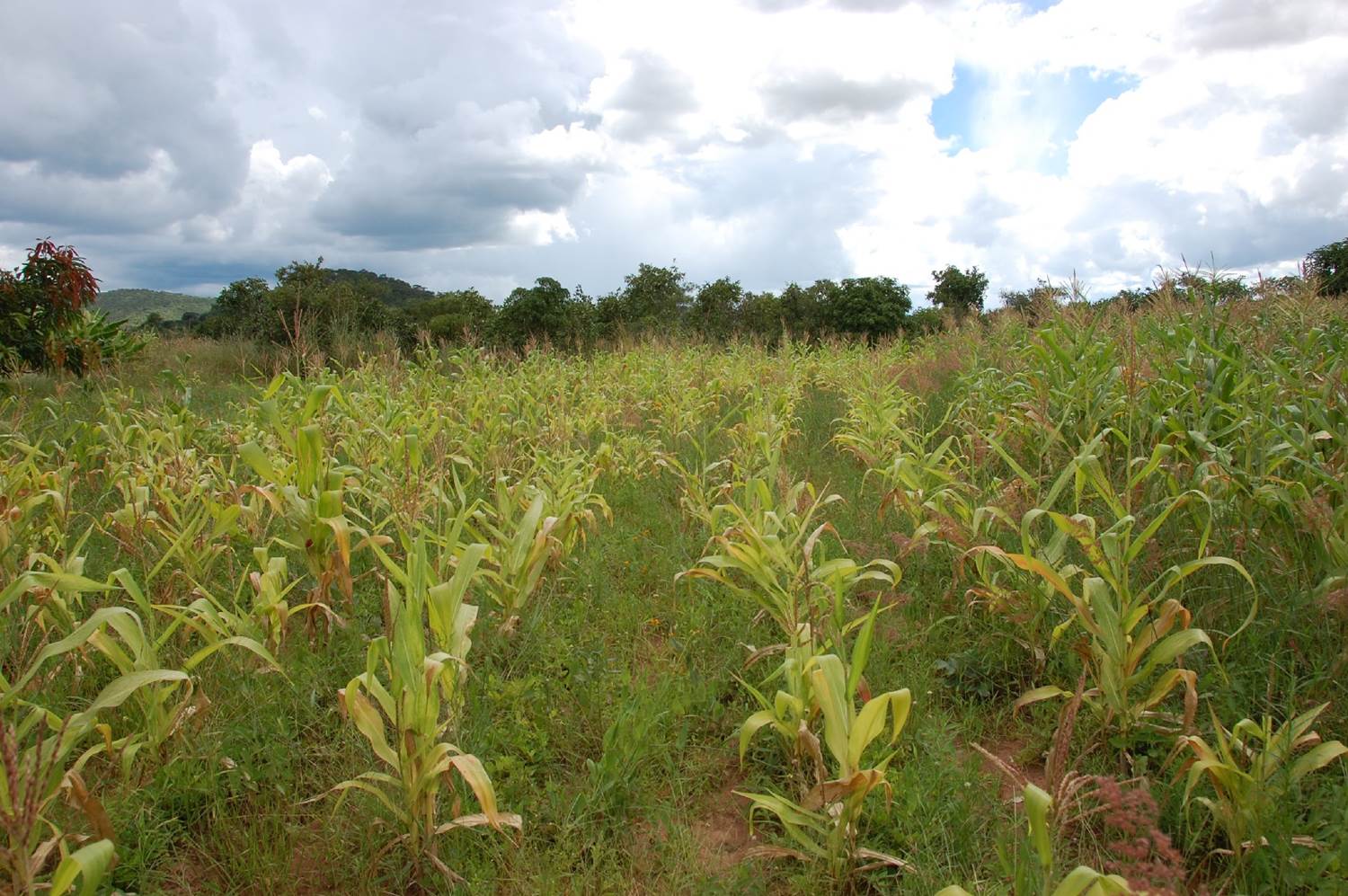
Weedy Maize Field: Africa

Weedy Maize Field: Africa

Maize consumption is a major source of calories for millions of people in Sub-Saharan Africa. Within the next few decades, the majority of people in Sub-Saharan Africa will be living in cities. Countries in eastern and southern Africa are increasing imports of staple foods, including maize. In order to be competitive, African farmers need to reduce the cost of producing a unit of maize. Herbicide adoption would greatly reduce costs of growing maize and lead to greater yields and farmer income and competiveness.

“Rural smallholder production remains highly labor-intensive. On average, family labor accounts for 62% of the total cost of maize production in Zambia’s small- and medium-scale farm sector. Promoting the identification and adoption of practices and technologies that save labor and/or identifying labor-productivity-enhancing technologies through research and development will therefore help to make Zambian maize more competitive and allow farmers to maintain profitability even at lower producer prices.

Although only 3% of fields had herbicides applied, regression results suggest the benefits of its use are quite high. All else equal, applying herbicides increases gross margin between ZMK 363,700 to ZMK 376,300 per hectare planted… The magnitude of this effect is fairly large compared to the national average margin of ZMK 1,108,542 (in other words, at the mean, herbicide use would increase gross margins by roughly a third). …these results indicate that public policy measure should be considered to educate farmers about the benefits of herbicide application, as its contribution to smallholder income growth and regional competitiveness may be comparable to and highly synergistic with increased fertilizer use.”

Authors: Burke, W. J., et al.
Affiliation: Zambia Food Security Research Project (FSRP)
Title: The cost of maize production by smallholder farmers in Zambia
Source: Food Security Research Project. Working Paper 50. March 2011. Available at: http://www.aec.msu.edu/agecon/fs2/zambia/index.htm 
Organic Cocoa Growers Likely to Switch to Conventional Production if Financing of Inputs is Made Available

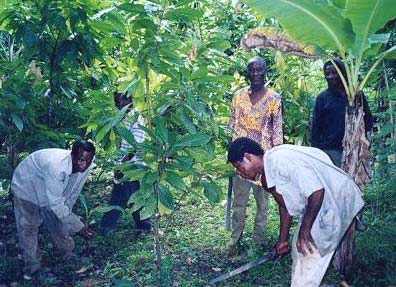
Weedy Cocoa: Ghana

Weeding Cocoa: Ghana

There are very few certified organic cocoa growers in Africa. The risks of trying to grow an organic crop are great. Many of these growers choose to grow organically because they lack financial resources to purchase inputs including pesticides. With financing of inputs, many of the current organic growers are likely to switch to use of conventional methods with pesticides due to greater yields, income and less risk.

“…the total market share of organically grown cocoa is still relatively very small and accounted for less than 0.5% of the total production in 2002 to 2005.

For producers who cannot afford inorganic inputs and who currently grow organic cocoa, there is a large amount of risk (both in price and in yield) involved with an estimated 30% lower yield compared with conventional (inorganic) production.

The obvious challenge for producers to produce conventionally is to obtain credit up front to purchase inorganic inputs. Given the advent of organizations like the Cocoa Abrabopa Association (CAA) established in 1998 in Ghana, credit is becoming more accessible to producers.

The current organic producers, who are constrained to do so because of a lack of microfinance opportunities to buy conventional inputs (fertilizer, fungicide, etc.), would probably switch to conventional if financing for said inputs became available, say through a microfinance program. Thus, an unintended impact of a microfinance program might be to lead to lower levels of current organic production.”

Authors: Mahrizal, L., et al.
Affiliations: Department of Agricultural Economics and Agribusiness, University of Arkansas
Title: Necessary price premiums to incentivize Ghanaian organic cocoa production: a phased, orchard management approach
Source: HortScience 47(11)1617-1624. 2012.

California Alfalfa Production Would be One Million Tons Lower with Conversion to Organic Practices

Alfalfa Weevil on Damaged Leaf

Alfalfa Weevil on Damaged Leaf

California is the #1 dairy state in the U.S. and one million acres of alfalfa are grown in the state. Alfalfa growers use herbicides to control weeds and insecticides to control key pests-the Egyptian and alfalfa weevils. Organic alfalfa growers do not have effective methods of controlling weeds and insect pests and they incur yield losses – particularly by harvesting early to avoid damage. A recent economic analysis from the University of California estimated that organic production of alfalfa is one ton less per acre which would mean a loss of one million tons of alfalfa if the entire state converted to organic practices.

“The Egyptian and alfalfa weevils are the most serious pests of alfalfa, causing yield and quality losses to the first harvest in late winter/early spring.

Most organic growers rely on early harvest to minimize weevil damage, but yields will be reduced.

The risks associated with the production of organic alfalfa hay should not be minimized. Weather and other risks are a continual concern for conventional growers, but organic growers face additional risks such as pest outbreaks that cannot be adequately controlled with organic methods.

Average annual yields in California range from 5.0 to 10 tons per acre with three to ten cuttings depending on location and alfalfa variety. Eight tons per acre over seven cuttings per year is common in the Central Valley. The crop in this study is assumed to yield 7.0 tons of hay per acre because yields of organic alfalfa are often slightly lower than conventional due to only partial control of many pests and weeds and the difficulty meeting the nutritional needs of alfalfa using solely organic sources.”

Authors: Rachael F. Long, et al.
Affiliation: US Cooperative Extension Farm Advisor, Yolo, Solano & Sacramento Counties
Title: Sample costs to establish and produce organic alfalfa hay California 2013
Source: University of California Cooperative Extension. 2013.

California Avocado Production Would be 82 million Pounds Lower with Conversion to Organic Practices

New Orchard Weeds

New Orchard Weeds

California farmers produce 550 million pounds of avocados annually. 8% of the avocado acres are managed with organic production practices. A recent economic analysis by the University of California shows why so few avocado acres are organic. Even though organic avocados receive a price premium, lower yields (15% lower) means lower profits than avocados grown with chemical inputs. The 15% lower yields would mean a loss of 82 million pounds of avocados if all the California avocado growers switched to organic practices. Weeds are the biggest problem for organic avocado growers.

“Profitability estimate of organic avocados in these counties is lower than avocados produced conventionally. Though organic avocados are considered to receive $0.20 more per pound than conventional avocados, organic avocado production shows lower yield than the conventional production.

Based on our discussions with growers and the UCCE farm advisor, organic yield is considered lower than the conventional production. In this study, organic avocado yield is estimated at 15% lower than the conventional yield.”

Author: Etaferahu Takele, et al.
Affiliation: Area Farm Advisor, Agricultural Economics/Farm Management, University of California Cooperative Extension (UCCE) Southern California
Title: Avocado sample establishment and production costs and profitability analysis san diego and riverside counties, 2011 organic production practices
Source: University of California Cooperative Extension. 2013.

Washington Post Reporter Writes about Benefits of Fungicides

Potato Late Blight

Potato Late Blight

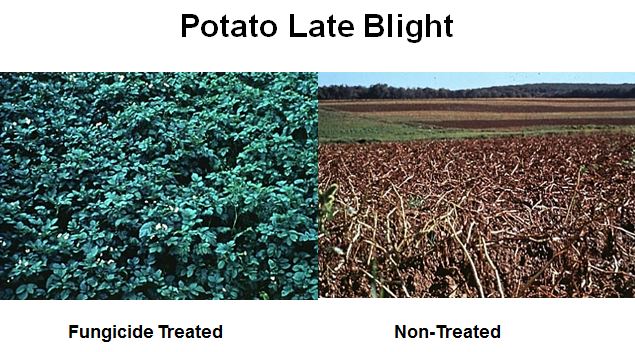
The Washington Post is not known for publishing articles describing the benefits of pesticide use. However, in a recent article about the development of a biotech potato in Ireland, a Post reporter described the current use of fungicides to control the late blight fungus. In the 1840s the Irish peasant population depended almost entirely on the potato for their diets. The late blight fungus destroyed the Irish potato crop in 1845 and 1846 and a million people died. Today, the fungus is well-controlled with regular fungicide spraying, a point made by the Post reporter…..

“The disease has become even more damaging in the past five years with the arrival of new, highly aggressive strains. Unchecked, blight can destroy entire crops in just days.

From the end of May until harvest, farmers spray fungicides every seven to 14 days, depending on the weather.

Without the sprays, the potato fields of Ireland would echo the destruction that began in 1845, when the blight took hold in Flanders and moved like wildfire to the British Isles.

More than a million died of starvation and disease, and as many as another 2 million fled to Britain, North America and other lands.”

Author: Adrian Higgins
Affiliation: Reporter
Title: Modified tuber is no small potato in Ireland
Source: The Washington Post, March 17th 2013

Herbicide Use in Finland has Increased Significantly to Protect the North Sea

Herbicide sales: Finland

Herbicide sales: Finland

In 2001, herbicide use began to increase in Finland largely due to government policies subsidizing growers to no longer plow fields for weed control. Finland is a signatory to the North Sea Treaty which includes a goal of reducing nutrients into the North Sea by half. Research showed that a considerable amount of phosphorus moves into waterways with eroded soils from fields that are plowed in the autumn. Thus, growers now are using herbicides to control weeds without plowing in order to keep phosphorus out of the North Sea.

“Our weed survey represented part of a follow-up project on the impacts of agri-environment policy in Finland. For instance, reduced tillage has been one of the subsidized measures primarily implemented to reduce nutrient leaching. Spring cereals, 1.1 million hectares in total, covering 50-55% of arable land, dominate crop production in Finland. In the 1990s ploughing was still the standard tillage practice in spring cereal fields, while the latest statistics show that only approximately half of the cultivated cereal field area is currently ploughed. Ploughing has been replaced with reduced tillage methods (29%) or direct drilling (17%). At the same time, the sales of glyphosate have more than doubled within a decade in Finland.

Increased use of glyphosate in Finland is notable; in 1999, the annual sales of glyphosate products were sufficient to treat about 13% of arable land under cultivation or fallow, while the same figure had increased to 37% in 2010.”

Author(s): Salonen, J., et al.
Affiliation: MTT Agrifood Research Finland, Plant Production Research, Jokionen, Finland
Title: Impact of changed cropping practices on weed occurrence in spring cereals in Finland – a comparison of surveys in 1997-1999 and 2007-2009.
Source: Weed Research. 53:110-120. 2012.

Global Warming Likely to Result in Increased Insecticide Sprays in the Northeast

# of Insecticide Sprays for Sweet Corn (Today)

# of Insecticide Sprays for Sweet Corn (Today)

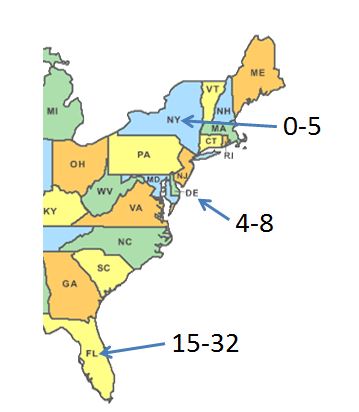
The U.S. is likely to warm substantially over the next 40 years. Along the eastern seaboard, average temperatures will increase in a northward direction. Future temperatures in New York State will be similar to current temperatures in the Carolinas. Increased temperatures and earlier onset of the growing season will reduce the winter mortality of insects, increase the rate of insect growth and increase the number of generations during the crop season. In response, insecticide applications are likely to increase in the northeast-a point recently made in a major climate change report from USDA.

“A warming trend is likely to lead to increased pesticide use in the Northeast due to earlier arrival of migratory insects, higher winter-time survival of insects that currently are only marginally adapted to the region, and more generations of insects within a single season.

With more pests shifting northward, generation times decreasing, and abundances increasing in the future, management costs are expected to increase due to more frequent application of pesticides. For example, pesticide applications to control lepidopteran pests (e.g., moths) on sweet corn decrease with increase in latitude from 15 to 32 times per year in Florida, four to eight times per year in Delaware, and zero to five times per year in New York. “

Author(s): Walthall, C.L., et al.
Affiliation: USDA
Title: Climate change and agriculture in the United States: effects and adaptation
Source: USDA, February 2013. Available at: http://www.usda.gov/oce/climate_change/effects.htm

Nobody Wants an Orange with a Worm Inside

Med Fly

Med Fly

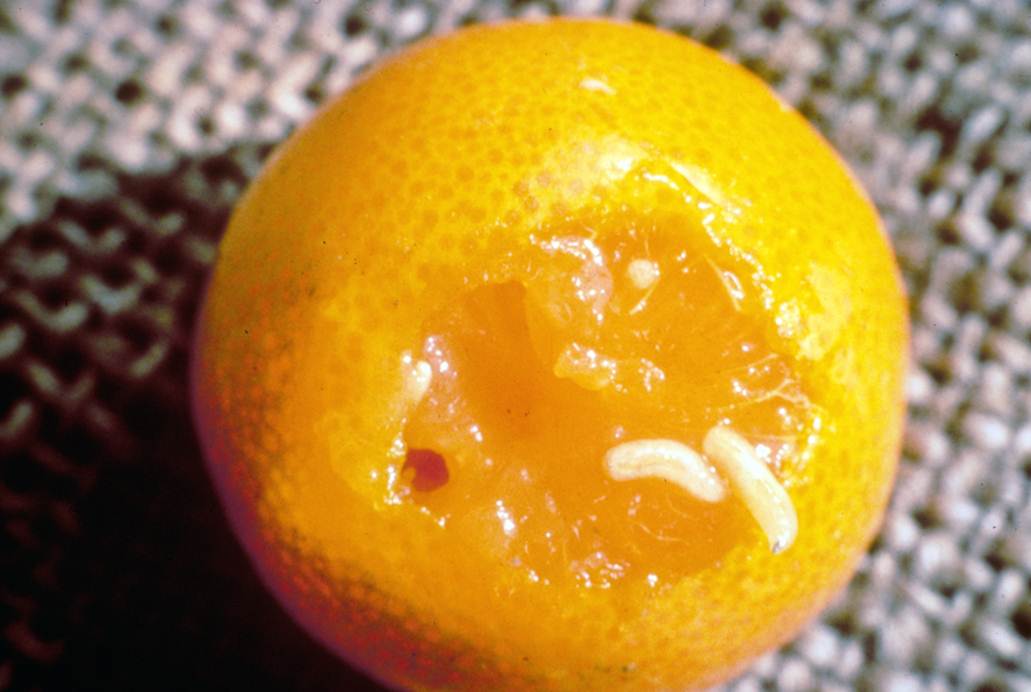
Medfly females lay their eggs inside many different fruit and vegetable crops, including oranges. When the eggs hatch, small Medfly worms begin eating inside the fruit. In order to keep Spain’s oranges free from these worms, growers have to spray.

“The Mediterranean fruit fly is one of the most destructive pests of fruit in the world, attacking >250 species of fruits and vegetables. In Spain, this fly is considered one of the most economically damaging pests of citrus orchards. Direct losses result from the oviposition in fruits, larval activity, and eventual infection by fungi. In addition, quarantine measures are required for exportation to fly-free areas.”

(2)”The Mediterranean fruit fly is one of the most serious pests affecting cultivated plants in the world… Its life strategy includes changes of host species throughout the year, because larvae develop inside fruits only when they are mature.
Eastern Spain has a heterogeneous fruit growing area which extends all along the coast of Iberian Peninsula, from north to south… The most important damage to citrus fruits is produced between September and November, when satsuma and clementine mandarins reach maturity and suffer heavy attacks. Traditional control methods for reducing medfly populations and damage in citrus groves rely on the use of chemical sprays applied to fruits near harvest.”

(1)
Authors: C. Magaña, P. Hernández-Crespo, F. Ortego and P. Castañera
Affiliation: Departamento de Biología de Plantas, Centro de Investigaciones Biológicas, CSIC, Madrid, Spain
Title: Resistance to malathion in field populations of Ceratitis capitata.
Publication: Journal of Economic Entomology. 2007. 100(6):1836-1843.

(2)
Authors: Martinez-Ferrer M.T., et al.
Affiliation: IRTA Amposta. Ctra. de Balada, km. 1. 43870 Amposta (Tarragona). Spain.
Title: Seasonal and annual trends in field populations of Mediterranean fruit fly, Ceratitis capitata, in Mediterranean citrus groves: comparison of two geographic areas in eastern Spain.
Publication: Spanish Journal of Agricultural Research. 2010. 8(3):757-765.

China Warns of Famine Without Pesticides

Over the past several decades, China has become self-sufficient in basic foods such as wheat, maize, and rice. In addition, Chinese production of many fruit and vegetable crops has soared. The widespread use of pesticides has had a key role in this vast expansion in food production and without their use…

“China would ‘undergo famine if pesticides were not used’. The warning has come in a recent Ministry of Agriculture document entitled ‘pesticide residues in agricultural products and related safety issues’, reports the national newspaper, the AgriGoods Herald.”

“China has more than 1,700 types of plant disease and insect pests, with major pest outbreaks occurring on over 400 million hectares annually. Laboratory findings released by Chinese agrochemical company Beijing Yoloo Pesticide showed that rice production would be reduced by more than two-thirds if pesticides were not used, and wheat production would be halved.”

Authors: Agrow staff writer
Headline: China warns of famine without pesticides.
Publication: Agrow. 2012. No. 642, June 20.

UK Consumers Would Need to Pay 40% More for Food…

Most cropland in the UK is treated with pesticides to prevent diseases, insects and weeds from lowering crop yields. Without the use of pesticides, crop production would fall significantly resulting in higher prices for consumers. A 2010 study estimated the impact of the lower food production on consumer costs…

“This report estimates that without plant protection products, food security in the UK, and by implication in the EU and in most countries across the world, would be severely reduced and the cost of food would rise substantially. In the UK the cost of food would rise by about 40 per cent, increasing food and drink expenditures by some £70 billion per year and raised to the level of the EU this implies additional food expenditures of some £750 billion.”

Author: Séan Rickard
Publication: The Value of Crop Protection: An Assessment of the Full Benefits for the Food Chain and Living Standards. 2010 Report from the Crop Protection Association.