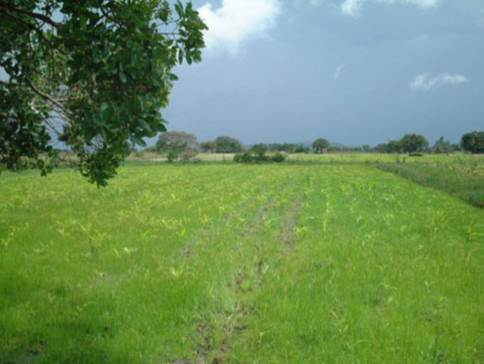
Herbicides are Widely-Used by Maize Farmers in Ghana with Great Benefits

Weedy Maize Field in Africa

Weedy Maize Field in Africa

Ghana leads the way in terms of herbicide use by maize farmers in Africa. Farmers applying herbicides are enjoying higher maize yields, less need for backbreaking handweeding, and lower costs of weeding.

“Herbicide is widely used among maize farmers in Ghana. Seventy-three percent of maize area was applied with herbicide either before or after planting.

Figures in Ghana are far higher than earlier estimates for Africa south of the Sahara: 3 percent adoption among maize smallholders in Africa south of the Sahara.

Plots treated with herbicide have a significantly higher average yield than those without herbicide, with the greatest difference in the Northern Savannah zone. In plots with fertilizer and certified seed, those with herbicide have 1.4 tons/hectare more yield than those without herbicide in the Northern Savannah zone.

Given serious labor constraints and the relatively cheaper herbicide formulations available, herbicide use has been popular across all regions. Comparison of weeding costs suggests that whereas farmers using herbicide spend 359 cedi/hectare total in purchasing herbicide (9 liters at 8 cedi/liter) and an additional 41 person-days for manual weeding, farmers not using herbicide spend 511 cedi/hectare for manual weeding for 73 person-days on average. It is apparent from this calculation that it is cheaper to purchase herbicide than to hire labor or use family labor for weeding.”

Authors: Ragasa, C., et al.
Affiliation: International Food Policy Research Institute.
Title: Patterns of Adoption of Improved Maize Technologies in Ghana.
Source: IFPRI. July, 2013. Working Paper 36. Available at: http://www.ifpri.org/publication/patterns-adoption-improved-maize-technologies-ghana

No Small Wonder Why Farmers Use Herbicides

Soybean Growth With and Without Herbicide Treatments

Soybean Growth With and Without Herbicide Treatments

Farmers all over the world use herbicides to prevent weeds from taking over their fields. A large number of non-chemical methods of weed control have been tested and are available. However, farmers prefer herbicides. A prominent weed scientist cites the reasons why…..

“In comparison with herbicides, non-chemical methods of weed control are often: less effective, more unpredictable, more expensive, have labour/timeliness constraints, may not reduce the requirement for herbicides, may provide little or no visual evidence of success, may have adverse environmental implications and are often more complex to manage.”

Author: Moss, S. R.
Affiliation: Plant and Invertebrate Ecology Department, Rothamsted Research, Hertfordshire, UK.
Title: Weed research: is it delivering what it should?
Source: Weed Research. 2008. 48:389-393.

Horses and Cows Prefer Weed-Free Alfalfa

05

Alfalfa is the perfect food for horses and cows. High in protein, minerals and nutrients, alfalfa is essential for a balanced diet. When alfalfa is harvested mechanically, any weeds in the field are also harvested and contaminate the alfalfa bales, which lowers the value of the alfalfa bale for animal feed. As a result, alfalfa growers, particularly in California, the number one alfalfa state, use herbicides to produce high-quality weed-free alfalfa bales.

“The selling price for clean high quality alfalfa remains as much an incentive today as ever. It is estimated that greater than 75% of acreage is treated for weeds on an annual basis. The market financially rewards weed free high quality forage with higher prices. In 2011, the price for high test >56 TDN weed free hay topped $280 per ton to the grower, as compared to lower quality non test hay with few weeds approximately $160 per ton. Extremely weedy or rain damage hay was priced even lower. Weed free fields remain an economic incentive for best prices and longer lasting stands. When weeds take over, it weakens alfalfa plants, increases incidence of diseases, insects, and lowers hay quality and a significant loss of income. Maintaining good weed control practices is necessary to sustain an economically viable and healthy producing crop of alfalfa for many years.”

Author: Canevari, M.
Affiliation: UCCE Advisor.
Title: Advances in weed management, is it getting better or worse?
Source: 2011 41st California Alfalfa Symposium. Proceedings available at: http://alfalfa.ucdavis.edu/+symposium/proceedings/2011/11-102.pdf

Carbon Footprint of Organic Weed Control Much Higher than Use of Herbicides

Cultivating Grape Vineyard

Cultivating Grape Vineyard

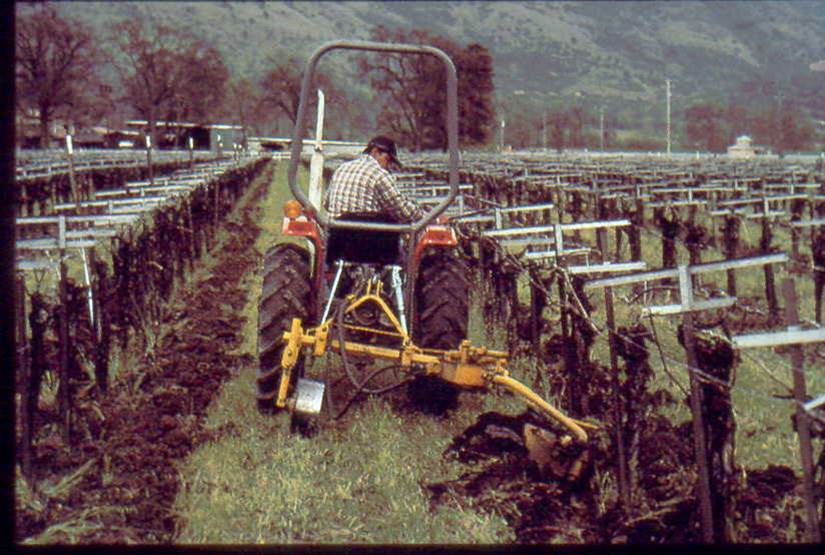
Farmers have a choice for managing weeds. They can apply herbicides or use cultivation to remove weeds. It takes 2-3 cultivation trips to equal the effectiveness of a single herbicide treatment. As a result, organic farmers, who cannot use herbicides, release more carbon to the atmosphere than farmers who use herbicides.

“When it comes to farming, Monterey County winegrape grower Steve McIntyre believes in using the best management practices available. Some are conventional and some are organic. Bottom line: they’re sustainable.

McIntyre, whose office is in Soledad, farms about 800 acres of winegrapes in the county, which is fast becoming one of the state’s premier winegrape growing regions.

“To me, farming organically or biodynamically is like farming in a box. There are too many rules if you don’t have the opportunity to use the latest and best science to lower your carbon footprint.”

McIntyre points to weed control to illustrate his point of where organic farming has its limitations.

“When you cultivate the weeds in the vineyard, new weeds germinate and come roaring back fairly quickly, as opposed to using a good herbicide, which results in the weeds coming back much slower.

“If you cultivate you have to make two or three trips through the vineyard, as opposed to one trip with a sprayer,” he continued. So with conventional farming, you have less equipment, less air pollution, fewer natural resources to build the equipment and power the equipment.

“If you look at weed control with a carbon calculator, there is a huge difference,” he said. “If you look at organic weed control, the carbon footprint for that is two or three times greater than the carbon footprint of a good herbicide.”

Author: Adler, S.
Affiliation: Reporter.
Title: Winegrape grower approaches farming like evolving science.
Source: Ag Alert. April 15, 2009.

Jimmy Carter Was Right: Herbicides Have Improved Peanut Yields

01

In a 1977 Question-and-Answer Session with Department of Agriculture employees, President Carter recalled the tremendous growth in peanut yields on his Georgia farm which resulted when they stopped plowing. He credited research that showed that more plowing meant less yield. It turns out that he was right: the plowing spread disease that lowered peanut yield. Herbicides made the reduction in plowing possible and improvements in herbicides have continued to benefit peanut farmers.

“Improvements in weed management are a contributing factor to advancements in peanut yield. …Cultivation was traditionally an integral component in peanut weed management. New herbicide developments improved overall weed control and cultivation is no longer needed. This directly addresses the susceptibility of peanut to infection by soil-inhabiting fungi. There is a direct correlation between incidence of stem rot and displaced soil thrown on peanut plants from cultivation. Not needing to cultivate lessens disease epidemics and protects peanut yield. In 2013, 21 herbicide active ingredients were registered in the U.S. for weed control in peanut. In contrast, there were 12 herbicide active ingredients registered for use on peanut in 1980. Recently developed herbicides are more consistent, versatile, and have a broader-spectrum than earlier herbicides. …There were no selective postemergence herbicides registered in 1980 that controlled emerged grasses. In  2013, there were three postemergence herbicides registered for use on peanut to control annual and perennial grasses…. Registrations of these herbicides were major weed control milestones in peanut production and have largely eliminated yield losses from grasses that escaped earlier control efforts.”

Author: Johnson, W. C.
Affiliation: USDA-ARS, Tifton GA
Title: Yield Advances in Peanut – Weed Control Effects
Source: 2013 Proceedings of the American Peanut Research and Education Society, Inc. http://apresinc.com/wp-content/uploads/2014/02/Volume-45-Proceedings_2013.pdf

Sustaining Water Resources in Asia Means Rice Growers Must Use Herbicides

Rice Fields

Rice Fields

Flooding rice fields prevents certain weed species from developing and rice fields in Asia are major users of water resources. However, a looming water shortage in Asia means that rice growers will have to cut back on water use. Herbicides are being tested as a replacement for flooding for weed control in rice fields.

Currently, sustainability of water resources is of major concern, and declining water availability threatens the sustainability of traditional flood-irrigated rice ecosystems. In Asia, it is predicted that 17 million ha of irrigated rice areas may have “physical water scarcity” and 22 million ha areas may be subject to “economic water scarcity” by 2025. It is, therefore, no longer feasible to flood rice fields for better crop establishment and weed control.

“Aerobic rice, growing rice in non-saturated and non-puddled aerobic soil, is a promising water-wise technique of rice cultivation under the context of ever-mounting water scarcity. But weed menace continues to be a severe problem in aerobic rice systems resulting in up to 90% reduction in grain yield. When direct seeded, rice seeds germinate simultaneously with weed seeds without any “head start” over germinating weed seeds, and the initial flush of weeds is not suppressed by flooding. …Therefore, effective weed management in aerobic rice has become a serious challenge for researchers and farmers.

Eight commercial herbicide products were applied singly or as tank-mix or in sequence to evaluate their efficacy, rice selectivity and cost-effectiveness in aerobic rice. …Most of the herbicide treatments provided excellent weed control, and produced much higher net benefit than weedy or weed-free check. …Among the herbicide treatments, sequential application of Cyhalofop-butyl + Bensulfuron at early growth stage followed by Bentazon/MCPA at mid growth stage provided the highest weed control efficiency, productivity and net benefit. …Since manual weeding was not economic, herbicide rotation using the above chemicals may be recommended for effective weed management in aerobic rice.

In the present study, cost of different herbicide treatments ranged from RM 167 to RM 469 ha-1 depending upon the price and rate of application, while manual weed control required a high investment of RM 2500 ha-1 for season-long weed-free checks.

In our study, the net benefit of the herbicidal weed control was two to three times higher than that obtained from manual weed control. Hence, manual weeding is less remunerative than herbicidal control, and keeping aerobic rice field weed-free manually throughout the season is a losing concern, confirmed by many others.”

Authors: Anwar, P., et al.
Affiliation: Institute of Tropical Agriculture, Universiti Putra Malaysia
Title: Efficacy, phytotoxicity and economics of different herbicides in aerobic rice.
Source: Acta Agriculturae Scandinavica Section B – Soil and Plant Science. 2012. 62:604-615.

Chewing Gum Will Lose Its Flavor Without Herbicide Use In Mint Fields

Weedy Mint Field (Foreground)

Weedy Mint Field (Foreground)

Peppermint and spearmint are grown in the U.S. commercially on close to 100,000 acres with peppermint comprising 70% of the acreage. Mint crops are grown to extract the oil produced in glands on the plant’s leaves. The U.S. produces about 9 million pounds of mint oil which is used to flavor chewing gum, toothpaste, pharmaceuticals and liqueurs. One drum of mint oil weighing 400 pounds can flavor more than 5 million sticks of chewing gum or 400,000 tubes of toothpaste. Mint crops are harvested mechanically and any weeds in the field are harvested along with the mint. If the weeds are processed along with the mint, the mint oil loses its flavor; as a result, mint growers use herbicides to prevent weeds from contaminating the mint oil with off-flavors.

“Mint oil yield is reduced when weeds compete with mint for light, nutrients, and water. Mint oil quality is reduced when weeds impart off-flavors and odors to mint oil during distillation.

The demand for mint oil is based on its desirable flavor and odor. Mint oil is used to flavor medicines, toothpaste, candy, and chewing gum. If mint oil is contaminated with undesirable flavors or odors then its quality is downgraded.

Unfortunately, many weeds harvested with mint hay impart off-flavors to mint oil during distillation. This results in a reduction of mint oil quality and price.

In one study, the oil from hay containing 5% pigweed was not marketable.

3.2 Horseweed plants per square yard would make the mint oil unmarketable.

Mint oil severely contaminated with objectionable weed odors is not marketable and is therefore valueless. Infestations of horseweed, pigweed, western goldenrod, common lambsquarters, and prickly lettuce at 7 or more plants per square yard are likely to make mint oil unmarketable.”

Author: Heap, I.
Affiliation: Dept. of Crop and Soil Science, Oregon State University.
Title: The Effect of Weeds on Mint Oil Yield and Quality. 1993.

Herbicides Improve Dove Hunting in the Southeast

Doves over a sunflower field

Doves over a sunflower field

The mourning dove is one of the most numerous, widely hunted, and economically valuable game birds in Mississippi and the Southeast. For decades, landowners and wildlife managers have planted fields in agronomic crops to attract doves for sport hunting—a practice that led to these types of fields being known more simply as “dove fields.”

“…dove fields traditionally have been planted in one or more grain crops such as corn, sorghum, millets, wheat, and sunflowers. Although the concept of planting sunflowers to attract doves is nothing new, their use as a dove field crop has been limited over the years. However, when environmental conditions permit, a well-managed stand of sunflowers can be one of the most productive dove fields in the Southeast.

Weed control is a key component of managing sunflowers for dove fields. Doves prefer to feed in areas of clean, open ground. An effective weed control program will render fields more attractive to doves.

Herbicide applications are the most practical and cost-effective means of weed control in sunflower fields. For many years, only a few herbicides were labeled and marketed for use with sunflowers. However, because sunflower production is on the rise, more herbicides are labeled for sunflowers than ever before. Weed control via herbicide applications is essential for maximizing sunflower seed yields.”

Author: Nelms, K., et al.
Affiliation: Natural Resources Conservation Service & Mississippi State University Extension Service.
Title: Growing and Managing Sunflowers for Dove Fields in the Southeast.
Source: Mississippi State University Extension Service Publication 2725. 2012.

Herbicides Prevent Blindness in Sheep

Sheep - NZ Pasture

Sheep – New Zealand Pasture

Eye Damage From Barley Grass

Eye Damage From Barley Grass

New Zealand is well-known for its lamb. Sheep and lambs feed in pastures. Barley grass is a common problematic weed in New Zealand pastures. The barbed spikes on barley grass seed can penetrate the eyes of sheep and can cause painful lesions, infections and blindness. Weight loss in lambs is attributed to their reluctance to feed in pastures infected with barley grass. Herbicides are used to remove the barley grass and early research in New Zealand demonstrated the benefits.

“An area of uniform barley grass (Hordeum murinum) infestation, in Waikato, was divided into twenty-four 0.2ha paddocks. Three chemicals… were used to control barley grass and the paddocks were grazed by lambs throughout the summer at two stocking rates.

All the chemicals reduced the barley grass content of the sward by over 96%, with pronamide giving 99% reduction, and significantly reduced Poa spp.

During the first month of the grazing period, the lambs on all chemical treatments at both stocking rates gained weight at approximately twice the rate of those on the untreated paddocks. …The control lambs (untreated paddocks) stopped gaining weight in mid-January and started to lose weight at the higher stocking rate.

The sudden growth check among the control lambs in mid-January coincided with maximum seed shed of the barley grass and is almost certainly attributable to the physical damage caused by the barley grass seed, especially to the eyes.

Initially the eye damage recorded was barley grass seed in the eyes but, at later stages, conjunctivitis and keratitis resulting from seed puncture and abrasion of the cornea.

During late January and throughout February, many of the control lambs were completely blind and were a pitiful sight. …this paper gives a clear indication of the benefits to stock and pasture that can arise from herbicide treatment.”

Authors: Hartley, M. J., and G. C. Atkinson.
Affiliation: Ruakura Agricultural Research Centre, Hamilton.
Title: Effect of chemical removal of barley grass on lamb growth rates.
Source: Proceedings of the New Zealand Plant Protection Society. 1972.

USDA Research Shows That Soil Erosion is Higher in Organic Systems

Time to replace the plow?

Cultivation: ARS-Beltsville

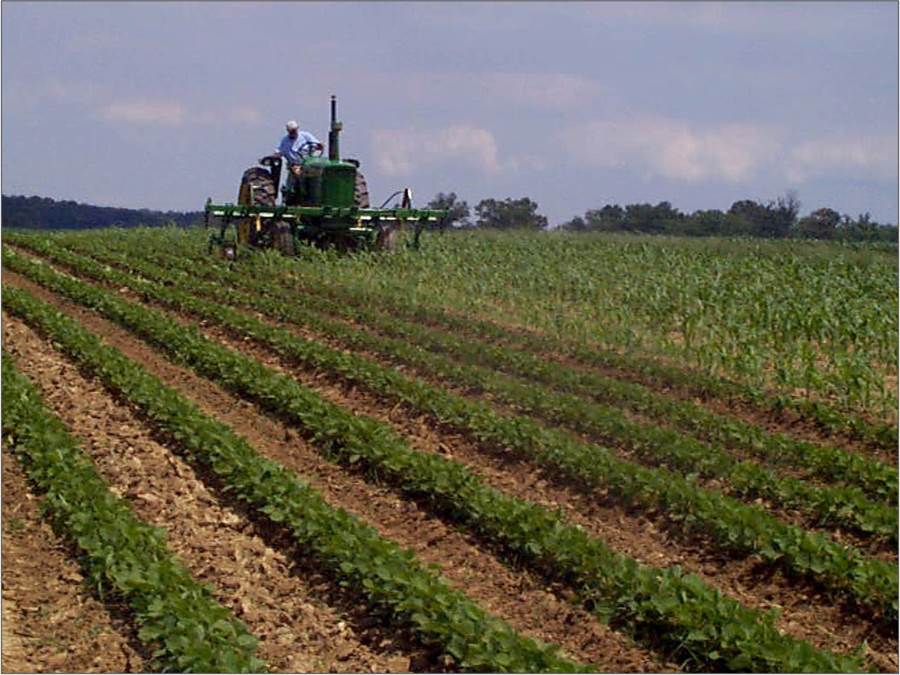
In 1996, The Farming Systems Project was established at the USDA ARS Beltsville Agricultural Research Center in Beltsville, Maryland to compare the performance of conventional and organic production systems. In the conventional systems, herbicides are used to kill weeds while in the organic systems, up to seven tillage operations are used to kill weeds. Tillage equipment loosens the soil and leaves it bare and susceptible to erosion when it rains. The USDA researchers estimated that the organic plots lost five times more eroded soil than the plots that were not tilled and where herbicides were used. A point made in a recent highlight article…..

“Tillage is used to bury the previous year’s crop residue and destroy weeds. But in no-till farming, herbicide removes the weeds and the new seed is sown directly into the stubble of the last crop.

No-till systems also win hands-down when it comes to hanging on to soils. An 11-year farming experiment by the U.S. Department of Agriculture in Beltsville, Maryland, compared crops grown in three ways: conventional tillage, organic methods, or no-till. Compared to the conventionally tilled plot, the organic plot was likely to hang on to 30 percent more soil. But compared to the organic plot, the no-till plot hung on to 80 percent more soil.

David Pimentel is a Cornell University entomologist who has written much about the negative environmental impacts of pesticides. Nevertheless, “I’d take chemicals over soil erosion any day,” he says.”

Author: Finkel, E.
Affiliation: Writer
Title: Is It Time to Replace the Plow?
Source: Conservation Magazine. 2008. 9[3]:32-33.