Insecticide Use is Critical to Successful Tomato Production

Insect Damage: Tomatoes

Insect Damage: Tomatoes

Insecticides are generally used on close to 100% of tomatoes grown in eastern states to prevent damage from a large number of species that would feed directly on the tomatoes- significantly lowering their value. A study of tomatoes in Virginia revealed that uncontrolled insects lowered marketable yield by 33%. Insecticide cost ($230/A) prevented losses of from $3000-$7000/A.

“Insect pest management is critical to successful tomato production in the Mid-Atlantic U.S. Important pests each year often include the tomato fruitworm (= corn earworm), thrips, stink bugs, aphids, and spider mites.  Occasional pests also include armyworms, Colorado potato beetle, hornworms, cabbage looper, and leafminers. To control this complex of pests, insecticide usage is often intense on commercial farms. For instance, in Virginia, tomato growers make an average of 7 to 10 pesticide applications per crop.

Although IPM and biological control programs have been demonstrated, insecticides continue to be the chief management tool by which damaging insect pests can be controlled immediately and economically for conventional tomato producers. Because strict quality standards for produce coupled with high production costs are unlikely to change significantly, current and future tomato pest management strategies are likely to include an insecticide component.”

Author: Thomas P. Kuhar
Affiliation: Associate Professor – Vegetable Entomology, Virginia Tech
Title: Update on insect pest management for tomatoes
Source: 2011 Proceedings 56th New Jersey Annual Vegetable Meeting. January 11-13, 2011. Available at: http://njveg.rutgers.edu/assets/pdfs/2011-56th-NJ-Annual-Vegetable-Meeting-Proceedings.pdf
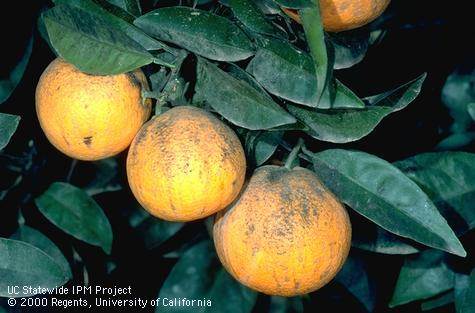
Deadly Biological Parasite of Citrus Pest Can’t Take the Heat of the San Joaquin Valley

Citricola Scale Damage

Citricola Scale Damage

Certain scale insect species feed by sucking juices from citrus trees. Each mature citricola scale produces more than 1000 eggs which hatch into crawlers that settle on the trees. A severe infestation may reduce tree vigor, kill twigs and reduce flowering and fruit set. In southern California, citricola scale is not a problem because they are parasitized by a wasp that lays its eggs in the scale bodies. The wasp eggs hatch and the tiny wasps consume the insides of the scale. However, these deadly parasites are not effective in the San Joaquin Valley where 70% of California’s oranges are grown.

“Citricola scale is a voracious pest that in high numbers can dramatically reduce yield. A typical Valencia orange tree can produce 325 oranges per tree. If there are 10 citricola scale per twig, yields can drop by 70 fruit per tree, a yield loss of more than 20 percent.

The only effective control method in the valley is insecticide treatments. The parasitic wasp that is an effective biological control in Southern California citrus does not control the pest in the valley because of the high populations of scale produced under hotter valley conditions.

Oil will control citricola scale for organic growers, but it may take two applications per season. There is a list of registered foliar and systemic compounds on the UC IPM website.”

Author: Cline, H.
Affiliation: Western Farm Press
Title: Citricola scale valley’s No. 1 citrus pest
Source: Western Farm Press. Friday, 2012-09-28. Available at: http://www.westernfarmpress.com/orchard-crops/citricola-scale-valley-s-no-1-citrus-pest

Pesticide Sprays Improve Food Safety

Cherry Fruit Fly

Cherry Fruit Fly

Plants are living, dynamic organisms that must defend themselves from bacteria, fungi and insects. Plants in nature synthesize toxic chemicals in large amounts as a primary defense against hordes of bacterial, fungal, and insect predators. Plants respond to attacks by increasing their production of self-defense chemistries. To be effective, these self-defense chemistries are often potent toxicants. The good news is that the levels of natural toxicants of food plants are very much under human control through the application of small amounts of man-made pesticides. Farmers treat crops with pesticides to reduce damage from insects and fungi. When plants do not have to fight off insects and fungi, the plants make less of the self-defense chemicals. Adding a tiny amount of synthetic pesticide reduces exposure to larger amounts of plant-produced toxic chemicals.

“An unrecognized benefit of use of crop protection chemicals is a reduced net exposure to toxicants. …crops that are stressed by competition from weeds, and from attack from infections and bugs, have increased levels of ‘natural’ pesticides. Crops protected from stress have smaller amounts of ‘natural’ pesticide. These ‘natural’ pesticides commonly are mutagenic and carcinogenic, as well as having the capability of inducing a large variety of other types of toxicities. Manufactured crop-protection chemicals are screened for mutagenicity, carcinogenicity, organ toxicity and the like, and exposure is rigorously regulated. Hence, proper use of crop-protection chemicals can cause a net reduction in toxicant exposure by reducing exposure to the potentially more hazardous and abundant ‘natural’ pesticides.”

Author: Mattsson, J. L.
Affiliation: Health and Environmental Sciences, The Dow Chemical Co.
Title: Let’s end the double standard for natural versus manufactured chemicals
Source: J Occup Health. 1996. 38:94-96.

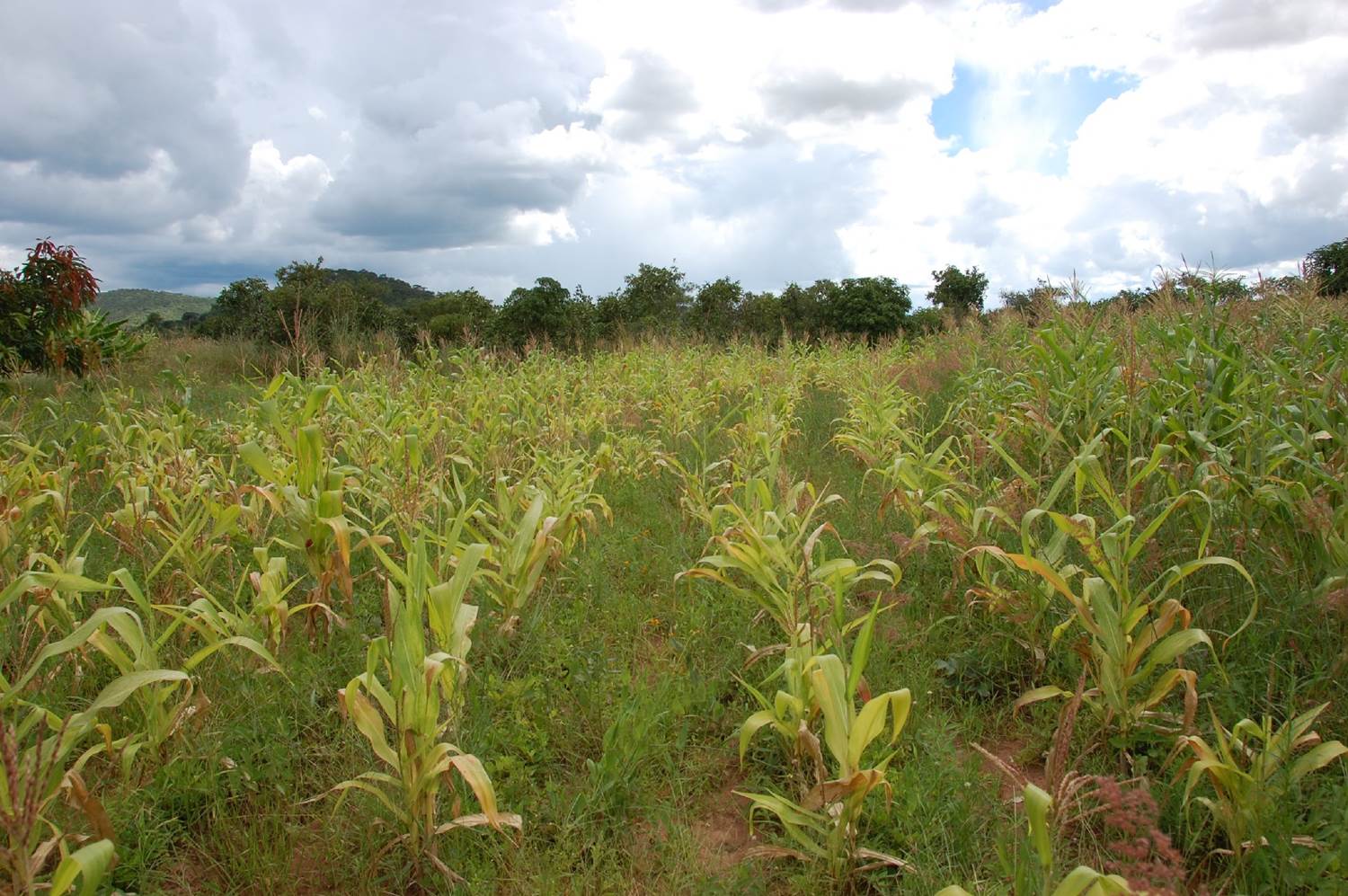
To Increase Income and Competiveness, Public Policy Should Educate African Maize Farmers About the Benefits of Using Herbicides

Weedy Maize Field: Africa

Weedy Maize Field: Africa

Maize consumption is a major source of calories for millions of people in Sub-Saharan Africa. Within the next few decades, the majority of people in Sub-Saharan Africa will be living in cities. Countries in eastern and southern Africa are increasing imports of staple foods, including maize. In order to be competitive, African farmers need to reduce the cost of producing a unit of maize. Herbicide adoption would greatly reduce costs of growing maize and lead to greater yields and farmer income and competiveness.

“Rural smallholder production remains highly labor-intensive. On average, family labor accounts for 62% of the total cost of maize production in Zambia’s small- and medium-scale farm sector. Promoting the identification and adoption of practices and technologies that save labor and/or identifying labor-productivity-enhancing technologies through research and development will therefore help to make Zambian maize more competitive and allow farmers to maintain profitability even at lower producer prices.

Although only 3% of fields had herbicides applied, regression results suggest the benefits of its use are quite high. All else equal, applying herbicides increases gross margin between ZMK 363,700 to ZMK 376,300 per hectare planted… The magnitude of this effect is fairly large compared to the national average margin of ZMK 1,108,542 (in other words, at the mean, herbicide use would increase gross margins by roughly a third). …these results indicate that public policy measure should be considered to educate farmers about the benefits of herbicide application, as its contribution to smallholder income growth and regional competitiveness may be comparable to and highly synergistic with increased fertilizer use.”

Authors: Burke, W. J., et al.
Affiliation: Zambia Food Security Research Project (FSRP)
Title: The cost of maize production by smallholder farmers in Zambia
Source: Food Security Research Project. Working Paper 50. March 2011. Available at: http://www.aec.msu.edu/agecon/fs2/zambia/index.htm 

California Alfalfa Production Would be One Million Tons Lower with Conversion to Organic Practices

Alfalfa Weevil on Damaged Leaf

Alfalfa Weevil on Damaged Leaf

California is the #1 dairy state in the U.S. and one million acres of alfalfa are grown in the state. Alfalfa growers use herbicides to control weeds and insecticides to control key pests-the Egyptian and alfalfa weevils. Organic alfalfa growers do not have effective methods of controlling weeds and insect pests and they incur yield losses – particularly by harvesting early to avoid damage. A recent economic analysis from the University of California estimated that organic production of alfalfa is one ton less per acre which would mean a loss of one million tons of alfalfa if the entire state converted to organic practices.

“The Egyptian and alfalfa weevils are the most serious pests of alfalfa, causing yield and quality losses to the first harvest in late winter/early spring.

Most organic growers rely on early harvest to minimize weevil damage, but yields will be reduced.

The risks associated with the production of organic alfalfa hay should not be minimized. Weather and other risks are a continual concern for conventional growers, but organic growers face additional risks such as pest outbreaks that cannot be adequately controlled with organic methods.

Average annual yields in California range from 5.0 to 10 tons per acre with three to ten cuttings depending on location and alfalfa variety. Eight tons per acre over seven cuttings per year is common in the Central Valley. The crop in this study is assumed to yield 7.0 tons of hay per acre because yields of organic alfalfa are often slightly lower than conventional due to only partial control of many pests and weeds and the difficulty meeting the nutritional needs of alfalfa using solely organic sources.”

Authors: Rachael F. Long, et al.
Affiliation: US Cooperative Extension Farm Advisor, Yolo, Solano & Sacramento Counties
Title: Sample costs to establish and produce organic alfalfa hay California 2013
Source: University of California Cooperative Extension. 2013.

California Avocado Production Would be 82 million Pounds Lower with Conversion to Organic Practices

New Orchard Weeds

New Orchard Weeds

California farmers produce 550 million pounds of avocados annually. 8% of the avocado acres are managed with organic production practices. A recent economic analysis by the University of California shows why so few avocado acres are organic. Even though organic avocados receive a price premium, lower yields (15% lower) means lower profits than avocados grown with chemical inputs. The 15% lower yields would mean a loss of 82 million pounds of avocados if all the California avocado growers switched to organic practices. Weeds are the biggest problem for organic avocado growers.

“Profitability estimate of organic avocados in these counties is lower than avocados produced conventionally. Though organic avocados are considered to receive $0.20 more per pound than conventional avocados, organic avocado production shows lower yield than the conventional production.

Based on our discussions with growers and the UCCE farm advisor, organic yield is considered lower than the conventional production. In this study, organic avocado yield is estimated at 15% lower than the conventional yield.”

Author: Etaferahu Takele, et al.
Affiliation: Area Farm Advisor, Agricultural Economics/Farm Management, University of California Cooperative Extension (UCCE) Southern California
Title: Avocado sample establishment and production costs and profitability analysis san diego and riverside counties, 2011 organic production practices
Source: University of California Cooperative Extension. 2013.

Herbicide Use in Finland has Increased Significantly to Protect the North Sea

Herbicide sales: Finland

Herbicide sales: Finland

In 2001, herbicide use began to increase in Finland largely due to government policies subsidizing growers to no longer plow fields for weed control. Finland is a signatory to the North Sea Treaty which includes a goal of reducing nutrients into the North Sea by half. Research showed that a considerable amount of phosphorus moves into waterways with eroded soils from fields that are plowed in the autumn. Thus, growers now are using herbicides to control weeds without plowing in order to keep phosphorus out of the North Sea.

“Our weed survey represented part of a follow-up project on the impacts of agri-environment policy in Finland. For instance, reduced tillage has been one of the subsidized measures primarily implemented to reduce nutrient leaching. Spring cereals, 1.1 million hectares in total, covering 50-55% of arable land, dominate crop production in Finland. In the 1990s ploughing was still the standard tillage practice in spring cereal fields, while the latest statistics show that only approximately half of the cultivated cereal field area is currently ploughed. Ploughing has been replaced with reduced tillage methods (29%) or direct drilling (17%). At the same time, the sales of glyphosate have more than doubled within a decade in Finland.

Increased use of glyphosate in Finland is notable; in 1999, the annual sales of glyphosate products were sufficient to treat about 13% of arable land under cultivation or fallow, while the same figure had increased to 37% in 2010.”

Author(s): Salonen, J., et al.
Affiliation: MTT Agrifood Research Finland, Plant Production Research, Jokionen, Finland
Title: Impact of changed cropping practices on weed occurrence in spring cereals in Finland – a comparison of surveys in 1997-1999 and 2007-2009.
Source: Weed Research. 53:110-120. 2012.

Global Warming Likely to Result in Increased Insecticide Sprays in the Northeast

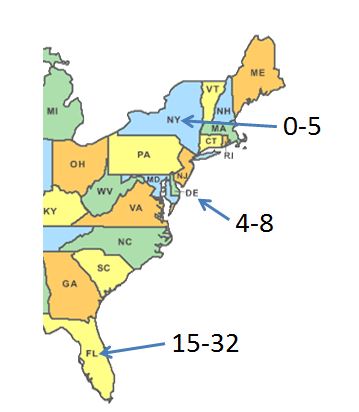
# of Insecticide Sprays for Sweet Corn (Today)

# of Insecticide Sprays for Sweet Corn (Today)

The U.S. is likely to warm substantially over the next 40 years. Along the eastern seaboard, average temperatures will increase in a northward direction. Future temperatures in New York State will be similar to current temperatures in the Carolinas. Increased temperatures and earlier onset of the growing season will reduce the winter mortality of insects, increase the rate of insect growth and increase the number of generations during the crop season. In response, insecticide applications are likely to increase in the northeast-a point recently made in a major climate change report from USDA.

“A warming trend is likely to lead to increased pesticide use in the Northeast due to earlier arrival of migratory insects, higher winter-time survival of insects that currently are only marginally adapted to the region, and more generations of insects within a single season.

With more pests shifting northward, generation times decreasing, and abundances increasing in the future, management costs are expected to increase due to more frequent application of pesticides. For example, pesticide applications to control lepidopteran pests (e.g., moths) on sweet corn decrease with increase in latitude from 15 to 32 times per year in Florida, four to eight times per year in Delaware, and zero to five times per year in New York. “

Author(s): Walthall, C.L., et al.
Affiliation: USDA
Title: Climate change and agriculture in the United States: effects and adaptation
Source: USDA, February 2013. Available at: http://www.usda.gov/oce/climate_change/effects.htm

Southern California Vineyards Recover Thanks to Insecticide Applications

Grapevines Destroyed in 1999

Grapevines Destroyed in 1999

Temecula Today

Temecula Today

In 1999, about one-third of the vineyards in Temecula Valley, Riverside County, California were destroyed due to Pierce’s Disease which is caused by a bacteria transmitted to grapevines by an insect-the glassy winged sharpshooter. The disease seemed destined to spread throughout Southern California. However, research demonstrated that a carefully-timed insecticide application would prevent the sharpshooter from transmitting the disease to grapevines. As a result of this insecticide use, the wine grape industry in Southern California has recovered and is prospering.

“Twelve years ago a Pierce’s disease epidemic in Southern California wine grapes prompted a multi-pronged local, state and federal attack to contain the disease spread and find a cure or treatment.

Riverside County agriculture officials declared a local emergency in 1999 and 300 acres of Temecula wine grape vines were destroyed after they were found to be infested with the glassy winged sharpshooter.

Emergencies were declared, a task force was formed, and in 2000 $22.3 million in federal financial assistance was secured to reduce pest infestations and support research.

Research found that the Southern California epidemics were almost entirely the result of vine-to-vine transmission…. A protocol of applying one carefully timed application of a persistent systemic insecticide such as imidacloprid virtually eliminates the vine-to-vine spread.

Ben Drake is a Temecula-area wine grape grower and vineyard manager who began seeing problems from PD in the Temecula Valley as early as 1997.

We’ve found that if we apply (imidacloprid) at the middle to the end of May, before the sharpshooter moves out of the citrus and goes into the vineyards, we get levels of the material into the plant high enough that when the sharpshooter flies over from the citrus groves to try it, they just fly back where they came from. Or, if they feed long enough, it will kill them.

But just look at the Temecula Valley now to understand what’s changed: From 12 wineries in 1999, the Temecula Valley Winegrowers Association website today lists more than 50 growers and 34 wineries…. A thriving agritourism industry has developed…. Existing wineries are expanding and new ones are under construction or in planning phases.”

Author: Christine Thompson
Affiliation: Reporter
Title: Grape growers urged to remain vigilant against sharpshooter pest
Source: Western Farm Press. 2011-12-12. Available at: http://westernfarmpress.com/grapes/grape-growers-urged-remain-vigilant-against-sharpshooter-pest

Zebra Stripes on Potato Chips? No Way.

Zebra Chip Disease

Zebra Chip Disease

5.4 billion pounds of potatoes are used to make potato chips in the U.S. every year. 50% of the potatoes grown in the U.S. come from the Pacific Northwest states of Washington, Oregon, and Idaho. The first appearance of a new potato disease known as “zebra chip” in the Pacific Northwest in 2011 caused great concern. The bacterium that causes zebra chip is transmitted to potato by an insect, the potato psyllid which transmits the bacterium within hours of colonizing a potato plant. Thus, psyllid controls must begin immediately upon detection of the insect in a field. The disease is not harmful to humans when they eat a potato chip, but the bacterium discolors the chips making them unmarketable. In regions where zebra chip has been a problem (Texas, New Zealand, Mexico, Honduras) entire fields have been abandoned.

“Potato producers and researchers, alike, were caught by surprise in late summer 2011 when zebra chip showed up for the first time in Washington, Oregon and Idaho, affecting most of the major cultivars grown in the region. Zebra chip, a disease spread by potato psyllids infected with the liberibacter bacterium, causes dark streaks in the tuber flesh. The discoloration is intensified when the infected tubers are processed into chips or fries. …At this point, the only way you’re going to control zebra chip is to manage your potato psyllids. …Nowhere where this thing has shown up, has it gotten better except by huge applications of insecticides.”

Authors: D. Keller
Affiliation: Field Editor, Potato Country.
Title: Zebra Chip Strikes Pacific Northwest.
Publication:  Potato Country. January 2012. 28-31.