Research Backs Up India’s Herbicide Boom

Handweeding Rice In India

Handweeding Rice In India

The India herbicide market is experiencing a growth spurt of epic proportions- growing by 35% in 2012. The increased use of herbicides in India is being spurred on by the lack of labor for hand weeding. The younger generation is losing interest in farming due to the availability of higher paying jobs in the fast growing industrial, business and construction sectors. Research by Indian agronomists backs up the positive contribution that herbicides make in terms of labor use, yield and profits.

“The objective of this study was to compare the profitability of farms that are using herbicides as one of their control measures and otherwise… For farms using herbicides, the analysis showed that labour usage was about 43, 33 and 80 hours lower in paddy rice, maize and sugarcane crops, respectively. Yields in farms using herbicides were also higher by about nine quintals in paddy rice, four quintals in maize and 100 quintals in sugarcane. Profits were also higher where herbicides were applied. It was concluded that application of herbicides to control weeds in paddy rice, maize and sugarcane is an efficient way of weed control in terms of labour use, yield and profits.”

Authors: Govindarajan, K., et al.
Affiliation: Tamil Nadu Agricultural University
Title: Impact analysis of integrated weed management under irrigated eco-systems in cultivation of tropical crops in Tamil Nadu, Southern India.
Source: 2nd International Conference on Novel and sustainable weed management in arid and semi-arid agro-ecosystems. September 7-10, 2009. Agricultural University of Athens

Trees Grown for the Wood Industry Benefit from Herbicides, So Does the Environment

Pare tree

Herbicide Strip to Establish Pine Trees

Loblolly pine is the most important and widely cultivated timber species in the southern United States. Because it grows rapidly on a wide range of sites, it is extensively planted for lumber and pulpwood. Loblolly pines are planted and managed for their fast growth rates. Unmanaged loblolly pine stands can take up to 50 years to mature into sawtimber-size trees. Managed stands can generate sawtimber-size trees much faster, often within 25 to 40 years. During the past twenty years, study after study has reported large gains in growth due to control of competing vegetation (weeds) in pine plantations in the southeast. Herbicides do a great job of getting the trees off quickly while alternatives for controlling weeds (burning, cultivation) have fallen from favor.

“The United States harvests approximately 708,000,000 m3 of wood annually, the highest rate of timber removal of any nation. …The 13 southeastern states (collectively referred to as the South) sustainably produce 60% of the forest products in the United States, more timber products than any other country (outside the United States) in the world.

One crucial component of intensive silviculture is the use of herbicides to control competing vegetation. Herbicides are applied to an estimated 2.0 million acres annually in the South, primarily associated with loblolly pine plantation establishment and stand management. Prescribed burning for vegetation control has declined during the past 2 decades, primarily due to concerns about liability from fire escapes and smoke management. Mechanical site preparation has also declined as more existing plantations and fewer naturally regenerated forests are harvested and replanted. Mechanical site preparation can also cause accelerated erosion losses. Replacing mechanical site preparation practices with herbicide applications lowers the potential for sediment and nutrient pollution of surface waters.”

Authors: McBroom, M. W., et al.
Affiliation: Austin State University
Title: Runoff of silvicultural herbicides applied using best management practices.
Source: Forest Science. 2013. 59(2):197-210.

African Farmers Need More Time to Manage Crops: Herbicides Provide the Solution

Woman in labor

African Farmer Weeding

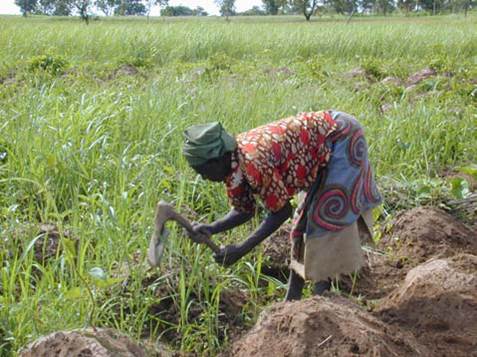
African farmers are constrained in the amount of time that they have available to improve their farming operations due to the inordinate amount of time required to hand weed their fields. About 50% of their time is taken up with hand weeding. Other opportunities ( such as planting a cash crop) are neglected. The use of herbicides to kill weeds in African crop fields would significantly free up time for farmers to improve their farms.

“The use of herbicides as a weed control strategy under under conservation agriculture (CA) in Zimbabwe was tested in two consecutive cropping season in 2009-10 and 2010-11… The use of herbicides in conservation agriculture systems can be recommended in most farming circumstances; it controls weed species that are difficult to manage, reduces the weeding time for farmers and is seen as a viable option even for smallholder farmers in Zimbabwe.

The results show that it is economical to use herbicides under CA because farmers save at least US$388 worth of time to be used on other off-or on-farm activities.

The time savings by using herbicides under CA can only be a benefit if farmers use this additional time meaningfully for other tasks. Farmers who choose to use herbicides are likely to have more time to commit to other farm operations such as growing vegetables in their gardens for sale, value addition to their farm products and some may also sell their labour off-farm to improve their income. The use of herbicides under CA systems reduces the labour constraints during the peak labour demand periods of the season… With improved weed management through use of herbicides, smallholder farmers can increase their yields and recover the costs of herbicides use.” 

Authors: Tarirai Muoni, et al.
Affiliation: University of Zimbabwe
Title: Weed control in conservation agriculture systems of Zimbabwe: identifying economical best strategies.
Source: Crop Protection. 2013. 53:23-28.

To weed or not to weed: Shakespeare as Ag Communicator

Shakespeare

Shakespeare

An Ag Communication specialist recently read through the Bard’s plays and found several quotes about the importance of controlling weeds.

“I suppose Shakespeare wasn’t an agronomist in the proper sense so much as he had an acute, affectionate love of nature along with the transcendent genius to contemplate and express his sublime sentiments. It wasn’t that he surveyed or discovered things in the world that no one else could see externally, but everywhere in nature he found metaphors for the human condition.

The Bard was so comprehensive and universally appealing that multitudes of professions have “claimed” him as their own practitioner: Why can’t we agricultural communicators claim him as our own as well?

Without further ado, here are just a few quotes I plucked out of the Bard’s works pertaining in some manner to the foulness of weeds or other pests.

Gardener:
I would go root away
The noisome weeds, which without profit suck
The soil’s fertility from wholesome flowers.

Servant:
The whole land,
Is full of weeds, her fairest flowers choked up,
Her fruit-trees all unpruned, her hedges ruin’d
Her knots disorder’d and her wholesome herbs
Swarming with caterpillars?
Richard II, act iii, sc. 4

I think the above clearly shows that Shakespeare would’ve concurred with our contention that one must control weeds if one wants to preserve moisture and nutrients for one’s crops.

Hamlet:
How weary, stale, flat, and unprofitable
Seem to me all the uses of this world!
Fye on it, ah fye! ‘tis an unweeded garden
That grows to seed; things rank and gross in nature
Possess it merely.
Hamlet, act I, sc. 2

Fye on you weeds! Thou art rank and gross! My fellow ag communicators have been proclaiming this for years… just like Hamlet.

Friar:
I must up-fill this willow cage of ours0
With baleful weeds and precious juiced flowers.
Romeo and Juliet, act ii, sc. 3
 
“Baleful weeds”…now that’s ominous.

Queen:
Now ‘tis the spring, and weeds are shallow-rooted;
Suffer them now, and they’ll o’ergrow the garden,
And choke the herbs for want of husbandry.
2nd Henry VI, act iii, sc. 1

Bravo! Spray weeds early and often!”

Author: Loftis, D.
Affiliation: McCormick Co.
Title: To weed or not to weed
Source: Agri Marketing. November/December 2009. Pgs.54-55.

Organic Cotton Profits on Women’s Back Breaking Work

Women Handweeding Cotton

Women Handweeding Cotton

Organic cotton is highly profitable. However, growing cotton without  herbicides for controlling weeds means that more labor is needed in back breaking hand weeding. A recent analysis of organic cotton production reports that the bulk of this labor falls on women’s backs.

“The aim of this article is to describe the economic performance and perceived social and environmental impacts of organic cotton in southern Kyrgyzstan… Due to lower input costs as well as organic and fair trade price premiums, the average gross margin from organic cotton was 27% higher… The major disadvantage of organic farming is the high manual labor input required. In the study area, where manual farm work is mainly women’s work and male labor migration is widespread, women are most affected by this negative aspect of organic farming.

The vast majority of female respondents from organic farms (farm managers or wives) perceived higher workloads. It was generally agreed that organic farming requires more manual work, is more labor intensive, and that women in particular must bear the negative effects because (a) manual work is typically done by women, and (b) the work-related outmigration of men has left more work to women in general. Indeed, the biggest negative impact perceived by respondents in regards to organic farming—an increased workload—appeared to affect women the most.”

Author: Bachmann, F.
Affiliation: Centre for Development and Environment CDE, University of Bern, Switzerland.
Title: Potential and limitations of organic and fair trade cotton for improving livelihoods of smallholders: evidence from Central Asia.
Source: Renewable Agriculture and Food Systems. 2011. 27(2):138-147.

Using Herbicides to Reduce the Risk of Forest Fires

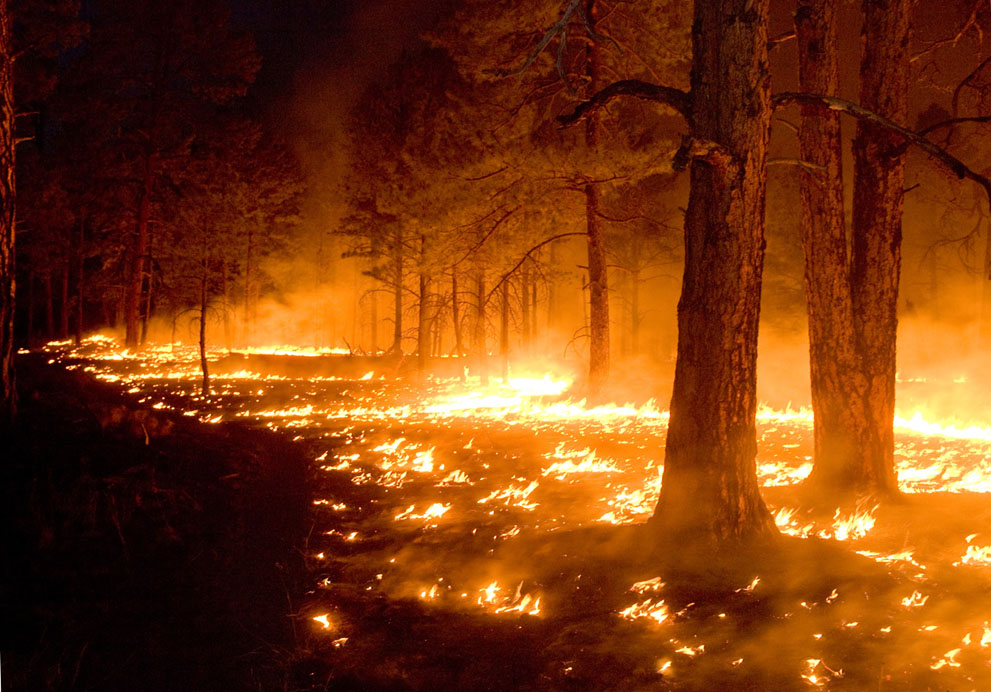
Wildfires

Wildfire Burning on Forest Floor

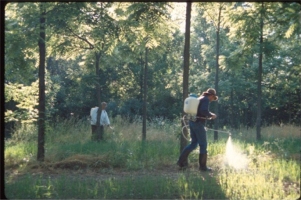
Sprays

Spraying Weeds on Forest Floor

Forest floors can be covered with many weeds that dry out and become a source of fuel
for forest fires. Many weed species dry quickly during drought creating hazardous “flashy” fuels in wildfire situations.  Studies have shown a significant reduction in fire intensity in areas where herbicides are applied to remove weeds. Incorporating herbicides into land management plans helps to decrease fuel loads and reduce the risk of forest fires.

“Exotic annual grasses such as cheatgrass, medusahead, and Ventenata can produce large amounts of fine fuel loads creating favorable conditions for wild fires… Herbicides imazapic and propoxicarbazone sodium have been particularly effective in controlling or suppressing exotic annual grasses, depending on rates and time of application. The main limitation for extensive use of these herbicides, particularly in rangelands, is the cost. However, if the fuel load from exotic annual grasses is reduced, the risk of wild fires will also decrease as a result of the herbicide applications. This could help create lower fire risk sections or corridors in order to protect more sensitive areas such as installations, roadsides, buildings, animal shelters, etc. The cost of herbicide applications for these areas would be compensated by the value of the saved resources and reduction in the cost of controlling frequent wild fires. The use of herbicides would only be justified if a significant reduction of the fuel load is achieved. The objective of this study was to quantify the impact of herbicides and application timings on invasive annual grass fuel load production.

…Although every treatment had an impact on the produced litter, the most significant biomass reduction, 53 percent, was observed with the application of Plateau®.

These preliminary results suggest that herbicides have the potential be used to reduce fuel loads from annual weedy grasses, particularly in recently burned fields.”

Authors: Sbatella, G., and Twelker, S.
Affiliations: Oregon State University
Title: Impact of herbicide applications for exotic annual grass control on fuel load production.
Source: Rangeland Research Reports, available at: http://oregonstate.edu/dept/coarc/sites/default/files/impact_of_herbicide_applications_for_exotic_annual_grass_control_on_fuel_load_production.pdf

To Maintain High Profits, California Organic Growers Gain Exemption from Worker Protection Rule

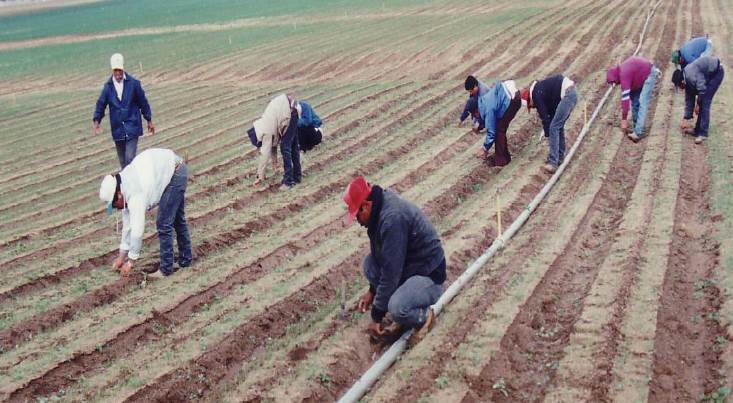
Hand Weeding in California

Hand Weeding Organic Crops in California

In 2005, the State of California banned the practice of hand weeding crop fields in order to protect farm workers from lifelong back pain. Because they don’t use herbicides, California organic vegetable growers employ farm workers to pull weeds by hand and claimed that hand weeding was absolutely essential to maintain high profits on organic produce. As a result of their lobbying, the California organic vegetable companies were exempted from the worker protection rule.

“The physically demanding nature of organic farming sparked a recent battle that pitted organic farmers against farmworkers. The UFW had long drawn attention to musculoskeletal problems suffered by people who work stooped over in the fields. In the 1970s the union led a successful campaign to ban the short-handled hoe, arguing that the tool caused back injuries. When union founder Cesar Chavez died, friends at the funeral placed one of the hoes on his casket. But growers soon found a way around the ban by requiring workers to weed by hand. Moises Olivera, a migrant worker who’s hopped from job to job throughout the Central Valley, explained to me how it feels…

“You go along on your knees,” he said. “There is a constant, numbing pain. By the end of a year people develop a lot of problems with their bones.”

In 2004 farmworker groups lobbied the California Occupational Safety and Health Administration to restrict hand-weeding. Organic farmers led the backlash against the proposal. While they have devised many creative tactics for banishing weeds without pesticides—singeing them with torches, slicing them with disks, allowing them to flourish before planting and then mowing them down—every organic farmer I talked to insisted there’s only one way to completely rid your crop of pesky plants: sitting, kneeling or bending, plucking them out one by one.

It’s tremendously costly. Yet farmers say there’s little alternative; long-handed hoes, which would allow workers to stand upright, can destroy some of the delicate specialty crops, such as baby leaf lettuce, that many organic farmers cultivate. At a minimum they would force farmers to space their plants farther apart, cutting into profits by yielding a smaller harvest on the same area of land…

The farmers ultimately triumphed, and OSHA exempted organic farms from the new rules, which went into effect last year. For labor advocates like Martha Guzman, who had sought to reach a compromise, it was a slap in the face…”

Author: Mello, F.
Affiliation: Reporter, The Nation.
Title: Hard Labor
Source: The Nation. September 11th, 2006.

Weed from Hell Invades Florida

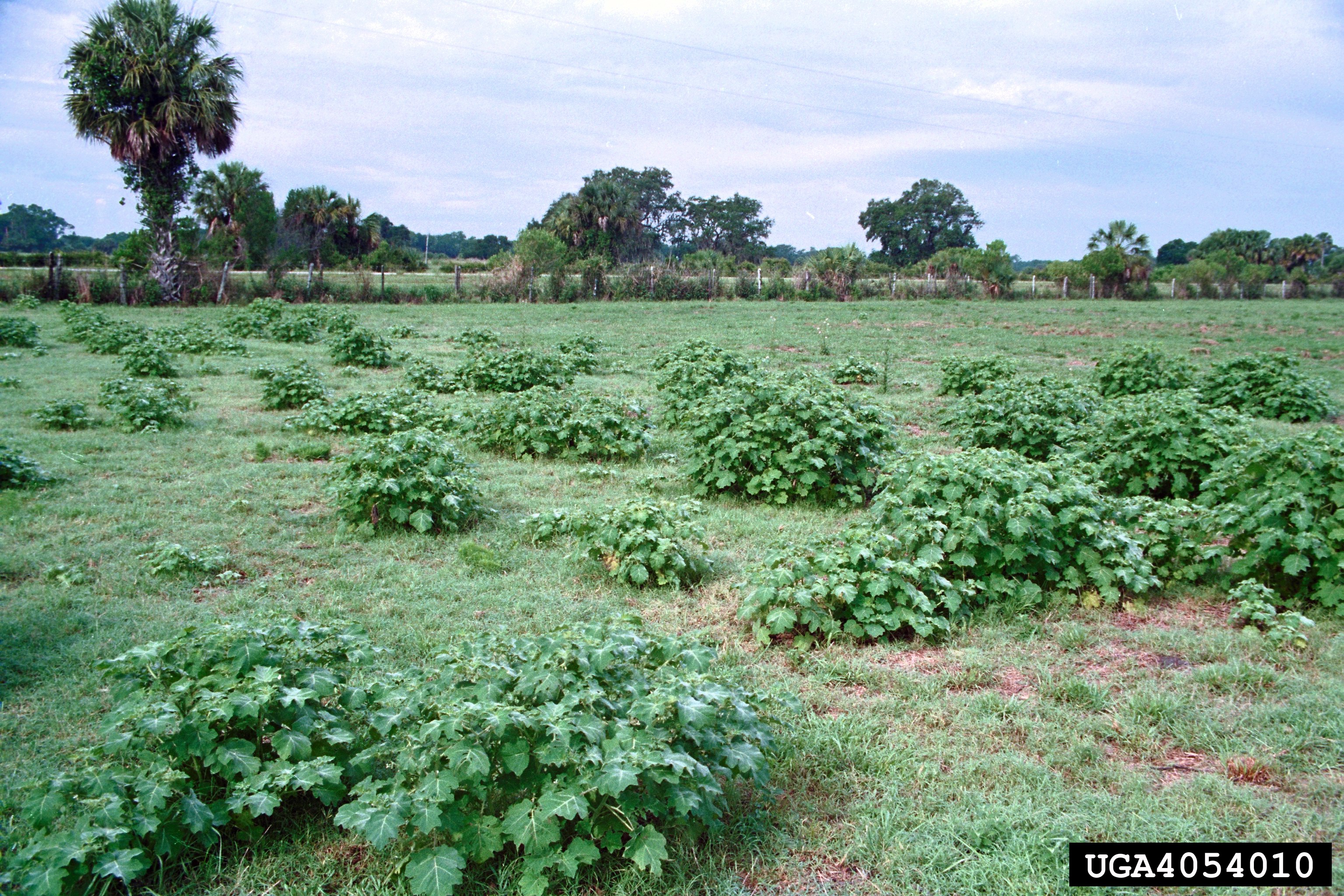
Tropical Soda Apple

Tropical Soda Apple

Tropical soda apple (TSA) is a weed native to Brazil, Argentina, Paraguay, and Uruguay that has invaded Florida. The pathway of introduction is unknown, but it may have been accidentally introduced with cattle carrying undigested TSA seeds. Currently, more than 404,000 acres are believed infested in Florida. TSA invades pasture, where it reduces livestock carrying capacity. Dense stands of the prickly shrub prevent cattle access to shaded areas, which results in summer heat stress and economic losses from cattle heat stress have been estimated at $2 million. TSA is a reservoir for at least six crop viruses; in addition, major insect pests use TSA as an alternate host. Herbicides are a major management practice for this “weed from hell.”

“Tropical soda apple (TSA) is an invasive weed of agricultural and natural areas in Florida. The plant is native to South America and was first found in south Florida in 1988. Its spiny foliage and stems are unpalatable to livestock, and dense stands of this prickly plant often grow into large impenetrable thickets.

In some areas of central and south Florida, TSA has covered entire pastures, rendering them unusable for grazing livestock. Some have called this weed the “plant from hell”.

The preferred methods of TSA control were chemical herbicides and mowing. On a statewide basis, 20% of cattle producers used herbicides alone, 7% used mowing alone, and 20% used both methods. Triclopyr and glyphosate were the two most commonly used herbicides reported by cattle producers. However, many had begun using amino-pyralid, an herbicide registered for use in pasture and rangeland in 2005, and becoming the new standard for TSA control. With continued TSA spread and the absence of alternative effective control measures, it is likely that the demand for these herbicides will continue to grow.”

Authors: Salaudeen, T., et al.
Affiliation: College of Agriculture, Florida A&M University.
Title: Economic impact of tropical soda apple (Solanum viarum) on Florida cattle production.
Source: Weed Technology. 2013. 27:389-394.

Organic Growers Can Use Synthetic Herbicides When Planting a New Vineyard

Weedy Vineyard

Weedy Vineyard

Planting a new vineyard in a weedy field is a bad idea. Weeds would compete with the small vines for moisture, space, nutrients and light which would set back their growth. Thus, in establishing a new vineyard, growers need to clear the weeds out. Most growers use synthetic chemical herbicides when planting a new vineyard due to the high cost of hand weeding and negative effects of tillage. Using herbicides is an option for organic growers since the small vines do not produce grapes for several years which corresponds to the waiting time to be certified as organic.

“…weed management is the most expensive and technically challenging practice for organic grape production, and many organic farmers rely on mechanical and hand cultivation for weed control. Although these methods are highly effective, they are also labor intensive, more expensive, and their sustainability is questionable from a labor and environmental perspective.

Another option would be to use conventional production techniques that use synthetic herbicides during the establishment phase, and once established, transition the vineyard to achieve organic certification.”

Authors: Olmstead, M., et al.
Affiliations: Department of Horticultural Sciences, University of Florida.
Title: Weed control in a newly established organic vineyard.
Source: Hort Technology. December 2012. 22(6):757-765.

Cover Crops Provide Many Benefits-But Must be Terminated

07

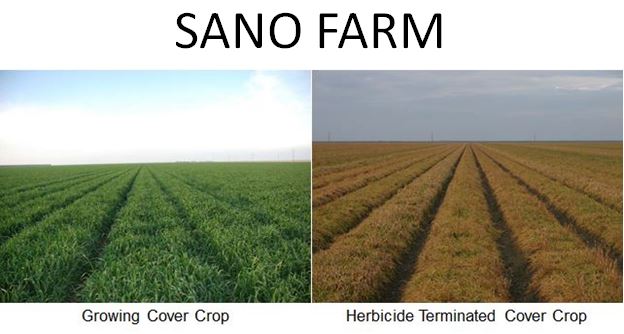
Cover crops are crops that are planted between the traditional growing seasons and generally without intent to harvest. Cover crops provide many benefits: reduced erosion, reduced nutrient leaching, increased soil organic matter, and improved soil productivity. However, cover crops need to be terminated so that the next crop can be planted and herbicides are a preferred termination method, as described in a recent article about a progressive California tomato farmer……

“During the past seven years, Sano Farms… has also refined a production system for processing tomatoes that uses cover crops, subsurface drip irrigation, and conservation tillage practices. Their system saved fuel by reducing the number of tractor operations, cut fertilizer inputs, reduced labor, improved soil condition, reduced overall variation in yield, and increased tomato yields up to 15% relative to the standard practices that were previously used.

An important component of the integrated tomato production system at this farm is the use of winter-grown triticale cover crop. These cover crops are typically seeded in late October or early November, sprinkler irrigated as part of the farm’s “preirrigation” program for the subsequent year’s crop, and then ended with herbicide typically in early February before the aboveground growth becomes too difficult to manage.”

Authors: Mitchell, J. P., et al.
Affiliations: Department of Plant Sciences, University of California..
Title: Evolution of conservation tillage systems for processing tomato in California’s central valley
Source: Hort Technology. October 2012. 22(5):617-626.