Consumers Want Perfect Avocados: Growers Must Spray

Infected Avocados

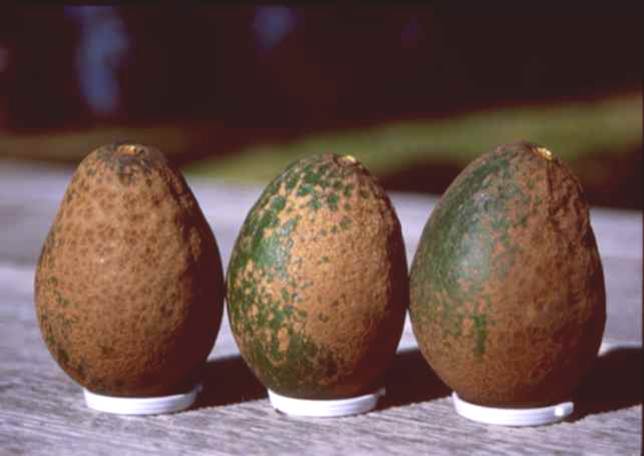
Avocado Thrip Fruit Scarring

Historically, the production of avocados in California required little usage of insecticides. Avocado pests were kept under commercially acceptable control by a variety of beneficial organisms. This situation changed in 1996 with the appearance of avocado thrips which feed on the surface of the fruit. Feeding scars develop while the flesh of the fruit is a healthy green. Even partial fruit scarring results in downgrading of fruit in packinghouses because of cosmetic damage unacceptable to consumers .

“The California avocado industry is under increasing threat from the introduction of arthropod pests. The avocado thrips, was first detected in California avocado groves in June 1996, and it has since spread to most of the major production areas within the state where it has become the primary insect pest. The main source of economic loss arises from feeding damage that causes scarring of immature fruit, leading to a reduction in fruit quality at harvest.

In California avocado groves, the use of foliar insecticides is the predominant tactic adopted by growers for the management of arthropod pests, including the avocado thrips. Aerial applications by helicopter are needed for the majority of California avocado groves because most are grown on steep hillsides.”

Author: Byrne, F. J., et al.
Affiliation: University of California
Title: Field evaluation of systemic imidacloprid for the management of avocado thrips and avocado lace bug in California avocado groves.
Source: Pest Management Science. 2010. 66:1129-1136.
Using Herbicides to Reduce the Risk of Forest Fires

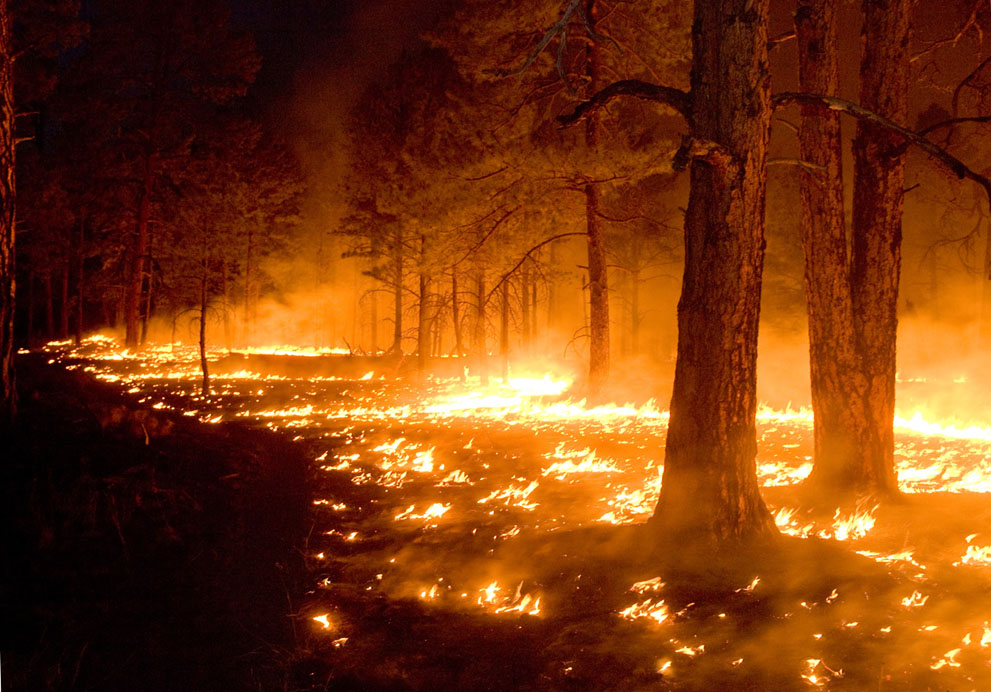
Wildfires

Wildfire Burning on Forest Floor

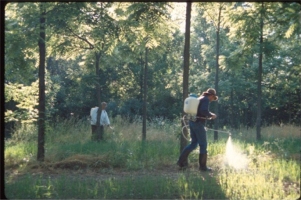
Sprays

Spraying Weeds on Forest Floor

Forest floors can be covered with many weeds that dry out and become a source of fuel
for forest fires. Many weed species dry quickly during drought creating hazardous “flashy” fuels in wildfire situations.  Studies have shown a significant reduction in fire intensity in areas where herbicides are applied to remove weeds. Incorporating herbicides into land management plans helps to decrease fuel loads and reduce the risk of forest fires.

“Exotic annual grasses such as cheatgrass, medusahead, and Ventenata can produce large amounts of fine fuel loads creating favorable conditions for wild fires… Herbicides imazapic and propoxicarbazone sodium have been particularly effective in controlling or suppressing exotic annual grasses, depending on rates and time of application. The main limitation for extensive use of these herbicides, particularly in rangelands, is the cost. However, if the fuel load from exotic annual grasses is reduced, the risk of wild fires will also decrease as a result of the herbicide applications. This could help create lower fire risk sections or corridors in order to protect more sensitive areas such as installations, roadsides, buildings, animal shelters, etc. The cost of herbicide applications for these areas would be compensated by the value of the saved resources and reduction in the cost of controlling frequent wild fires. The use of herbicides would only be justified if a significant reduction of the fuel load is achieved. The objective of this study was to quantify the impact of herbicides and application timings on invasive annual grass fuel load production.

…Although every treatment had an impact on the produced litter, the most significant biomass reduction, 53 percent, was observed with the application of Plateau®.

These preliminary results suggest that herbicides have the potential be used to reduce fuel loads from annual weedy grasses, particularly in recently burned fields.”

Authors: Sbatella, G., and Twelker, S.
Affiliations: Oregon State University
Title: Impact of herbicide applications for exotic annual grass control on fuel load production.
Source: Rangeland Research Reports, available at: http://oregonstate.edu/dept/coarc/sites/default/files/impact_of_herbicide_applications_for_exotic_annual_grass_control_on_fuel_load_production.pdf

To Maintain High Profits, California Organic Growers Gain Exemption from Worker Protection Rule

Hand Weeding in California

Hand Weeding Organic Crops in California

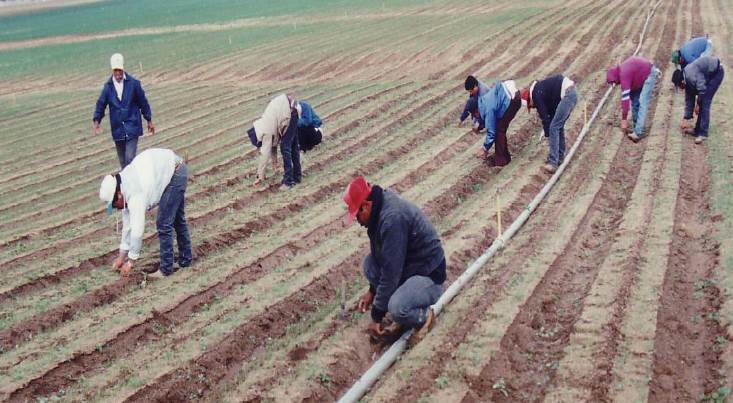
In 2005, the State of California banned the practice of hand weeding crop fields in order to protect farm workers from lifelong back pain. Because they don’t use herbicides, California organic vegetable growers employ farm workers to pull weeds by hand and claimed that hand weeding was absolutely essential to maintain high profits on organic produce. As a result of their lobbying, the California organic vegetable companies were exempted from the worker protection rule.

“The physically demanding nature of organic farming sparked a recent battle that pitted organic farmers against farmworkers. The UFW had long drawn attention to musculoskeletal problems suffered by people who work stooped over in the fields. In the 1970s the union led a successful campaign to ban the short-handled hoe, arguing that the tool caused back injuries. When union founder Cesar Chavez died, friends at the funeral placed one of the hoes on his casket. But growers soon found a way around the ban by requiring workers to weed by hand. Moises Olivera, a migrant worker who’s hopped from job to job throughout the Central Valley, explained to me how it feels…

“You go along on your knees,” he said. “There is a constant, numbing pain. By the end of a year people develop a lot of problems with their bones.”

In 2004 farmworker groups lobbied the California Occupational Safety and Health Administration to restrict hand-weeding. Organic farmers led the backlash against the proposal. While they have devised many creative tactics for banishing weeds without pesticides—singeing them with torches, slicing them with disks, allowing them to flourish before planting and then mowing them down—every organic farmer I talked to insisted there’s only one way to completely rid your crop of pesky plants: sitting, kneeling or bending, plucking them out one by one.

It’s tremendously costly. Yet farmers say there’s little alternative; long-handed hoes, which would allow workers to stand upright, can destroy some of the delicate specialty crops, such as baby leaf lettuce, that many organic farmers cultivate. At a minimum they would force farmers to space their plants farther apart, cutting into profits by yielding a smaller harvest on the same area of land…

The farmers ultimately triumphed, and OSHA exempted organic farms from the new rules, which went into effect last year. For labor advocates like Martha Guzman, who had sought to reach a compromise, it was a slap in the face…”

Author: Mello, F.
Affiliation: Reporter, The Nation.
Title: Hard Labor
Source: The Nation. September 11th, 2006.

The Dilemma of Insect Fragments in Processed Tomatoes

Tomato Fruitworm Damage

Tomato Fruitworm Damage

The tomato fruitworm is the most serious insect pest of tomatoes in the US, feeding on fruit and contaminating it with insect parts, excrement and decay-causing organisms. Interest in spraying insecticides to control the fruitworm was accelerated in the 1930s by the finding of insect fragments in canned products, which were seized and destroyed as adulterated foods by the FDA. Today, insecticides are used to prevent widespread insect damage to tomatoes and tomato shipments for processing are rejected if more than 2% damage is found. Therein is the dilemma. If the standard was relaxed (say to 4%), tomato growers could probably make one less insecticide spray. However, consumers may not want more insect fragments in canned tomatoes and may actually want a tighter standard which would result in more insecticide sprays.

“All loads of processing tomatoes in California are evaluated by inspectors from the Processing Tomato Advisory Board, a marketing order, under the direction of supervising inspectors from the California Department of Food and Agriculture. A load of processing tomatoes is rejected if 2% or more of the tomatoes by weight have a worm or excreta in the flesh of the tomato.

The damage tolerance acceptable to consumers and industry could be changed accordingly. Increasing the tolerance might be expected to result in a reduced number of insecticide applications when used in conjunction with a careful monitoring program.

A reduction in the tolerance might also be considered, arguing that consumers would not tolerate even the present level of insect fragments which, as our results indicate, is possible to have in the final product.”

Authors: Zalom, F. G., and A. Jones.
Affiliation: Department of Entomology, University of California, Davis
Title: insect fragments in processed tomatoes
Source: Journal of Economic Entomology. February, 1994. 87[1]:181-186.

Rice Insect Pest Invades the World from the USA

Rice Water Weevil Larva

Rice Water Weevil Larva

The home of the rice water weevil is the southeastern US where the species feeds on
grasses in swampy areas. When rice plants were introduced into America, the
insect quickly found this new grass plant to its liking and has been feeding on
rice ever since. The weevils move into rice fields every year from nearby woods
and clumps of grass. Farmers have used insecticides since 1950 to control the
weevil populations in rice fields. The rice water weevil has spread from the
southeastern US to Louisiana, Texas, California, Japan, China and Italy where
it would decrease rice production without insecticide sprays.

“The rice water weevil, Lissorhoptrus oryzophilus, is the most destructive insect pest of rice in the United States. The insect is native to the southeastern United States but has, over the past 60 years, invaded important rice-growing areas in California, Asia and Europe and thus poses a global threat to rice production.

Small-plot research and sampling of commercial fields indicate yield losses from the rice water weevil would likely exceed 10% in many areas if no insecticides are used.”

Authors: Stout, M. J., et al.
Affiliations: Department of Entomology, Louisiana State University.
Title: The influence of rice plant age on susceptibility to the rice water weevil, Lissorhoptrus oryzophilus.
Source: Journal of Applied Entomology. 2013. 137:241-248.

Fungicides Enhance the Economic Viability of Southeast Asian Refugee Farmers in California

Local Food

Roadside Stand

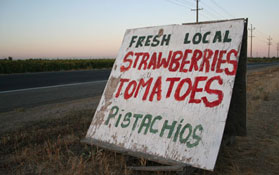
Most of the 95 strawberry farm stands in and around the Sacramento region are owned and operated by Mien and Hmong refugees from Laos, a small country in Southeast Asia that neighbors Vietnam. When the U.S. left Southeast Asia in 1975, hundreds of thousands of Hmong and Mien fled to the U.S. Most of the refugees were farmers in Laos and turned to farming in the U.S. Most growers lease small plots of land and grow strawberries for sale. A group of University of California researchers received a USDA grant to work with these refugee farmers. It became apparent that fungicide use is a critical element in improving the economic viability of the refugee farmers.

“Sacramento County Southeast Asian strawberry growers are very limited-resource growers who sell almost strictly at their roadside stands. UC Cooperative Extension has been working with these growers for 14 years and holding an annual meeting every March. This year’s meeting was held on March 24, 2010, and was supported by the California Strawberry Commission… A total of 52 growers attended the meeting, including several from nearby counties. In 2009-10, we received funding from the USDA to work with Sacramento County growers on food safety education, pest and nutrient management education, variety trials and market expansion.

Two of the most challenging and consistent pest problems facing Southeast Asian strawberry growers are spider mites and fruit rot… Fungicides are rarely used, and botrytis fruit rot caused by pre-Mother’s Day 2009 rains decimated all growers’ crops just before the busiest time of year. A leading grower did spray fungicide and estimated that he saved 50% of his crop.

Four treatments were compared to evaluate their effectiveness in reducing fruit rot, as well as their effects on yield.

The amount of rot per plant in the tunnel and fungicide treatments was significantly less than that of the untreated control.”

Author: Ingels, C.
Affiliation: UC Cooperative Extension
Title: Spider mite and botrytis rot trials
Source: California Strawberry Commission Annual Production Research Report. 2009-2010 Research Projects. Pgs. 99-103

To Remain Viable, California Strawberry Growers will need to use Fumigants for Years to Come

Strawberry Production: California

Strawberry Production: California

California is the top strawberry growing state producing 2-3 billion pounds per year. California accounts for 20% of the world’s production of strawberries. Since about 1965, approximately 90% of strawberry land in California has been fumigated before each crop is planted. Statewide average strawberry yields tripled following the adoption of fumigation. Generally, the increase in strawberry yield is credited to effective control of the soilborne fungal disease, verticillium wilt, which attacks the water-conducting tissue of the plant. In recent years, the use of fumigants in California has been under intense regulatory review with a phaseout of methyl bromide and use restrictions which could include expanded buffer zones in strawberry fields where fumigation will not be permitted. A recent working group in California assessed the status of nonfumigant alternatives……

“Owing to potentially devastating soilborne pests, strawberry growers have relied on soil fumigation treatments for many years.

Director Brian Leahy of the California Department of Pesticide Regulation convened in April 2012 a working group of industry and scientific leaders to develop an action plan of research priorities for developing cost-effective management tools and practices for soilborne pests of strawberries in the absence of conventional fumigants.

The Working Group recognized that over the last 20 years, many studies focused on breeding disease-resistant plants and testing soil treatments such as anaerobic soil disinfestation, biopesticides, biofumigants, soilless substrate, steam, and solarization.

Yet to be done is testing combinations of alternatives in extensive field trials and on-farm demonstrations.

Full implementation of the action plan will require a major commitment of time and resources by a broad range of groups in the private and public sectors, such as researchers, funding institutions, growers, grower organizations, farmworker advocates, community and environmental organizations, and consumers.

Even with full commitment to implement this action plan, the strawberry industry will need to continue its use of fumigants for years to remain viable in California.”

Title: Nonfumigant strawberry production working group action plan
Source: California DPR. April 2013. Available at: http://www.cdpr.ca.gov/docs/pestmgt/strawberry/work_group.htm

Downy mildew of Basil is here to Stay

Downy Mildew Close-up

Downy Mildew Close-up

Downy Mildew Spore Growth on Basil Leaves

Downy Mildew Spore Growth on Basil Leaves

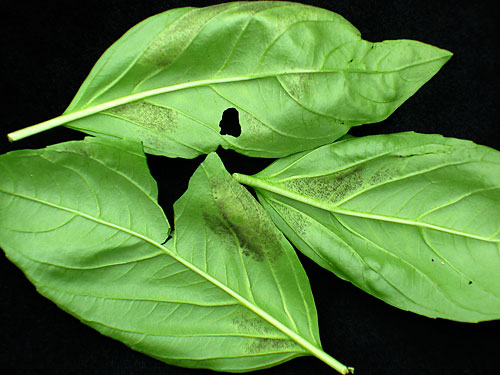
Downy mildew of basil is a new destructive disease that appears to be here to stay. In the first years of its appearance in the U.S., complete crop losses occurred for some growers because basil leaves with any mildew are unmarketable. Applying fungicides frequently and starting before first symptoms are considered necessary to control basil downy mildew effectively.

“Sweet basil (Ocimum basilicum L., Fam. Lamaiaceae) is the most commercially important annual culinary herb crop grown in the United States. Sweet basil is grown for culinary use for both fresh and dry consumption and as a source of essential oil and oleoresin for manufacturing perfumes, food flavors, and aromatherapy products.

Basil downy mildew… is a new disease of basil in the United States. …In the United States, the pathogen was first discovered in Florida in the fall of 2007. Since that time, basil downy mildew has been found throughout the eastern United States and in regions of commercial basil production in the Midwest and California.

Once basil plants become infected and develop symptoms, they are no longer marketable as a fresh product. …Currently, there is no known resistance or tolerance to basil downy mildew leaving 100% of the sweet basil acreage in the eastern United States vulnerable to the pathogen. Without adequate chemical control options and genetic resistance, basil downy mildew has the potential to destroy basil production in the eastern United States and in all other areas where basil is being produced.

Selection criteria such as foliar morphology, plant architecture as well as the presence of secondary metabolites and other factors that provide a less favorable microenvironment to the pathogen need to be examined as potential avenues for developing downy mildew-resistant sweet basil cultivars. Until this can be achieved, basil growers will have to rely on multiple applications of the few commercial fungicides currently registered to produce a marketable crop. Additionally, for organic basil growers, control of basil downy mildew will be even more challenging because there are fewer approved products labeled for organic use.”

Authors: Wyenandt, C. A., et al.
Affiliation: Department of Plant Biology and Pathology, Rutgers University
Title: Susceptibility of basil cultivars and breeding lines to downy mildew (Peronospora belbahrii)
Source: HortScience. 2010. 45(9):1416-1419.

California Avocado Production Would be 82 million Pounds Lower with Conversion to Organic Practices

New Orchard Weeds

New Orchard Weeds

California farmers produce 550 million pounds of avocados annually. 8% of the avocado acres are managed with organic production practices. A recent economic analysis by the University of California shows why so few avocado acres are organic. Even though organic avocados receive a price premium, lower yields (15% lower) means lower profits than avocados grown with chemical inputs. The 15% lower yields would mean a loss of 82 million pounds of avocados if all the California avocado growers switched to organic practices. Weeds are the biggest problem for organic avocado growers.

“Profitability estimate of organic avocados in these counties is lower than avocados produced conventionally. Though organic avocados are considered to receive $0.20 more per pound than conventional avocados, organic avocado production shows lower yield than the conventional production.

Based on our discussions with growers and the UCCE farm advisor, organic yield is considered lower than the conventional production. In this study, organic avocado yield is estimated at 15% lower than the conventional yield.”

Author: Etaferahu Takele, et al.
Affiliation: Area Farm Advisor, Agricultural Economics/Farm Management, University of California Cooperative Extension (UCCE) Southern California
Title: Avocado sample establishment and production costs and profitability analysis san diego and riverside counties, 2011 organic production practices
Source: University of California Cooperative Extension. 2013.

Fungal Spots on Carrots are not Acceptable to Consumers

Carrot Cavity Spot

Carrot Cavity Spot

Cavity spot is a common disease of carrots grown in California. The disease results in a small fungal spot on the carrot, which can be easily trimmed away by consumers. However, this “cosmetic” defect is not acceptable to consumers. If growers do not control cavity spot in their fields by using fungicides, their carrots would have to be sorted manually to remove the damaged ones. The sorting costs are prohibitively high; fields with high levels of cavity spot are simply not harvested…… because of consumer standards.

“Out of the 62,000 acres of carrots grown in California, cavity spot is one of the top three problems that farmers need to worry about. Unlike other vegetable diseases and pests, cavity spot doesn’t cause direct yield losses. It does, however, cause cosmetic damage, which in the world of carrots, is equivalent to yield loss.
Cavity spot is a chronic problem and even growers with the best managed fields know that,” says Jim Farrar, a professor of plant pathology in the Department of Plant Science at California State University, Fresno.
Farrar, who has studied cavity spot for the past several years, along with UC Davis researchers Joe Nunez and Mike Davis, says that most growers can accept some level of cavity spot damage in their fields. But fields with even 5 percent cavity spot damage can cause a real problem.
“The cost of hand-culling carrots in the packing shed can be more than the value of whatever carrots there are to save,” Farrar says, “I’ve seen fields where growers have totally had to walk away from entire crops.”
To deal with cavity spot, most growers apply fungicides three to four times throughout the carrot growing season.”

Author: Lieberman, L.
Affiliation: Writer, Carrot Country.
Title: New Materials and Techniques for Treating Carrot Cavity Spot.
Source: Carrot Country. 2012. Fall:13-14.