Organic Apple Growing Not Popular in Sweden

Apple Scab

Apple Scab

The Swedish government set a goal of having 20% of the total crop area grown organically by 2010. Organic fruit acreage did not make the goal and is still less than 5%. Growers fear low yields and poor quality by not using chemical pesticides in organic systems. Apple production would decline significantly in Sweden if the majority of growers gave up the use of pesticides and used organic methods. A major problem for apple growers in Sweden is apple scab.

 “There is a large demand for domestically grown apples in Sweden. However, approximately 85% of the apples consumed in Sweden are imported, and the percentage of imported organic apples is even higher. Organic fruit is produced on 4% of the orchard area.

The estimated cost price of producing organic apples in a 5 ha orchard is €1.14 per kg, which is twice as high as for conventionally produced apples, mainly due to lower yields in organic production. Modern apple orchards have average yields of 40 ton/ha in conventional production and around 20 ton/ha in organic production.

The high cost price of organic apples was mainly due to lower yields in organic production, but also higher costs for weed control. Although it is possible to generate similar economic returns from organic production, few conventional growers in Sweden are converting to organic production. Another obstacle is that growers fear low yields and poor quality in organic production due to pests, diseases and weeds.”

Authors: Ascard, J., et al.
Affiliation: Swedish Board of Agriculture.
Title: Cost price calculations for organically and conventionally grown apples in Sweden.
Source: Ecofruit Proceedings. 2010.

A Crop Variety May Resist a Disease but May not be Desired by Consumers.

Blight on stems

Blight lesions on chickpea stems

The planting of disease-resistant varieties is often promoted as an alternative to the use of fungicides. If a plant variety is produced through traditional crop breeding and is able to somehow resist penetration and infection by fungi, then fungicides are not needed. Right? The problem is that when new varieties are produced through crop breeding, they often lose quality traits that are desired by consumers. In Turkey, the best quality chickpeas are susceptible to blights and require fungicide treatments in contrast to the lower quality resistant chickpea varieties.

“Chickpea is one of the most extensively grown legume crops in Turkey, the area and production being 622,214 ha and 548,000 tons, respectively. Chickpea blight, is one of the most important diseases affecting this crop wherever it is grown. The disease, which originates from infected seeds and diseased plant debris remaining in the field, mainly affects all the above-ground parts of the plants, causing lesions mostly on stems and stem breakage. Chickpea blight can be effectively controlled by using tolerant or resistant cultivars, but none of them has good quality or sells for high prices in Turkey; unfortunately, high-value cultivars are susceptible to the disease. Seed transmission is especially important where crop rotation is practiced. For this reason, effective chemical control is needed for seed and foliage treatments.”

Authors: Demirci, F., et al.
Affiliation: Department of Plant Protection, Ankara University, Turkey
Title: In vitro and in vivo effects of some fungicides against the chickpea blight pathogen, Ascochyta rabiei.
Source: Journal of Phytopathology. 2003. 151:519-524.

What’s a Cucurbit? Downy Mildew Knows.

Cucumber Downy Mildew

Cucumber Downy Mildew

Cucurbits are a plant family consisting of squashes, melons and gourds, including crops such as cantaloupes, cucumbers, pumpkins and watermelons. Most of the plants in the cucurbit family are annual climbing or trailing vines. Downy mildew of cucurbits is caused by a fungus which infects only cucurbit crops. Downy mildew symptoms are almost exclusively confined to the leaves. The tiny spores of the fungus fall on a leaf, germinate and force food absorbing organs into the leaf. These rootlike structures remove nutrients from the plant. Downy mildew can defoliate an entire watermelon field in 10 to 14 days.

“Clemson University plant pathologist Anthony Keinath urges South Carolina farmers to scout and spray after downy mildew infection was found June 18 on non-sprayed sentinel watermelon at Clemson’s Coastal Research and Education Center (REC) in Charleston. It is the earliest in the growing season that the watermelon strain of the disease has been found in South Carolina.The mildew also was found on cucumber, cantaloupe and several different varieties of squash over the past two weeks.

“The rainy, cloudy weather we’ve been having favors rapid outbreaks of downy mildew. Early detection is critical to controlling outbreaks,” said Keinath, professor of plant pathology in Clemson’s School of Agricultural, Forest, and Environmental Sciences (SAFES).

Keinath advises all South Carolina growers of cucurbits, a family of plants that includes various squashes, melons and gourds, to immediately apply preventative fungicides and walk their fields twice per week to scout for the mildew.”

Author: Clemson University
Affiliation: Clemson University
Title: South Carolina cucurbit growers advised to treat for downy mildew
Source: Southeast Farm Press. June 20th, 2013.

Organic Growers Can Use Synthetic Herbicides When Planting a New Vineyard

Weedy Vineyard

Weedy Vineyard

Planting a new vineyard in a weedy field is a bad idea. Weeds would compete with the small vines for moisture, space, nutrients and light which would set back their growth. Thus, in establishing a new vineyard, growers need to clear the weeds out. Most growers use synthetic chemical herbicides when planting a new vineyard due to the high cost of hand weeding and negative effects of tillage. Using herbicides is an option for organic growers since the small vines do not produce grapes for several years which corresponds to the waiting time to be certified as organic.

“…weed management is the most expensive and technically challenging practice for organic grape production, and many organic farmers rely on mechanical and hand cultivation for weed control. Although these methods are highly effective, they are also labor intensive, more expensive, and their sustainability is questionable from a labor and environmental perspective.

Another option would be to use conventional production techniques that use synthetic herbicides during the establishment phase, and once established, transition the vineyard to achieve organic certification.”

Authors: Olmstead, M., et al.
Affiliations: Department of Horticultural Sciences, University of Florida.
Title: Weed control in a newly established organic vineyard.
Source: Hort Technology. December 2012. 22(6):757-765.

Cover Crops Provide Many Benefits-But Must be Terminated

07

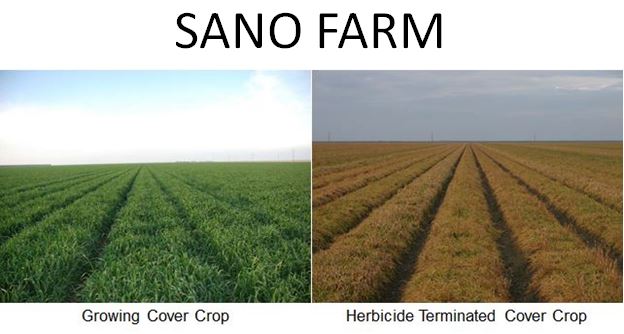
Cover crops are crops that are planted between the traditional growing seasons and generally without intent to harvest. Cover crops provide many benefits: reduced erosion, reduced nutrient leaching, increased soil organic matter, and improved soil productivity. However, cover crops need to be terminated so that the next crop can be planted and herbicides are a preferred termination method, as described in a recent article about a progressive California tomato farmer……

“During the past seven years, Sano Farms… has also refined a production system for processing tomatoes that uses cover crops, subsurface drip irrigation, and conservation tillage practices. Their system saved fuel by reducing the number of tractor operations, cut fertilizer inputs, reduced labor, improved soil condition, reduced overall variation in yield, and increased tomato yields up to 15% relative to the standard practices that were previously used.

An important component of the integrated tomato production system at this farm is the use of winter-grown triticale cover crop. These cover crops are typically seeded in late October or early November, sprinkler irrigated as part of the farm’s “preirrigation” program for the subsequent year’s crop, and then ended with herbicide typically in early February before the aboveground growth becomes too difficult to manage.”

Authors: Mitchell, J. P., et al.
Affiliations: Department of Plant Sciences, University of California..
Title: Evolution of conservation tillage systems for processing tomato in California’s central valley
Source: Hort Technology. October 2012. 22(5):617-626.

Disease Management Sprays Have Doubled and Quadrupled in Florida Citrus Groves since 2004 Due to New Exotic Pests

Citrus Canker

Citrus Canker

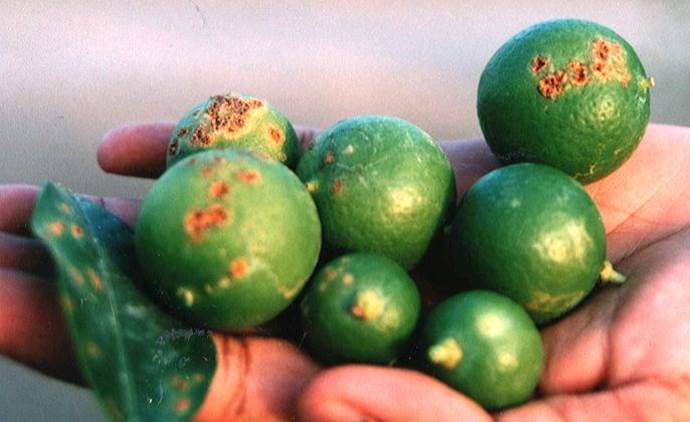
Before 2004, Florida citrus growers were concerned with only a few diseases. Thanks to hurricanes and tropical storms, new exotic disease organisms have been spread around the state. As a result, Florida citrus growers have had to dramatically increase sprays to manage disease: sprays for processed juice fruit have quadrupled and sprays for fresh grapefruit have doubled.

“The Florida example begins before 2004 when citrus tristeza and blight-decline were the major disease problems. Average annual sprays were two for processed juice fruit and six sprays for fresh market grapefruit. After the 2004-05 hurricanes and the ending of the citrus canker eradication program in 2006, the number of sprays to manage canker and other diseases increased to three or four sprays for processed juice fruit and 10 sprays for fresh grapefruit. With the 2005 discovery of huanglongbing (HLB) in Florida and citrus black spot in 2010, costs continued to increase. Now the annual spray program includes eight or nine sprays for processed juice fruit and 14 for fresh market grapefruit.”

Author: Muraro, R. P.
Affiliation: University of Florida, IFAS, Citrus Research and Education Center.
Title: Evolution of citrus disease management programs and their economic implications: the case of Florida’s citrus industry.
Source: Proceedings of the Florida State Horticultural Society. 2012. 125:126-129.

Organic Sugarbeets from Austria: Fungicide Use and Lots of Handweeding

Organic Sugar

Organic Sugar

There is a retail market for organic sugar in the EU and until recently the demand was met with imports of organic sugar from Latin America. British Sugar began producing organic sugar in the UK in 2002 but abandoned the organic line because it was not commercially viable. Now, a small number of sugarbeet growers in Austria are growing organic sugarbeets. Without herbicides for weed control, these growers need an enormous amount of hand labor. For disease control, the organic growers spray copper fungicides.

“In the past organic sugar from sugar cane was imported to Europe. In 2008 AGRANA started to contract organic sugar beet… In 2008 organic sugar beet was grown by 105 farmers on 323 ha. Up to 2011 the organic beet area was increased to 913 ha and reached about 2% of the Austrian sugar beet acreage.

Weed control is a major issue in production of organic beet. Farmers are using harrows and inter row cultivators for mechanical weed control. In addition, an enormous input of hand labour is required, on average there is the need for 200 hours per hectare.

Control of Cercospora leaf spot and powdery mildew is carried out by spraying fungicides containing copper or sulfur. Normally two or three sprayings with copper products are required to control Cercospora. It is allowed to apply up to 2 kg Copper per hectare and year.”

Authors: Kempl, F., et al.
Affiliation: AGRANA Zucker GmbH.
Title: Organically grown beets? A growing segment in the Austrian sugar production.
Source: 73ed IIRB Congress. 2012. Proceedings of Papers:183-186.

Highest Sugarbeet Yields Ever in the UK Thanks to Fungicides

Where Sugar Comes From

Where Sugar Comes From

The sugarbeet industry expanded dramatically in the UK in the 1920s to make Britain more self-sufficient in sugar production after severe shortages in World War 1 and after it lost most of its sugar-producing colonies. Until the introduction of new fungicides in the 1990s, UK sugarbeet growers relied on sulfur sprays for controlling diseases. The new fungicides provide better disease control and have a direct physiological effect on the plants which leads to higher yields. Refining the spray schedule with these new fungicides has resulted in the highest sugarbeet yields ever in the UK.

“In 2011, the UK sugar industry celebrated its highest ever national yield of 75.6 t/ha. A number of factors contributed to this excellent achievement, but a major contributor was the widespread and appropriate use of fungicide spray regimes across the vast majority of the sugar beet crop. These products control diseases including powdery mildew and rust, but also provide physiological benefits such as green leaf retention and early frost protection.”

Authors: Stevens, M., and E. Burks.
Affiliation: Rothamsted Research-Broom’s Barn
Title: Fungicide strategies for maximizing yield potential: lessons from 2011.
Source: British Sugar Beet Review. Summer, 2012. 80[2]:10-13.

Hurricanes Increase the Need for Insecticides in Louisiana Sugarcane Fields

Fire Ant Killing Sugarcane Borer

Fire Ant Killing Sugarcane Borer

Louisiana is the top producing sugarcane state accounting for 40% of the nation’s sugarcane production. Approximately 3 billion pounds of raw sugar are produced annually by Louisiana sugar mills. The sugarcane borer is the most damaging insect pest of sugarcane in Louisiana. The larvae bore into the plant where they feed on the central tissue. Borers make tunnels up and down the stalk. The size and weight of the stalks are decreased. Sugarcane borers in Louisiana are controlled by an integrated system that consists of spraying insecticides, planting varieties with some resistance and by natural enemies of the borer. The most important natural enemy of the borer is the red imported fire ant. Typically, the predation of fire ants contributes an estimated savings of two insecticide sprays. However, when the sugarcane fields are flooded by hurricanes, the fire ants are negatively affected and insecticide use has to increase.

“On 24 September 2005, Hurricane Rita made landfall on the extreme southwestern coast of Louisiana near the border with Texas as a Category 3 hurricane.

Twelve thousand to 16,000 ha of sugarcane produced in south Louisiana were flooded by saltwater from Hurricane Rita storm surge.

During spring 2006, sugarcane growers and contracted agricultural consultants began observing that flooded areas seemingly had more [sugarcane borer] infestations, which might require earlier and more frequent insecticide applications for D. saccharalis control.

This study showed that growers had to treat more (2.4-fold increase) in zones impacted by the hurricane storm surge.

S. invicta [red imported fire ant] seemed to be negatively impacted 10-12 mo after the areawide habitat disruption caused by the storm surge flooding. When plunged into freshwater, S. invicta individuals gather and form floating clusters that can drift for more than a week without drowning. However… S. invicta is susceptible to saltwater, sinking within 30 min when in 3.5% saltwater (approximately equal to seawater), and within 48 h in 1% saltwater. …Susceptibility to saltwater flood and limited dispersal abilities may explain why S. invicta was negatively impacted by the storm surge and slow to recover back to prehurricane population levels.

This study suggests that Hurricane Rita disturbed the pest management stability between beneficial and pest anthropods for the subsequent production season, requiring additional insecticide applications…”

Authors: Beuzelin, J.M., et al.
Affiliations: Department of Entomology, Louisiana Agricultural Experiment Station, Louisiana State University Agricultural Center
Title: Impacts of Hurricane Rita storm surge on sugarcane borer (Lepidoptera: Crambidae) management in Louisiana.”
Source: Journal of Economic Entomology. 2009. 102[3]:1054-1061.

The Dilemma of Insect Fragments in Processed Tomatoes

Tomato Fruitworm Damage

Tomato Fruitworm Damage

The tomato fruitworm is the most serious insect pest of tomatoes in the US, feeding on fruit and contaminating it with insect parts, excrement and decay-causing organisms. Interest in spraying insecticides to control the fruitworm was accelerated in the 1930s by the finding of insect fragments in canned products, which were seized and destroyed as adulterated foods by the FDA. Today, insecticides are used to prevent widespread insect damage to tomatoes and tomato shipments for processing are rejected if more than 2% damage is found. Therein is the dilemma. If the standard was relaxed (say to 4%), tomato growers could probably make one less insecticide spray. However, consumers may not want more insect fragments in canned tomatoes and may actually want a tighter standard which would result in more insecticide sprays.

“All loads of processing tomatoes in California are evaluated by inspectors from the Processing Tomato Advisory Board, a marketing order, under the direction of supervising inspectors from the California Department of Food and Agriculture. A load of processing tomatoes is rejected if 2% or more of the tomatoes by weight have a worm or excreta in the flesh of the tomato.

The damage tolerance acceptable to consumers and industry could be changed accordingly. Increasing the tolerance might be expected to result in a reduced number of insecticide applications when used in conjunction with a careful monitoring program.

A reduction in the tolerance might also be considered, arguing that consumers would not tolerate even the present level of insect fragments which, as our results indicate, is possible to have in the final product.”

Authors: Zalom, F. G., and A. Jones.
Affiliation: Department of Entomology, University of California, Davis
Title: insect fragments in processed tomatoes
Source: Journal of Economic Entomology. February, 1994. 87[1]:181-186.