To Remain Viable, California Strawberry Growers will need to use Fumigants for Years to Come

Strawberry Production: California

Strawberry Production: California

California is the top strawberry growing state producing 2-3 billion pounds per year. California accounts for 20% of the world’s production of strawberries. Since about 1965, approximately 90% of strawberry land in California has been fumigated before each crop is planted. Statewide average strawberry yields tripled following the adoption of fumigation. Generally, the increase in strawberry yield is credited to effective control of the soilborne fungal disease, verticillium wilt, which attacks the water-conducting tissue of the plant. In recent years, the use of fumigants in California has been under intense regulatory review with a phaseout of methyl bromide and use restrictions which could include expanded buffer zones in strawberry fields where fumigation will not be permitted. A recent working group in California assessed the status of nonfumigant alternatives……

“Owing to potentially devastating soilborne pests, strawberry growers have relied on soil fumigation treatments for many years.

Director Brian Leahy of the California Department of Pesticide Regulation convened in April 2012 a working group of industry and scientific leaders to develop an action plan of research priorities for developing cost-effective management tools and practices for soilborne pests of strawberries in the absence of conventional fumigants.

The Working Group recognized that over the last 20 years, many studies focused on breeding disease-resistant plants and testing soil treatments such as anaerobic soil disinfestation, biopesticides, biofumigants, soilless substrate, steam, and solarization.

Yet to be done is testing combinations of alternatives in extensive field trials and on-farm demonstrations.

Full implementation of the action plan will require a major commitment of time and resources by a broad range of groups in the private and public sectors, such as researchers, funding institutions, growers, grower organizations, farmworker advocates, community and environmental organizations, and consumers.

Even with full commitment to implement this action plan, the strawberry industry will need to continue its use of fumigants for years to remain viable in California.”

Title: Nonfumigant strawberry production working group action plan
Source: California DPR. April 2013. Available at: http://www.cdpr.ca.gov/docs/pestmgt/strawberry/work_group.htm
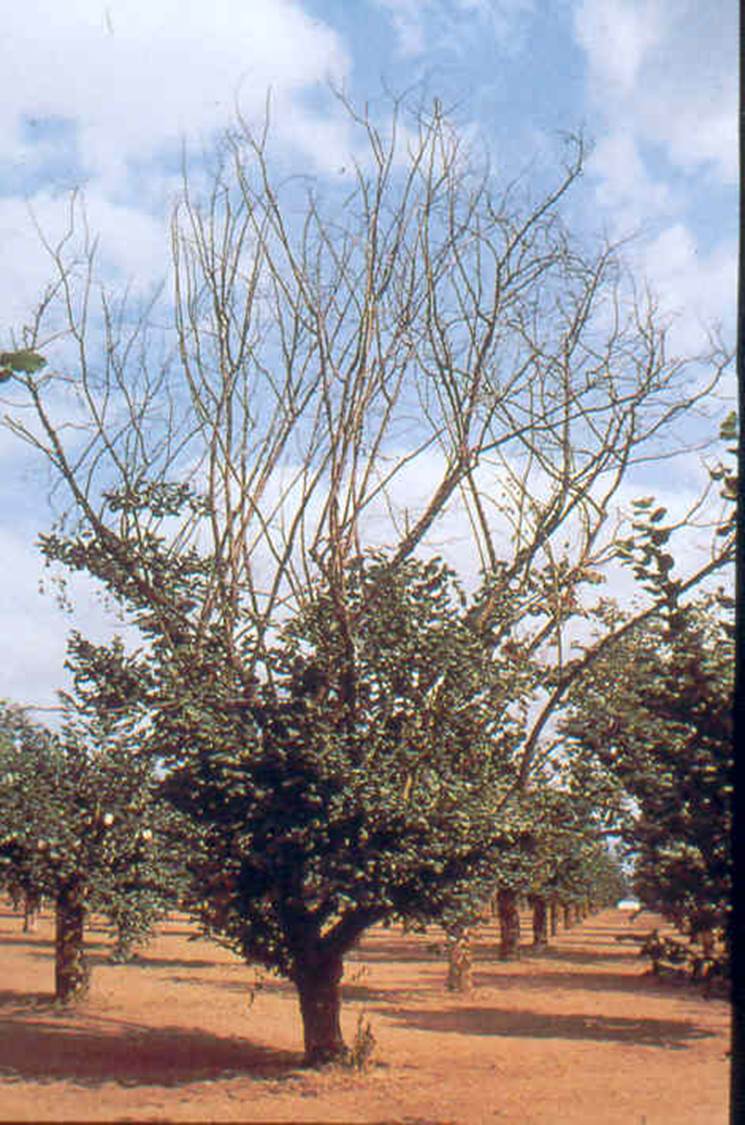
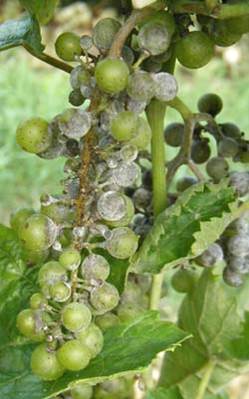
Eastern Filbert Blight Would Kill All the Western Hazelnut Trees Without Fungicide Sprays

EFB Killing Hazelnut Tree

EFB Killing Hazelnut Tree

Hazelnuts have been commercially produced in Oregon since the early 1900s when they were called “filberts.” In 1981, Oregon “filbert” growers began referring to their crop as “hazelnuts” to be consistent with the rest of the world. Oregon’s hazelnut orchards, concentrated in the Willamette Valley, account for 99% of US production and 5% of world production. Eastern filbert blight is a destructive disease of hazelnut trees that is only present in North America. The disease is known as eastern filbert blight because a shrub harbors the disease in the eastern US. In the 1920s, growers tried to start a hazelnut industry in New York. Filbert blight destroyed the trees. In 1974, the disease was found for the first time in Oregon and has spread throughout the Valley. Without fungicide sprays, the blight would kill the hazelnut trees.

“Eastern filbert blight (EFB) is caused by the fungus Anisogramma anomala…it causes severe perennial cankers, branch die-back, and eventual death of nearly all cultivars of the commercially important European hazelnut, C. avellana. …The pathogen was inadvertently introduced into southwestern Washington in the 1960s and devastated commercial hazelnut orchards because control measures were lacking at the time. It is now widespread across the Willamette Valley of Oregon, where 99% of the U.S. hazelnut crop is produced. Diligent scouting for cankers, extensive pruning, and copious fungicide applications are necessary to continue production in the presence of the fungus.”

Authors: Molnar, T. J., et al.
Affiliation: Department of Plant Biology and Pathology, Rutgers University.
Title: A real-time PCR assay for early detection of eastern filbert blight.
Source: Plant Disease. June 2013. 97[6]:813-818.

Powdery Mildew of Grapes Must be Controlled for Wine Quality

Powdery Mildew On Grapes

Powdery Mildew On Grapes

Powdery mildew exists wherever grapes are grown for wine. The fungus that causes grape powdery mildew is an obligate parasite, which means it must grow on grape tissue and will not parasitize any other species of plants. The fungus penetrates only the epidermal cells sending tubular suckers into them to absorb nutrients. The mass of fungal growth on grape skin give the impression that the grapes are sprinkled with flour. This impression is enhanced by the smell of moldy flour released by the diseased grapes. Fungicide sprays effectively control the incidence of powdery mildew of grapes from 99% to < 1% which is very important for the quality of wine.

“Analysis of wines made from powdery mildew-affected grapes has revealed that even slight infection leads to compositional changes, an oily mouthfeel and undesirable fungal/earthy flavours when compared with wines made from disease-free grapes.

The strongest link to the effect of powdery mildew was elevated ratings of ‘oily’ and ‘viscosity’ attributes in wines made from grapes with as little as 1-5% powdery mildew compared to wines made from disease free grapes.

…wines made from diseased grapes were rated as having more pronounced fungal, earthy and cooked tomato aroma attributes than wines made from uninfected grapes.

Juice from the most severely diseased grapes had a dusty and mushroom aroma and acid taste compared to the others.

When subjected to the heat test, wines made from grapes with severe powdery mildew showed greatest haziness, so there is the potential for spoilage of wine during storage due to haze.”

Authors: CRCV Update
Title: Powdery mildew impacting on wine quality
Source: Wine Industry Journal. 2004. 19[6]:71-75.

Fungicide Recommendations Are Being Made for Increasing African Groundnut Production

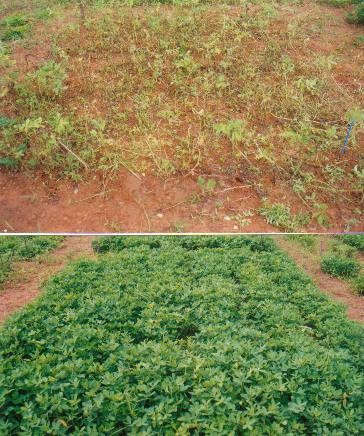
Fungicide Experiment: Ghana (top=untreated bottom=treated)

Fungicide Experiment: Ghana (top=untreated bottom=treated)

Peanuts (or groundnuts) are widely used as a food by Africans as they are a major source of protein. The productivity of peanut in Africa is very low which is particularly attributed to foliar diseases. Disease severities are so high in Africa that at harvest 80% of the leaves on peanut plants are defoliated. Research has shown that application of fungicides can successfully control diseases of peanuts in Africa and lead to substantial increases in yield.

“Lower productivity of peanut in West Africa is attributed to biotic factors (mainly foliar diseases)…

Farmers usually attribute leaf defoliation to maturing of the crop, and yield loss from foliar diseases is not recognized. Fungicide use is not a common practice in developing countries of this region partly because of lack of resources and lack of awareness of the extent of economic and yield benefits from application of fungicide.

Data on yield benefits under on-farm studies should be quantified to bring awareness to agricultural communities, and to improve access to capital resources to demonstrate that fungicide application can be economically viable with greater returns.

The objectives of our research were to quantify yield losses due to disease and to demonstrate the influence of fungicides and SSP fertilizer application on severity of leaf spot, dry matter production and pod yield of peanut crops grown in on-station and on-farm conditions in Northern Ghana, which is representative of the important peanut producing regions of West Africa.

Applications of fungicide were effective in controlling leaf spot and improved peanut pod yield on average by 48% in the three tested village sites under on-farm conditions and by about 40% under on-station conditions at two sites.

…farmers have an interest in adopting new technologies if they are certain of economic benefits. In view of the tremendous yield advantage, fungicide recommendations are being made to peanut farmers in this region.”

Authors: Naab, J. B., et al.
Affiliation: Savanna Agricultural Research Institute
Title: Response of peanut to fungicide and phosphorus in on-station and on-farm tests in Ghana
Source: Peanut Science. 2009. 36:157-164.

A floating Fungus Would Destroy Much of the World’s Rice Crop Without Fungicide Sprays

Rice Field With Sheath Blight

Rice Field With Sheath Blight

Sheath blight is a disease of rice plants which is caused by a fungus that lives in the soil. When rice fields are flooded, the fungus floats to the top of the water and contacts rice plants; the fungus grows out and moves into the rice leaf. The fungus spreads across the water to adjacent plants. The fungus grows across touching plant parts. The flow of water and nutrients in the rice plant is interrupted and the leaf dies, reducing rice yield. Development of resistant cultivars has been slow, because resistance is linked to undesirable traits such as tall plant stature, late maturity, and poor milling quality. Research has shown that a single application of a fungicide provides almost season-long control of sheath blight.

“Sheath blight of rice, caused by the fungus Rhizoctonia solani, is an economically important rice disease that is occurring throughout the rice-producing areas in the world, including the southern United States. Significant losses in grain quality and yield may occur in severely infected rice fields. Despite its economic importance, there are no completely resistant rice cultivars against this fungal rice disease and control methods for sheath blight are limited to heavy usage of fungicides.”

Authors: Shrestha, B. K., et al.
Affiliation: Louisiana State University Agricultural Center, Baton Rouge
Title: Suppression of sheath blight development in rice and sclerotia germination of Rhizoctonia solani by rice-associated strains of Bacillus spp.
Source: Phytopathology. 2013. 103(Supplement 1)(5):S1.9

Downy mildew of Basil is here to Stay

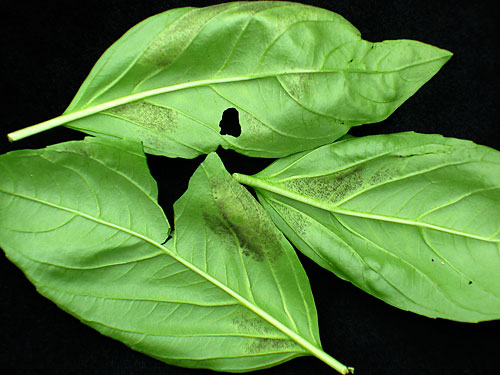
Downy Mildew Close-up

Downy Mildew Close-up

Downy Mildew Spore Growth on Basil Leaves

Downy Mildew Spore Growth on Basil Leaves

Downy mildew of basil is a new destructive disease that appears to be here to stay. In the first years of its appearance in the U.S., complete crop losses occurred for some growers because basil leaves with any mildew are unmarketable. Applying fungicides frequently and starting before first symptoms are considered necessary to control basil downy mildew effectively.

“Sweet basil (Ocimum basilicum L., Fam. Lamaiaceae) is the most commercially important annual culinary herb crop grown in the United States. Sweet basil is grown for culinary use for both fresh and dry consumption and as a source of essential oil and oleoresin for manufacturing perfumes, food flavors, and aromatherapy products.

Basil downy mildew… is a new disease of basil in the United States. …In the United States, the pathogen was first discovered in Florida in the fall of 2007. Since that time, basil downy mildew has been found throughout the eastern United States and in regions of commercial basil production in the Midwest and California.

Once basil plants become infected and develop symptoms, they are no longer marketable as a fresh product. …Currently, there is no known resistance or tolerance to basil downy mildew leaving 100% of the sweet basil acreage in the eastern United States vulnerable to the pathogen. Without adequate chemical control options and genetic resistance, basil downy mildew has the potential to destroy basil production in the eastern United States and in all other areas where basil is being produced.

Selection criteria such as foliar morphology, plant architecture as well as the presence of secondary metabolites and other factors that provide a less favorable microenvironment to the pathogen need to be examined as potential avenues for developing downy mildew-resistant sweet basil cultivars. Until this can be achieved, basil growers will have to rely on multiple applications of the few commercial fungicides currently registered to produce a marketable crop. Additionally, for organic basil growers, control of basil downy mildew will be even more challenging because there are fewer approved products labeled for organic use.”

Authors: Wyenandt, C. A., et al.
Affiliation: Department of Plant Biology and Pathology, Rutgers University
Title: Susceptibility of basil cultivars and breeding lines to downy mildew (Peronospora belbahrii)
Source: HortScience. 2010. 45(9):1416-1419.

Pesticide Sprays Improve Food Safety

Cherry Fruit Fly

Cherry Fruit Fly

Plants are living, dynamic organisms that must defend themselves from bacteria, fungi and insects. Plants in nature synthesize toxic chemicals in large amounts as a primary defense against hordes of bacterial, fungal, and insect predators. Plants respond to attacks by increasing their production of self-defense chemistries. To be effective, these self-defense chemistries are often potent toxicants. The good news is that the levels of natural toxicants of food plants are very much under human control through the application of small amounts of man-made pesticides. Farmers treat crops with pesticides to reduce damage from insects and fungi. When plants do not have to fight off insects and fungi, the plants make less of the self-defense chemicals. Adding a tiny amount of synthetic pesticide reduces exposure to larger amounts of plant-produced toxic chemicals.

“An unrecognized benefit of use of crop protection chemicals is a reduced net exposure to toxicants. …crops that are stressed by competition from weeds, and from attack from infections and bugs, have increased levels of ‘natural’ pesticides. Crops protected from stress have smaller amounts of ‘natural’ pesticide. These ‘natural’ pesticides commonly are mutagenic and carcinogenic, as well as having the capability of inducing a large variety of other types of toxicities. Manufactured crop-protection chemicals are screened for mutagenicity, carcinogenicity, organ toxicity and the like, and exposure is rigorously regulated. Hence, proper use of crop-protection chemicals can cause a net reduction in toxicant exposure by reducing exposure to the potentially more hazardous and abundant ‘natural’ pesticides.”

Author: Mattsson, J. L.
Affiliation: Health and Environmental Sciences, The Dow Chemical Co.
Title: Let’s end the double standard for natural versus manufactured chemicals
Source: J Occup Health. 1996. 38:94-96.

To Increase Income and Competiveness, Public Policy Should Educate African Maize Farmers About the Benefits of Using Herbicides

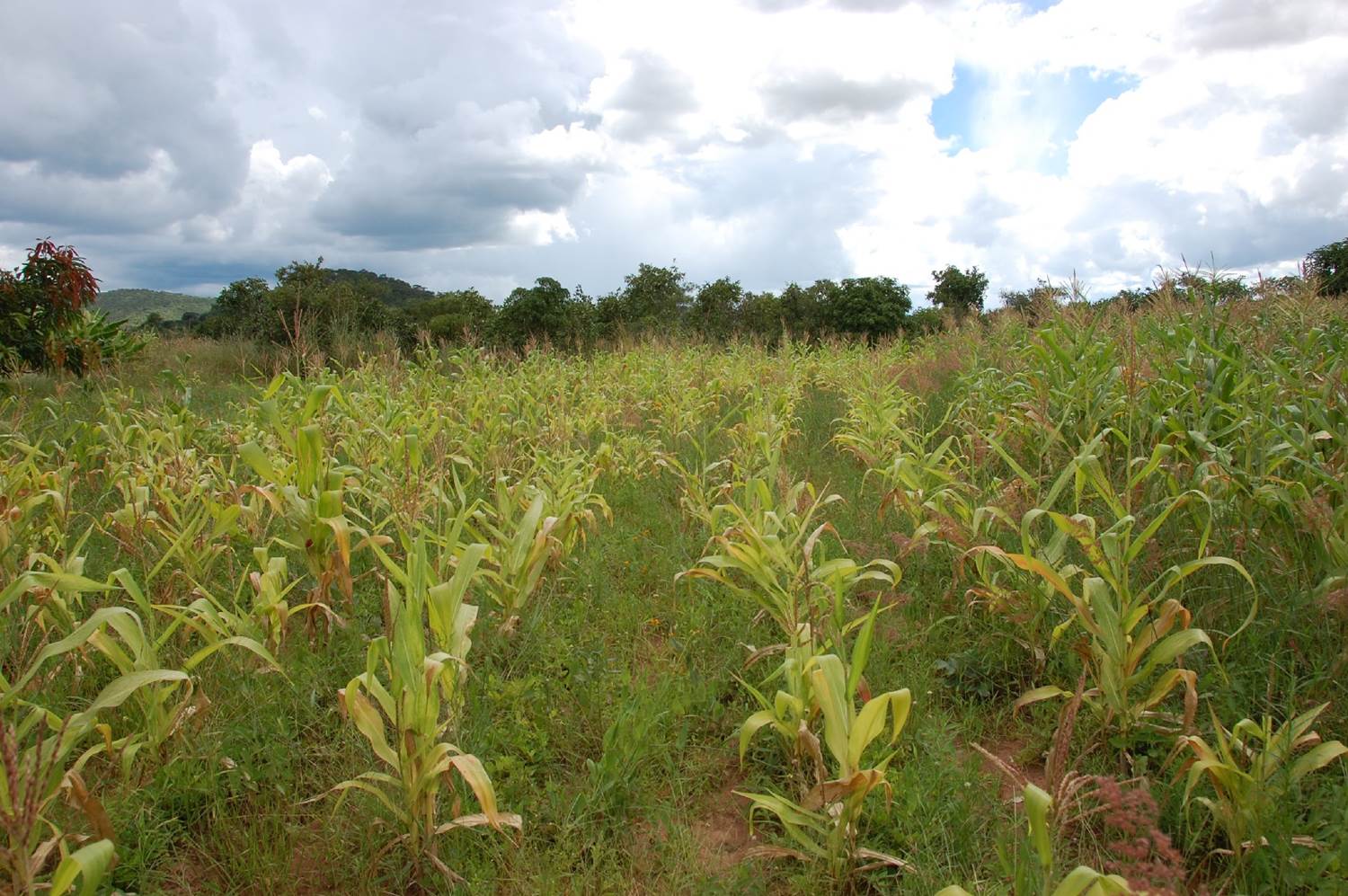
Weedy Maize Field: Africa

Weedy Maize Field: Africa

Maize consumption is a major source of calories for millions of people in Sub-Saharan Africa. Within the next few decades, the majority of people in Sub-Saharan Africa will be living in cities. Countries in eastern and southern Africa are increasing imports of staple foods, including maize. In order to be competitive, African farmers need to reduce the cost of producing a unit of maize. Herbicide adoption would greatly reduce costs of growing maize and lead to greater yields and farmer income and competiveness.

“Rural smallholder production remains highly labor-intensive. On average, family labor accounts for 62% of the total cost of maize production in Zambia’s small- and medium-scale farm sector. Promoting the identification and adoption of practices and technologies that save labor and/or identifying labor-productivity-enhancing technologies through research and development will therefore help to make Zambian maize more competitive and allow farmers to maintain profitability even at lower producer prices.

Although only 3% of fields had herbicides applied, regression results suggest the benefits of its use are quite high. All else equal, applying herbicides increases gross margin between ZMK 363,700 to ZMK 376,300 per hectare planted… The magnitude of this effect is fairly large compared to the national average margin of ZMK 1,108,542 (in other words, at the mean, herbicide use would increase gross margins by roughly a third). …these results indicate that public policy measure should be considered to educate farmers about the benefits of herbicide application, as its contribution to smallholder income growth and regional competitiveness may be comparable to and highly synergistic with increased fertilizer use.”

Authors: Burke, W. J., et al.
Affiliation: Zambia Food Security Research Project (FSRP)
Title: The cost of maize production by smallholder farmers in Zambia
Source: Food Security Research Project. Working Paper 50. March 2011. Available at: http://www.aec.msu.edu/agecon/fs2/zambia/index.htm 

Fungal Colonies on Apples are not Acceptable to Consumers

Sotty Apple


Sooty blotch and flyspeck are diseases of apples which result from fungi colonizing the fruit surface without penetrating below the peel. These fungal colonies simply grow on the surface of the apple. However, consumers don’t want to purchase apples with any blemishes. As a result, numerous fungicide sprays are used to prevent the fungal colonies and meet consumer demands.

“Sooty blotch and flyspeck (SBFS) is a disease caused by a complex of saprophytic fungi that colonize the epicuticular wax layer of apple and several other fruit crops in humid production regions worldwide. In the eastern half of the continental United States, SBFS is a major problem for commercial apple growers because the dark blemishes of SBFS colonies result in downgrading fruit from fresh-market to processing use, with economic losses as high as 90%

To suppress SBFS and fruit rots, most apple growers in this region apply fungicide sprays every 1 to 2 weeks from 7 to 10 days after petal fall until shortly before harvest.”

Authors: Diaz Arias, M.M., et al.
Affiliation: Department of Plant Pathology, Iowa State University
Title: Diversity and Biogeography of Sooty Blotch and Flyspeck Fungi on Apple in the Eastern and Midwestern United States.
Source: Phytopathology. 2010. 100(4):345-355.

California Alfalfa Production Would be One Million Tons Lower with Conversion to Organic Practices

Alfalfa Weevil on Damaged Leaf

Alfalfa Weevil on Damaged Leaf

California is the #1 dairy state in the U.S. and one million acres of alfalfa are grown in the state. Alfalfa growers use herbicides to control weeds and insecticides to control key pests-the Egyptian and alfalfa weevils. Organic alfalfa growers do not have effective methods of controlling weeds and insect pests and they incur yield losses – particularly by harvesting early to avoid damage. A recent economic analysis from the University of California estimated that organic production of alfalfa is one ton less per acre which would mean a loss of one million tons of alfalfa if the entire state converted to organic practices.

“The Egyptian and alfalfa weevils are the most serious pests of alfalfa, causing yield and quality losses to the first harvest in late winter/early spring.

Most organic growers rely on early harvest to minimize weevil damage, but yields will be reduced.

The risks associated with the production of organic alfalfa hay should not be minimized. Weather and other risks are a continual concern for conventional growers, but organic growers face additional risks such as pest outbreaks that cannot be adequately controlled with organic methods.

Average annual yields in California range from 5.0 to 10 tons per acre with three to ten cuttings depending on location and alfalfa variety. Eight tons per acre over seven cuttings per year is common in the Central Valley. The crop in this study is assumed to yield 7.0 tons of hay per acre because yields of organic alfalfa are often slightly lower than conventional due to only partial control of many pests and weeds and the difficulty meeting the nutritional needs of alfalfa using solely organic sources.”

Authors: Rachael F. Long, et al.
Affiliation: US Cooperative Extension Farm Advisor, Yolo, Solano & Sacramento Counties
Title: Sample costs to establish and produce organic alfalfa hay California 2013
Source: University of California Cooperative Extension. 2013.