Insecticides Defend Florida Avocado Trees from Invasive Species

14

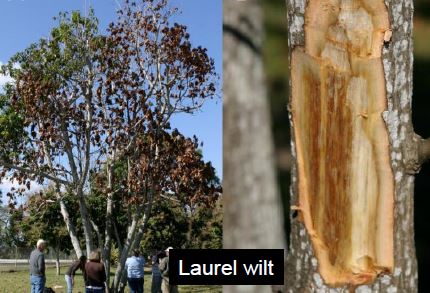
The redbay ambrosia beetle is an invasive species that vectors a fungus, Raffaelea lauricola, that causes laurel wilt, a lethal disease of several plant species within the Lauraceae, including avocado… The spread of the fungus has affected large areas of native Lauraceae trees in the southeastern United States and is now threatening the avocado industry in south Florida.

“In February 2012, the first avocado tree in a commercial grove located in the northeastern quadrant of the avocado growing area was diagnosed with R. lauricola. As of July 2013, 90 trees have been diagnosed R. lauricola positive, and >1,900 symptomatic trees have been removed as part of a suppression and sanitation strategy. …Because of the lack of alternative pest management strategies (e.g. biological control, repellants, etc.), private landowners and avocado producers rely on applications of chemical insecticides to complement sanitation practices and protect trees in groves affected by this beetle-disease complex.

The current strategy is based in early detection and removal of diseased trees to eliminate beetle breeding sites and fungal inoculum sources. The diseased trees are uprooted, the stump and roots burned, the trunk and limbs are chipped, and the chips and adjacent trees are sprayed with insecticides.”

Authors: Carrillo, D., et al.
Affiliation: Tropical Research and Education Center, University of Florida.
Title: Potential of Contact Insecticides to Control Xyleborus glabratus (Coleoptera: Curculionidae), a Vector of Laurel Wilt Disease in Avocados
Source: Journal of Economic Entomology. 2013. December.

New Fungicides Improve Management of Vomitoxin

Fusarium Head Blight

Fusarium Head Blight

Fusarium Head Blight (FHB), also known as scab, is a destructive disease of wheat and other small grains. In the spring, ascospores and/or conidia are released from crop residues and are spread by wind or splashing water. They land on wheat heads and during wet, warm weather they germinate and infect glumes, flower parts, or other parts of the head.

In addition to lowering grain yield and quality, F. graminearum produces mycotoxins, primarily the trichothecenes deoxynivalenol (DON), nivalenol (NIV) and T-2 toxin. …These mycotoxins are harmful to humans and livestock. In North America, DON, also known as vomitoxin, is the most common and economically important mycotoxin found In Fusarium-infected wheat. …Grain with high concentrations of DON often is discounted or rejected at the elevator, which exacerbates the losses incurred by the farmer.

“In the U.S., a less than desirable number of current commercial wheat cultivars have moderate resistance to FHB and this resistance can be overwhelmed in years with high disease intensity. Fungicides are often applied to control FHB when favorable conditions for disease development are forecast.

Over the last two decades, there has been considerable improvement in the effectiveness of fungicides in controlling FHB and DON. This improvement is attributable in part to improved fungicide chemistries and greater knowledge gained through research on fungicide application rates, timing, and technology.

The best approach to managing FHB is to integrate available management strategies. Research has shown that integrating cultivar resistance with fungicide application can be effective management strategy for FHB.

Availability of moderately resistant cultivars and new fungicide chemistries coupled with improved fungicide application technology has led to greater farmer adoption of an integrated strategy in the management of FHB and DON.”

Authors: Wegulo, S. N., et al.
Affiliation: Department of Plant Pathology, University of Nebraska-Lincoln.
Title: Integration of fungicide application and cultivar resistance to manage fusarium head blight in wheat.
Source: InTech. Fungicides – Showcases of Integrated Plant Disease Management from Around the World. Available at: http://www.intechopen.com/books/fungicides-showcases-of-integrated-plant-disease-management-from-around-the-world

Herbicides are Widely-Used by Maize Farmers in Ghana with Great Benefits

Weedy Maize Field in Africa

Weedy Maize Field in Africa

Ghana leads the way in terms of herbicide use by maize farmers in Africa. Farmers applying herbicides are enjoying higher maize yields, less need for backbreaking handweeding, and lower costs of weeding.

“Herbicide is widely used among maize farmers in Ghana. Seventy-three percent of maize area was applied with herbicide either before or after planting.

Figures in Ghana are far higher than earlier estimates for Africa south of the Sahara: 3 percent adoption among maize smallholders in Africa south of the Sahara.

Plots treated with herbicide have a significantly higher average yield than those without herbicide, with the greatest difference in the Northern Savannah zone. In plots with fertilizer and certified seed, those with herbicide have 1.4 tons/hectare more yield than those without herbicide in the Northern Savannah zone.

Given serious labor constraints and the relatively cheaper herbicide formulations available, herbicide use has been popular across all regions. Comparison of weeding costs suggests that whereas farmers using herbicide spend 359 cedi/hectare total in purchasing herbicide (9 liters at 8 cedi/liter) and an additional 41 person-days for manual weeding, farmers not using herbicide spend 511 cedi/hectare for manual weeding for 73 person-days on average. It is apparent from this calculation that it is cheaper to purchase herbicide than to hire labor or use family labor for weeding.”

Authors: Ragasa, C., et al.
Affiliation: International Food Policy Research Institute.
Title: Patterns of Adoption of Improved Maize Technologies in Ghana.
Source: IFPRI. July, 2013. Working Paper 36. Available at: http://www.ifpri.org/publication/patterns-adoption-improved-maize-technologies-ghana

Fungicides Prevent Significant Yield Losses in Argentinian Wheat Fields

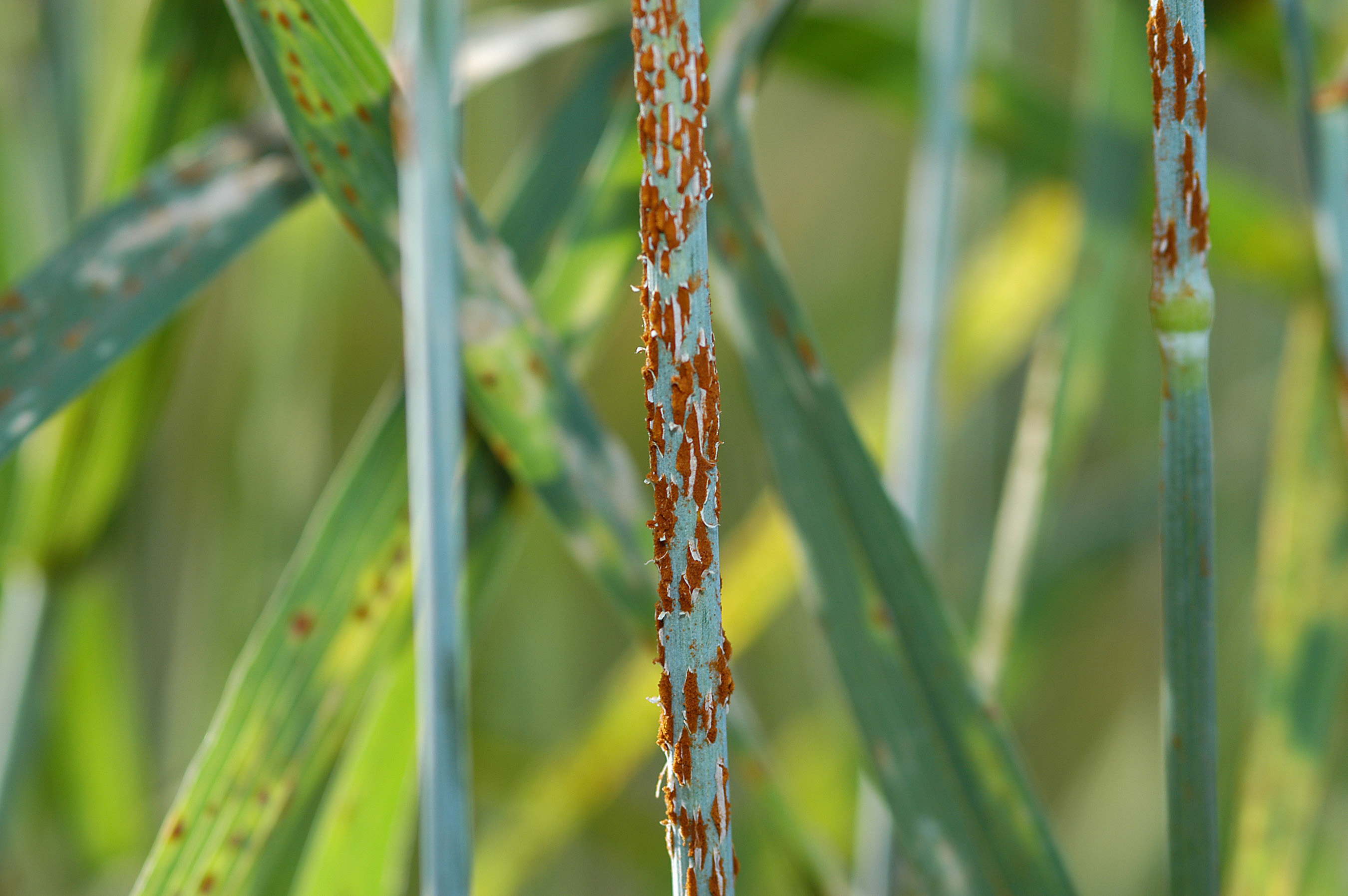
Wheat Rust is a Common Problem in Argentina

Wheat Rust is a Common Problem in Argentina

Argentina is one of the countries with the largest wheat-growing area in the world with more than 5 million hectares spread all over the country.

The grain production region has experienced severe tillage changes in the past twenty years, mostly due to the increased interest in maintaining soils covered with plant residues.

No tillage can reduce costs by decreasing fuel consumption required to produce a crop. However, in the wheat/soybean system under no tillage, as in wheat following wheat, the inoculum of fungi may survive until the next wheat season. Therefore, the use of fungicides is essential to decrease the severity of diseases.

Fungicides are usually applied on foliage to control diseases but they are also used for seed treatments to prevent seed decay. Leaf rust, septoria leaf blotch, and tan spot are the most important diseases in terms of potential yield reduction in Argentina.

“Planting resistant cultivars is one of the least expensive and most effective management strategies to prevent diseases. However, cultivars with an adequate genetic resistance level to necrotroph foliar diseases are scarce, and usually resistance to leaf rust is complete, conditioned by one or a few genes and has a low level of durability in Argentina. Therefore, chemical protection together with cultural practices is a common method of control. In addition, fungicides are also important because Argentinian wheat region combine high yield potential cultivars with high infection pressure, both deriving from adequate temperature and moisture levels, large application of N fertilizers and rotations dominated by cereals, which promote progression of some foliar diseases.

The results of experiments carried out in Argentina indicate that sowing wheat following wheat in no tillage is possible without significant yield losses if effective disease management practices including moderately resistant cultivars, N fertilization and fungicides are applied.”

Authors: Simon, M. R., et al.
Affiliation: National University of La Plata, Argentina.
Title: Recent Advances on Integrated Foliar Disease Management with Special Emphasis in Argentina Wheat Production.
Source: InTech. Fungicides – Showcases of Integrated Plant Disease Management from Around the World. Available at: http://www.intechopen.com/books/fungicides-showcases-of-integrated-plant-disease-management-from-around-the-world

No Small Wonder Why Farmers Use Herbicides

Soybean Growth With and Without Herbicide Treatments

Soybean Growth With and Without Herbicide Treatments

Farmers all over the world use herbicides to prevent weeds from taking over their fields. A large number of non-chemical methods of weed control have been tested and are available. However, farmers prefer herbicides. A prominent weed scientist cites the reasons why…..

“In comparison with herbicides, non-chemical methods of weed control are often: less effective, more unpredictable, more expensive, have labour/timeliness constraints, may not reduce the requirement for herbicides, may provide little or no visual evidence of success, may have adverse environmental implications and are often more complex to manage.”

Author: Moss, S. R.
Affiliation: Plant and Invertebrate Ecology Department, Rothamsted Research, Hertfordshire, UK.
Title: Weed research: is it delivering what it should?
Source: Weed Research. 2008. 48:389-393.

Horses and Cows Prefer Weed-Free Alfalfa

05

Alfalfa is the perfect food for horses and cows. High in protein, minerals and nutrients, alfalfa is essential for a balanced diet. When alfalfa is harvested mechanically, any weeds in the field are also harvested and contaminate the alfalfa bales, which lowers the value of the alfalfa bale for animal feed. As a result, alfalfa growers, particularly in California, the number one alfalfa state, use herbicides to produce high-quality weed-free alfalfa bales.

“The selling price for clean high quality alfalfa remains as much an incentive today as ever. It is estimated that greater than 75% of acreage is treated for weeds on an annual basis. The market financially rewards weed free high quality forage with higher prices. In 2011, the price for high test >56 TDN weed free hay topped $280 per ton to the grower, as compared to lower quality non test hay with few weeds approximately $160 per ton. Extremely weedy or rain damage hay was priced even lower. Weed free fields remain an economic incentive for best prices and longer lasting stands. When weeds take over, it weakens alfalfa plants, increases incidence of diseases, insects, and lowers hay quality and a significant loss of income. Maintaining good weed control practices is necessary to sustain an economically viable and healthy producing crop of alfalfa for many years.”

Author: Canevari, M.
Affiliation: UCCE Advisor.
Title: Advances in weed management, is it getting better or worse?
Source: 2011 41st California Alfalfa Symposium. Proceedings available at: http://alfalfa.ucdavis.edu/+symposium/proceedings/2011/11-102.pdf

Insecticides Manage New Threat to Traditional St Patrick’s Day Meal

Bagrada Bugs

Bagrada Bugs

Every year around St Patrick’s Day, cabbage becomes a hit again thanks to the traditional meal of corned beef and cabbage. There is typically a 50 to 75% increase in demand for green cabbage beginning about two weeks before the March 17 holiday. California leads the nation in cabbage production accounting for about 24% of total U.S. production. Most of the cabbage from California at this time of the year comes from the state’s southern coast and southwestern desert. In 2010, a new pest of cabbage, the Bagrada bug, made its grand entrance into these desert cabbage fields and threatened the availability of cabbage for St Patrick’s Day.

“2010 was a year that many winter cole crop vegetable growers in the Desert Southwest would rather forget, thanks to the bagrada bug which attacked plant seedlings en masse.

Since then, research conducted at the University of Arizona and the University of California has led to a better understanding of the pest, its biology, and has helped reduce yield and income losses for growers.

When the bagrada bug made its 2010 grand entrance, winter vegetable growers, pest control advisers, and entomologists were stunned.

“The pest caught us blind. Suddenly the bagrada bug was everywhere in the desert,” says John Palumbo, University of Arizona (UA) Extension specialist and entomologist based at the Yuma Agricultural Center.

The pest attacks the underside of leaves during the day, and hides at night in the soil and under dirt clods.

The bagrada bug can quickly destroy a seedling. In Palumbo’s trials, a single insect placed on a cotyledon killed the plant in about 60 hours under laboratory conditions.

In another lab test, small pots were lined up in a row, each containing one of 12 different vegetable seedlings. The bagrada passed right by the head lettuce to feast on cole crops. Its feeding favorites include green cabbage, red cabbage, and radish.

If the plant lives, the damaged plant develops multiple unmarketable small heads instead of a single large marketable head or floret.

First found in South Africa, the insect arrived in the western hemisphere in the U.S. in 2008 in California; possibly as a stow-a-way on a cargo ship arriving at the Port of Long Beach. The insect then scurried into neighboring Orange County and kept moving.

Palumbo has conducted several trials with synthetic insecticides and natural predators. While he said bio-control is a ways off, pyrethroid insecticides currently provide the most effective control.

“Newer pyrethroids on the market appear to be more consistent with good knockdown and residual control.”

Residual activity usually lasts about five days.

Looking to the future, Palumbo says the best insecticidal control of bagrada may lie in neonicotinoid seed treatments, based on trial findings.”

Author: Blake, C.
Affiliation: Reporter
Title: Researchers making strides against bagrada bug
Source: Western Farm Press. 2013-11-20. Available at: http://westernfarmpress.com/vegetables/researchers-making-strides-against-bagrada-bug

Carbon Footprint of Organic Weed Control Much Higher than Use of Herbicides

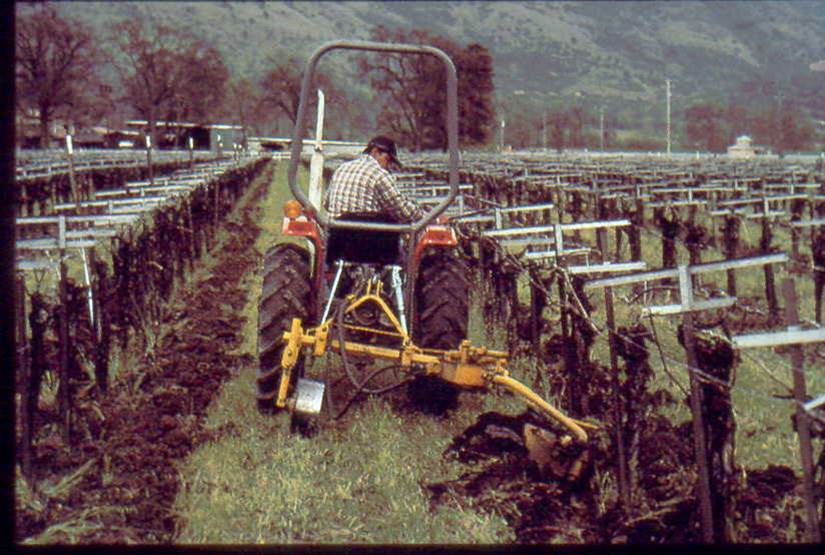
Cultivating Grape Vineyard

Cultivating Grape Vineyard

Farmers have a choice for managing weeds. They can apply herbicides or use cultivation to remove weeds. It takes 2-3 cultivation trips to equal the effectiveness of a single herbicide treatment. As a result, organic farmers, who cannot use herbicides, release more carbon to the atmosphere than farmers who use herbicides.

“When it comes to farming, Monterey County winegrape grower Steve McIntyre believes in using the best management practices available. Some are conventional and some are organic. Bottom line: they’re sustainable.

McIntyre, whose office is in Soledad, farms about 800 acres of winegrapes in the county, which is fast becoming one of the state’s premier winegrape growing regions.

“To me, farming organically or biodynamically is like farming in a box. There are too many rules if you don’t have the opportunity to use the latest and best science to lower your carbon footprint.”

McIntyre points to weed control to illustrate his point of where organic farming has its limitations.

“When you cultivate the weeds in the vineyard, new weeds germinate and come roaring back fairly quickly, as opposed to using a good herbicide, which results in the weeds coming back much slower.

“If you cultivate you have to make two or three trips through the vineyard, as opposed to one trip with a sprayer,” he continued. So with conventional farming, you have less equipment, less air pollution, fewer natural resources to build the equipment and power the equipment.

“If you look at weed control with a carbon calculator, there is a huge difference,” he said. “If you look at organic weed control, the carbon footprint for that is two or three times greater than the carbon footprint of a good herbicide.”

Author: Adler, S.
Affiliation: Reporter.
Title: Winegrape grower approaches farming like evolving science.
Source: Ag Alert. April 15, 2009.

Jimmy Carter Was Right: Herbicides Have Improved Peanut Yields

01

In a 1977 Question-and-Answer Session with Department of Agriculture employees, President Carter recalled the tremendous growth in peanut yields on his Georgia farm which resulted when they stopped plowing. He credited research that showed that more plowing meant less yield. It turns out that he was right: the plowing spread disease that lowered peanut yield. Herbicides made the reduction in plowing possible and improvements in herbicides have continued to benefit peanut farmers.

“Improvements in weed management are a contributing factor to advancements in peanut yield. …Cultivation was traditionally an integral component in peanut weed management. New herbicide developments improved overall weed control and cultivation is no longer needed. This directly addresses the susceptibility of peanut to infection by soil-inhabiting fungi. There is a direct correlation between incidence of stem rot and displaced soil thrown on peanut plants from cultivation. Not needing to cultivate lessens disease epidemics and protects peanut yield. In 2013, 21 herbicide active ingredients were registered in the U.S. for weed control in peanut. In contrast, there were 12 herbicide active ingredients registered for use on peanut in 1980. Recently developed herbicides are more consistent, versatile, and have a broader-spectrum than earlier herbicides. …There were no selective postemergence herbicides registered in 1980 that controlled emerged grasses. In  2013, there were three postemergence herbicides registered for use on peanut to control annual and perennial grasses…. Registrations of these herbicides were major weed control milestones in peanut production and have largely eliminated yield losses from grasses that escaped earlier control efforts.”

Author: Johnson, W. C.
Affiliation: USDA-ARS, Tifton GA
Title: Yield Advances in Peanut – Weed Control Effects
Source: 2013 Proceedings of the American Peanut Research and Education Society, Inc. http://apresinc.com/wp-content/uploads/2014/02/Volume-45-Proceedings_2013.pdf

French Government Policies to Reduce Pesticide Use Will Lower Food Production

Sprays!

Pesticide Spraying: French Vineyard

French farmers spend several billion Euros on pesticides each year. A large number of pesticide treatments are made to crops in France: wheat (4), sugarbeets (4), rapeseed (6), potatoes (17), apples (36) and vineyards (7-22). The French government has announced a policy to reduce the use of pesticides by 50%. The French National Institute for Agricultural Research (INRA) estimated the impacts on crop production as a result of the pesticide use reductions.

“The results demonstrated that the commitment of the Environment Round Table to a 50% reduction of pesticide use from current levels is a difficult target to achieve. During an average year similar to 2006, this could correspond to the results of a simulation under which all French farming would switch to integrated production: the reduction in pesticide use would then be estimated at 50% in arable crops, 37% in viticulture, 21% in fruit orchards and 100% in grasslands; drops in yield (in value terms) would then be observed, estimated at 12% for arable crops, 24% for viticulture and 19% for fruits (based on 2006 prices).”

Author: INRA
Affiliation: INRA
Title: Ecophyto R&D – which options to reduce pesticide use?
Source: Ecophyto R&D. January 2010. Pgs. 1-8.