Paying Farmers to NOT use pesticides Stalls Increasing Food Production

Picture1

With 2 billion more people inhabiting the earth in the next 40 years, food production must increase. Some countries, such as Switzerland, have adopted policies to encourage farmers to not use pesticides. The non-use of pesticides is slowing down increased food production. Policymakers need to be aware of these consequences.

“We analyze trends in crop yields and yield variability of barley, maize, oats, rye, triticale and wheat in Switzerland from 1961 to 2006. It shows that there have been linear increases in crop yields since the 1960s. However, yields of barley, oats, rye, triticale and wheat have leveled off in Switzerland since the early 1990s, which contrasts linear trends in cereal yields that is usually assumed for Europe. We show a relationship between the introduction of agricultural policy measures towards environmentally friendly cereal production that fostered widespread adoption of extensive farming practices and the observed leveling-off of crop yields. Thus, this paper emphasizes that agricultural policy can be an important reason for slowing crop yield growth.

Recent declines and leveling-off of yields are attributed to the adoption of an environmental program that aims to reduce the environmental load of agriculture as well as to decreasing crop prices.

In Switzerland, agricultural policy reforms in 1992 introduced ecological direct payments for extensive cereal production and led to major changes in production patterns… In this ancillary payment scheme no application of fungicides, plant growth regulators, insecticides and chemical-synthetic stimulators of natural resistance is allowed.

…the share of the cereal production area under this ecological direct payment scheme to the total area under cereals (except maize) was 37% in 1992, increased to 54% in 1997, but remained stable at about 50% since then.

The adoption of extensive cereal production in the framework of ecological direct payments leads to crop yield reductions in different ways: crop yields in extensive farming systems are smaller than for intensive management, simply due to the non-use of agro-chemicals.

Author: Finger, R.
Affiliation: Agri-food and Agri-environmental Economics Group, Zurich, Switzerland.
Title: Evidence of slowing yield growth – the example of Swiss cereal yields.
Source: Food Policy. 2010. 35:175-182.

40 Million People Protected from Blindness Thanks to Insecticides

Naked Africans Walking

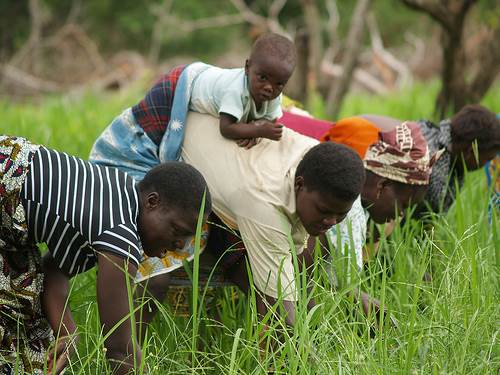
Children leading blind adults in Africa

Onchocerciasis, also known as river blindness and Robles disease, is caused by infection with the parasitic worm Onchocerca volvulus. Symptoms include severe itching, bumps under the skin, and blindness.

The parasite worm is spread by the bites of a black fly of the Simulium type. Usually many bites are required before infection occurs. These flies live near rivers therefore the name of the disease. Once inside a person the worms create larva that make their way out to the skin.

“The control of onchocerciasis, or river blindness, in West Africa has been hailed worldwide as a public health and economic development success. The World Health Organization (WHO) and the World Bank estimate that because of The Onchocerciasis Control Programme (OCP) in West Africa 40 million people have been protected from river blindness and an estimated 600,000 cases of blindness have been prevented in the 11 participating countries, 25 million hectares of arable land in previously infected river valleys have been open to resettlement and cultivation, and food resources for an estimated 17 million people are now being produced.

OCP achieved its success by controlling the vector of this disease, a Simulium black fly that transmits the disease-causing filarial worm, through application of insecticides to vast stretches of rivers (>50,000km at the peak of control activities) spread over large geographical areas (1,235,000 km2). Applications were frequent (near-weekly during 10-12 months each year) and, in some cases, lasted for 20 years.”

Authors: Resh, V. H., et al.
Affiliation: Department of Environmental Science, University of California, Berkeley.
Title: Long-Term, Large-Scale Biomonitoring of the Unknown: Assessing the Effects of Insecticides to Control River Blindness (Onchocerciasis) in West Africa.
Source: Annu. Rev. Entomol. 2004. 49:115-139.

Rotted Carrots: Not A Pretty Picture

Scleretinic Rot of Carrots

Sclerotinia Rot of Carrots

Sclerotinia rot of carrot (SRC), caused by Sclerotinia sclerotiorum, is one of the most economically important diseases of carrots. Losses to this disease can occur from pre-harvest epidemics, originating in the field, or from post-harvest outbreaks caused by infected carrots entering storage. Post-harvest outbreaks are particularly devastating, with storage losses of some commercial growers reported as high as 50% in Canada.

“Typically, in Prince Edward Island (PEI), where about 300 ha of carrots are grown, losses in storage due to SRC occur in most years. In 2006, losses due to SRC cost carrot growers in PEI approximately $500,000. In 2007, losses in storage of approximately 25% (valued at $350,000) occurred, and yet, 2007 was not considered a year with high disease pressure. After witnessing the serious disease pressure and crop losses occurring at the local vegetable co-op first hand, our research teams initiated a program to examine potential post-harvest control options for SRC in storage.

Based on the results of our studies, fludioxonil (Scholar) was found to be an excellent tool for managing SRC in storage. …In 2008 and again in 2009, Scholar 50WP (a product currently registered in Canada for post-harvest control of some fruit diseases) received emergency registration in Canada for post-harvest use by carrot growers for control of SRC in storage. Feedback from growers in PEI indicated that the post-harvest use of fludioxonil in 2008 prevented the type of losses due to SRC experienced in previous years.”

Peters, R. D., et al.
Affiliation: Agriculture and Agri-Food Canada.
Title: Post-harvest Application of Fludioxonil for Control of Sclerotinia Rot (Sclerotinia sclerotiorum) of Carrots in Storage.
Source: Carrot Country. Winter 2009. Pgs. 12-15.

Gentlemen Farmers Find the Going a Little Rough

picture caption

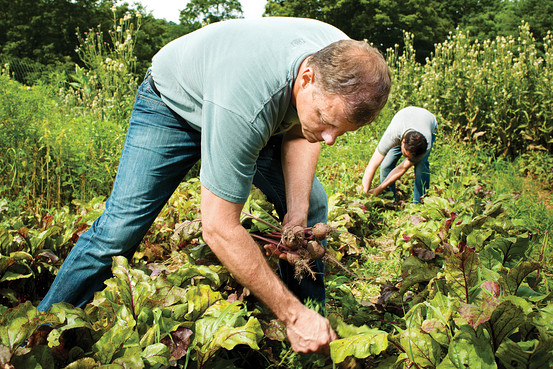
Steve Kettelle, successful real estate broker

When several ultra-rich celebrities and businesspeople tried their hand at organic farming, they found the going a little rough.

Of course, they knew going in that growing any kind of crop these days demands not only a high level of skill and knowledge, but a comprehensive grasp of factors affecting the bottom line. Didn’t they?

According to an article in WSJ. Money magazine, these modern-day gentleman, and gentlewoman, farmers – who had hoped to prove the principles of organic farming once and for all – instead found it costly, incredibly labor intensive and full of confusing and often conflicting regulations.

“The nation is in the middle of an organic-food boom, and in case you haven’t noticed, a surprising number of boldfaced names are becoming part of it. That includes Oprah Winfrey. …as well as comedian Roseanne Barr.

This gentleman’s farming—or gentlewoman’s farming—movement has spawned its own lifestyle brand.

But the good intentions of these type-A types notwithstanding, the economics of organic farming are a potential blow to their fairly large egos. These are individuals with scores of successes in life, but experts say that despite the price premiums that come with organic labeling or other likeminded practices, the math doesn’t always work out. It is just too expensive to do.

With organic farming, there’s an issue of scale that makes turning a profit hard. In myriad ways, conventional factory farms benefit economically by virtue of their size; not just by purchasing feed and seed in volume, but also in handling pest and weed control. For example, on an organic farm, weeding can be far more labor intensive because it can involve actual weeding. And crops can wither due to one problem or another, with no jug of Roundup to remedy the situation.

“We had a late-season blight which consumed an entire potato crop….It can happen in a day,” says Steve Kettelle, a successful Florida real-estate broker who started a certified-organic farm in Pine City, N.Y., after partially getting out of the business before the bust, Kerrelle has learned over time to maintain a good diversity of crops in case one fails, which they inevitably do. He considers himself a success story in that he’s in the black with his roughly five acres of produce, but he concedes if he factored the time he puts into his plot, his hourly earnings “would probably be below minimum wage.”

Author: Passy, C.
Affiliation: Reporter.
Title: The New Gentleman Farmer.
Source: The Wall Street Journal. Available at: http://online.wsj.com/news/articles/SB10001424052702303997604579242722533288250

Give Peas a Chance

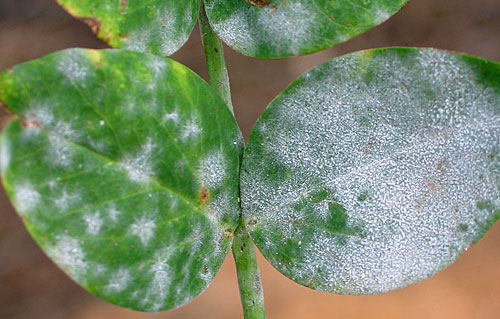
Pea Powdery Mildew

Pea Powdery Mildew

Pea powdery mildew caused by the obligate biotrophic fungus Erysiphe pisi DC is an air-borne disease of worldwide distribution, being particularly important in climates with warm dry days and cool nights. The disease can cause 25-50% yield losses, reducing total yield biomass, number of pods per plant, number of seeds per pod, plant height and number of nodes. The disease can also hasten crop maturity, rapidly raising tenderometer values beyond optimal green pea harvesting levels. Severe pod infectation leads to seed discolouration and downgrading of seed quality. It can also damage quality of processing pea giving tainted and bitter characteristics. Conidas and fungal debris from heavily infected crops can cause breathing and allergy problems for machinery operators.

“Crop rotation is of limited usefulness in managing powdery mildew. Powdery mildew epidemics sweep large areas with ease, and the separation of crops in time and space can delay epidemics but not prevent them.

Fungicide must be applied when the number of plants infected is still low and infection level on each plant is minimal (<5% infection).

Generally, only one application is required, unless infection comes in very early and/or conditions conducive to infection persist. In this case, follow-up applications may be required.

Extensive research throughout the agrochemical industry expanded options for powdery mildew control in the 1980s through introduction of several triazoles (sterol demethylation inhibitors) and two additional members of the morpholine group, fenpropimorph and fenpropidin. These have proven very effective in controlling pea powdery mildew.

More control options are recently available with the broad-spectrum fungicides strobirulins and anilinopyrimidines and the powdery mildew specifics spiroxamine and quinoxyfen. New mixtures are continuously being tested and approved for powdery mildew control in pea, such as the formulation mixture of the strobirulin pyraclostrobin plus the carboxamide boscalid.”  

Authors: Fondevilla, S., and D. Rubiales.
Affiliation: University of Cordoba, Spain.
Title: Powdery mildew control in pea. A review.
Source: Agron. Sustain. Dev. 2012. 32:401-409.

Herbicides Improve Productivity of Traditional Maize Farmers in Mexico

Milpan Cultivation

Milpa Cultivation

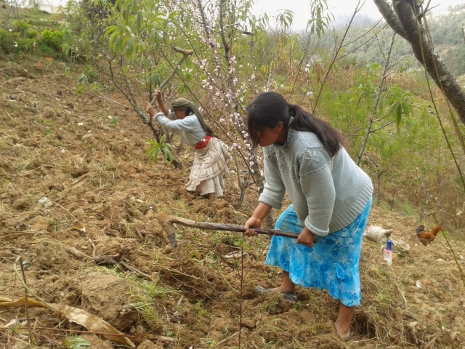
Milpa cultivation involving cutting an area of forest, burning, and planting crops has existed in the Yucatan Peninsula for more than three millennia. Fallow periods are short and decreasing, leading to a productivity collapse of the system. Technologies that increase yield and maintain plots under cultivation have the potential to decrease the land area needed for family food production, resulting in more mature forests.

Management practices are needed that increase yield in the first year of cultivation, and maintain yield with continued cultivation. Obvious solutions for achieving these outcomes, considering the hypothesized limitations from weed competition and nutrient depletion, are herbicides and fertilizers.

In milpa, weeds and pests were traditionally controlled manually; however, pesticide use has become more common.

For any cultivation year, labor requirements were much greater for hand control than for chemical control.  …If chemical control can be implemented effectively it represents an opportunity for farmers to reduce labor input, and continue to cultivate the same land for a longer period.

At harvest, herbaceous weed cover was much less following chemical control than with hand or no weeding and with chemical control, there was no increase in weed pressure between cultivation years suggesting that chemical weed control could enable cultivation of the same land for an extended period.

…with hand weed control, grain yield declined with continuing cultivation while grain yield did not decline with continuing cultivation when chemical control was implemented.

This suggests that maintaining weed control through chemical application benefits the crop throughout the growth cycle.

The study suggests that both enhanced weed pressure and declining fertility are important factors for yield decline in milpas. Chemical weed control required much less labor than hand weeding, effectively reduced weed cover, and increased grain and biomass yield. Grass weeds were not problematic in the first year of cultivation. However, continued cultivation led to problems such as yield decline unless chemical control was used.

Authors: Parsons, D., et al.
Affiliation: University of Tasmania, Australia.
Title: Managing maize production in shifting cultivation milpa systems in Yucatan, through weed control and manure application.
Source: Agriculture, Ecosystems and Environment. 2009. 133:123-134.

Herbicide Use in Corn Benefits Cotton and Peanut Farming

Herbicide Use in Corn: Treated (L) Untreated (R)

Herbicide Use in Corn: Treated (L) Untreated (R)

In southern states, corn is often planted in a three-year rotation with peanuts and cotton. One of the values of having corn in the rotation is that effective herbicides that are used in the corn crop control populations of weed species that would be difficult to control in the peanut and cotton crops. Thus, the control effectiveness of the corn herbicides benefit the succeeding peanut and cotton crops.

“Corn in a Deep South crop rotation remains one of the best weed management tools or decisions a grower can make – when he can make it. A corn crop squeezed into a field at least every three years in a corn-cotton-peanut cycle is most effective.

“There is an inherent value to a good crop rotation that is likely priceless, especially in the long-term weed management of a farm,” says Eric Prostko, weed specialist with the University of Georgia Cooperative Extension.

For corn particularly, its arsenal of herbicides is a welcomed addition to fields, he says, noting that most common field corn herbicide programs farmers use all give similar weed control results.

“But for one big reason, corn is the only major crop we grow where we don’t have to use a PPO (protoporphyrinogen oxidase) herbicide. Atrazine is carrying the load for us with corn” he says.

That herbicide’s economic, broad-spectrum weed control is certainly a plus, but the biggest benefit it brings to fields in the Deep South is its control of pigweed – a problem that isn’t going away.

For south Georgia farmer Philip Grimes, the atrazine-glyphosate one-two punch that his corn rotation provides is essential to his management of herbicide-resistant pigweed that showed up on his farm a couple of years ago.”

Author: Haire, B.
Affiliation: Reporter
Title: Corn in rotation a strong weed management tool
Source: Delta Farm Press. 2014-01-17.

Fungicides Prevent Destruction of Pistachio Orchards in California

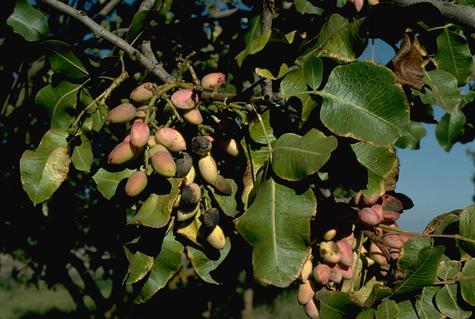
Alternaria leaf blight

Alternaria leaf blight

Alternaria late blight infects both leaves and fruit, causing early defoliation, severe brown-black stains on the shells and mold contamination of the shells and kernels. Other damage from Alternaria includes poor flavor and possible mycotoxin contamination. Without fungicide applications, alternaria would reduce California pistachio production by 30-50%.

“Alternaria late blight (ALB), caused by Alternaria alternata, A. tenuissima, and A. arborescens, is now considered the most destructive disease of pistachio in California. The disease affects foliage and fruit and is an annual production concern for pistachio growers. On foliage, it can be recognized by the development of large necrotic lesions, and multiple, expanding lesions eventually consume the whole leaf. The lesions are black in the center due to the production of many spores and are surrounded by a chlorotic halo. Under optimal conditions for the disease, the fungus can defoliate a tree in late summer and autumn. On fruit, it is characterized by small necrotic lesions surrounded by a red halo. These are located on the hull of immature nuts. When the nuts develop, one or two lesions can penetrate and decay the hull, resulting in shell staining of the nut underneath. The staining of the shell and colonization of the kernel result in a reduction of the nut quality. Although cultural practices such as irrigation management and pruning to increase air movement and decrease air humidity in the orchard can help reduce ALB, the use of multiple fungicide applications is essential to achieve adequate disease control.”

Authors: Avenot, H. F., et al.
Affiliation: Department of Plant Pathology, UC-Davis.
Title: Sensitivities of Baseline Isolates and Boscalid-Resistant Mutants of Alternaria alternata from Pistachio to Fluopyram, Penthiopyrad, and Fluxapyroxad.
Source: Plant Disease. 2014. 98[2]:197-198.

Herbicide Use by African Rice Farmers is Spreading Rapidly Due to Benefits

Hand Weeding Rice in Africa

Hand Weeding Rice in Africa

In Ghana, recent farmer surveys show that herbicide use by rice farmers is high. The adoption of herbicides is not due to programs being promoted by international organizations. Rather, the high adoption is simply due to farmers learning about the benefits of herbicides from other farmers.

“There was strikingly high use of herbicide in rice plots, with 84 percent of rice area treated with herbicide across all rice ecologies. Fifty-eight percent of rice area was treated with herbicide before planting, and 69 percent of the area was treated with herbicide after planting.

The yield of plots with herbicide is significantly higher than that of plots without herbicide for all rice ecologies…. For irrigated plots with fertilizer and certified seed, there was a 3.1 ton/hectare difference between plots with and without herbicide.

A simple comparison of weeding costs suggests that farmers using herbicide spend 666 cedi/hectare total in purchasing herbicide (8 liters at 8 cedi/liter) and an additional 86 person-days for manual weeding, while farmers not using herbicide spend 1,477 cedi/hectare for manual weeding for 211 person-days on average. It is apparent from this calculation that it is cheaper to purchase herbicide than to hire or use family labor for weeding.

The diffusion of herbicide seems to be wide, and farmers are learning about it from other farmers. About half of farmers reported that they knew about herbicide and its benefits from advice by or observing other farmers’ plots. …This suggests that if a technology is beneficial, it can spread quickly among farmers.”

Authors: Ragasa, C., et al.
Affiliation: International Food Policy Research Institute.
Title: Patterns of Adoption of Improved Rice Technologies in Ghana.
Source: IFPRI. July, 2013. Working Paper #35. Available at: http://www.ifpri.org/publication/patterns-adoption-improved-rice-technologies-ghana

Organic Coffee Farmers in Central America May Not Survive

Coffee Fields

Coffee Fields

Organic coffee farms in Central America have typically been located at high altitudes where there has been less worry about fungal   disease. However, in recent years, fungal outbreaks have increasingly-occurred at these higher elevations and organic growers may not survive the huge yield losses due to their non-use of fungicides.

“Finca Santa Isabel, often held up as a shining example of success with organic agriculture in coffee, may not make it. The culprit? A fungus known as roya that often goes unnoticed until bright-orange pustules start appearing on the underside of leaves. This parasite interrupts the tree’s ability to nourish itself by redirecting nutrients to those colorful lesions. Eventually, the infected leaves shrivel up and fall off.

The Keller family owns Finca Santa Isabel, located in Santa Rosa, about an hour south-east of Guatemala City. It became the second estate to be Rainforest Alliance-certified in 1997, and the Kellers were named Sustainable Standard-Setter by the nonprofit in 2003. In a 2009 profile, the family was lauded for its successes with sustainable practices: caring for the land, being a profitable business, and having enough left over to help build needed infrastructure for their community. They grow Arabica at an elevation of 3,500 to 4,500 feet above sea level in a zone most growers thought roya could not thrive.

But the rusk outbreak is happening almost everywhere. By most accounts, large and low-lying estates accustomed to spraying to protect their trees will survive. …Growers in areas prone to the rust use fungicide prophylactically twice a year. Spraying, which typically occurs in July and September in Central America, is timed to happen just before and just after periods of heavier precipitation.

Farmers caught unprepared, like Keller, have to decide whether and how to fight this blight.

The fungus is causing huge shortfalls in coffee cherries at higher elevations and in shaded areas of Central America, in places where growers used to feel relatively immune. Keller was one of them and he relayed a stunning loss: “Last year, we had about a 70% drop in production and so did many other farms that work conventionally around us. The main reason is that nobody thought that it was going to be so bad.”

Guatemalan workers on coastal farms in lower altitudes that face the Pacific sprayed ahead of time. Farmers in these regions have also planted rust-resistant varieties as part of recovering from earlier outbreaks. Those growing coffee in hillier areas at higher altitudes did not. Nor do they use fungicides routinely.

“…The pathogen itself could be adapting to temperature variation or it could be a combination of the weather events with growers not using fungicides making disease more severe.”

Authors: J. Neill
Affiliation: STiR
Title: Central American Coffee Rust Crisis: No Easy Answers.
Source: STiR Tea and Coffee Industry International. Available at:  http://worldcoffeeresearch.org/files/2013/12/2013Jul-STiR-CoffeeRustCrisis.pdf