Rice Insect Pest Invades the World from the USA

Rice Water Weevil Larva

Rice Water Weevil Larva

The home of the rice water weevil is the southeastern US where the species feeds on
grasses in swampy areas. When rice plants were introduced into America, the
insect quickly found this new grass plant to its liking and has been feeding on
rice ever since. The weevils move into rice fields every year from nearby woods
and clumps of grass. Farmers have used insecticides since 1950 to control the
weevil populations in rice fields. The rice water weevil has spread from the
southeastern US to Louisiana, Texas, California, Japan, China and Italy where
it would decrease rice production without insecticide sprays.

“The rice water weevil, Lissorhoptrus oryzophilus, is the most destructive insect pest of rice in the United States. The insect is native to the southeastern United States but has, over the past 60 years, invaded important rice-growing areas in California, Asia and Europe and thus poses a global threat to rice production.

Small-plot research and sampling of commercial fields indicate yield losses from the rice water weevil would likely exceed 10% in many areas if no insecticides are used.”

Authors: Stout, M. J., et al.
Affiliations: Department of Entomology, Louisiana State University.
Title: The influence of rice plant age on susceptibility to the rice water weevil, Lissorhoptrus oryzophilus.
Source: Journal of Applied Entomology. 2013. 137:241-248.

Fungicides Cover for Failure of Crop Breeding for Rust Control in Dry Beans

Bean Rust

Bean Rust

Bean rust usually is observed first as discrete pustules which are filled with cinnamon-brown spores, which leave a dusty brown streak when rubbed. The last bean rust epidemic in North Dakota in the 1990s caused in excess of $10 million in crop losses. Following the introduction of rust-resistant dry bean varieties produced through crop breeding, rust was not a problem until 2008 when a new race appeared which could overcome the resistance. Since the new race was first detected, rust has re-appeared every year. However, the disease has caused little damage due to frequent fungicide applications for white mold (most of the fungicides applied for white mold have some efficacy against rust).

“Between 1996 and 2008, bean varieties with resistance to rust made the threat of a bean rust epidemic in North Dakota very low. However, in 2008 a new race of the pathogen was identified in North Dakota. The new race has the ability to cause disease on the only commonly used effective resistance gene in common varieties. In 2010, the new race spread throughout North Dakota and into northwestern Minnesota. With the spread of the new race, the region is at risk again for the multimillion dollar yield losses caused by bean rust decades ago.

A fungicide application can be a very effective tool for rust management… In rust trials conducted between 2009 and 2011, all fungicides tested reduced rust severity… Because of this, a secondary benefit to a fungicide for white mold (which occurs at early bloom, R1-R2) is that the application may offer some measure of rust protection.

A fungicide application is most effective soon after the disease is found, making scouting for the disease critical.”

Authors: Markell, S., Olson, L., and Acevedo, M.
Affiliations: NDSU Department of Plant Pathology
Title: Dry edible bean rust
Source: Plant Disease Management. NDSU Extension Service. January 2012. Available at: http://www.ag.ndsu.edu/pubs/plantsci/pests/pp1601.pdf

Fungicides Enhance the Economic Viability of Southeast Asian Refugee Farmers in California

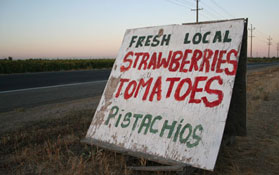
Local Food

Roadside Stand

Most of the 95 strawberry farm stands in and around the Sacramento region are owned and operated by Mien and Hmong refugees from Laos, a small country in Southeast Asia that neighbors Vietnam. When the U.S. left Southeast Asia in 1975, hundreds of thousands of Hmong and Mien fled to the U.S. Most of the refugees were farmers in Laos and turned to farming in the U.S. Most growers lease small plots of land and grow strawberries for sale. A group of University of California researchers received a USDA grant to work with these refugee farmers. It became apparent that fungicide use is a critical element in improving the economic viability of the refugee farmers.

“Sacramento County Southeast Asian strawberry growers are very limited-resource growers who sell almost strictly at their roadside stands. UC Cooperative Extension has been working with these growers for 14 years and holding an annual meeting every March. This year’s meeting was held on March 24, 2010, and was supported by the California Strawberry Commission… A total of 52 growers attended the meeting, including several from nearby counties. In 2009-10, we received funding from the USDA to work with Sacramento County growers on food safety education, pest and nutrient management education, variety trials and market expansion.

Two of the most challenging and consistent pest problems facing Southeast Asian strawberry growers are spider mites and fruit rot… Fungicides are rarely used, and botrytis fruit rot caused by pre-Mother’s Day 2009 rains decimated all growers’ crops just before the busiest time of year. A leading grower did spray fungicide and estimated that he saved 50% of his crop.

Four treatments were compared to evaluate their effectiveness in reducing fruit rot, as well as their effects on yield.

The amount of rot per plant in the tunnel and fungicide treatments was significantly less than that of the untreated control.”

Author: Ingels, C.
Affiliation: UC Cooperative Extension
Title: Spider mite and botrytis rot trials
Source: California Strawberry Commission Annual Production Research Report. 2009-2010 Research Projects. Pgs. 99-103

Organic Apple and Pear Growers Fear Fire Blight

Fire Blight: Apple

Fire Blight: Apple

In April 2013, the National Organic Standards Board voted to not extend the approved use of antibiotics in organic orchards for fire blight control past October 21, 2014.Fire blight is the most devastating bacterial disease affecting apples and pears in the U.S. Fireblight is caused by the bacterial organism Erwina amylovora which grows readily and utilizes sugars and acids as food sources. An infected tree may die within a few months of infection. Fire blight was so named because the plants look as though they have been burned. Tissue infected with fire blight will exude droplets of sticky ooze that contain fresh inoculum. Infected fruit may exude copious amounts of bacterial ooze. Antibiotics have long been key disease control materials for fire blight control and both organic and non-organic growers have been permitted their use. However, after October 21, 2014, only the non-organic growers will be able to use them.

“A bad fire blight year after 2014 could devastate some Northwest organic apple and pear growers, who have relied on oxytetracycline to control the disease, a researcher said.

When the National Organic Standards Board voted April 11 not to extend the sunset for use of the antibiotic, orchardists faced the prospect of losing a useful tool without having a suitable replacement.

David Granatstein, sustainable agriculture specialist with Washington State University, said, “I suspect we’ll see some exit organics or selectively exit some blocks.”

A study he performed in 2011 found that only a quarter of surveyed Washington growers expected they could survive a fire blight outbreak without tetracycline.”

Author: Brown, S.
Affiliation: Capital Press
Title: Organic growers fear fire blight
Source: Capital Press. 4-26-2013, Pg. 7.

Insecticide Use is Critical to Successful Tomato Production

Insect Damage: Tomatoes

Insect Damage: Tomatoes

Insecticides are generally used on close to 100% of tomatoes grown in eastern states to prevent damage from a large number of species that would feed directly on the tomatoes- significantly lowering their value. A study of tomatoes in Virginia revealed that uncontrolled insects lowered marketable yield by 33%. Insecticide cost ($230/A) prevented losses of from $3000-$7000/A.

“Insect pest management is critical to successful tomato production in the Mid-Atlantic U.S. Important pests each year often include the tomato fruitworm (= corn earworm), thrips, stink bugs, aphids, and spider mites.  Occasional pests also include armyworms, Colorado potato beetle, hornworms, cabbage looper, and leafminers. To control this complex of pests, insecticide usage is often intense on commercial farms. For instance, in Virginia, tomato growers make an average of 7 to 10 pesticide applications per crop.

Although IPM and biological control programs have been demonstrated, insecticides continue to be the chief management tool by which damaging insect pests can be controlled immediately and economically for conventional tomato producers. Because strict quality standards for produce coupled with high production costs are unlikely to change significantly, current and future tomato pest management strategies are likely to include an insecticide component.”

Author: Thomas P. Kuhar
Affiliation: Associate Professor – Vegetable Entomology, Virginia Tech
Title: Update on insect pest management for tomatoes
Source: 2011 Proceedings 56th New Jersey Annual Vegetable Meeting. January 11-13, 2011. Available at: http://njveg.rutgers.edu/assets/pdfs/2011-56th-NJ-Annual-Vegetable-Meeting-Proceedings.pdf

African Women Farmers Are Major Beneficiaries of Herbicide Use, USAID Study Finds

Woman Weeding in Africa

Women Weeding in Africa

The burden of handweeding crop fields in Africa falls on women who spend about 50% of their time as farmers pulling weeds out by hand. This enormous amount of time for weeding prevents African women farmers from undertaking other farming activities such as the growing of cash crops. Herbicides would greatly reduce the need for weeding time and empower women to undertake other more lucrative activities.

“…the future of Malian agriculture will be increasingly determined by labor constraints. Herbicide use in Mali has doubled in the last 5 years in part in response to labor constraints and is likely to increase substancialy in the future. Herbicide use has very positive spillover effects on woman’s time and ability to work on their own crops or collect karite nuts. More extension work and agribusiness training is needed, along the lines of USAID’s IPM CRSP’s work in pesticide literacy and safety, to ensure safe and effective use of herbicides.

All labor saving technology, such as herbicide, is likely to have a gender impact not as much in women directly using it, but in it freeing up women’s time for more lucrative activities. For example increased use of herbicide would free up women’s time during the key time of year when they collect karite nuts, July-August, potentially engendering an increase in the production of karite butter and better women’s incomes.”

Author: Jeremy Foltz
Affiliation: University of Wisconsin-Madison
Title: Opportunities and investment strategies to improve food security and reduce poverty in Mali through the diffusion of improved agricultural technologies.
Source: USAID: MALI. June 16, 2010. Available at: http://purl.umn.edu/97141   

To Remain Viable, California Strawberry Growers will need to use Fumigants for Years to Come

Strawberry Production: California

Strawberry Production: California

California is the top strawberry growing state producing 2-3 billion pounds per year. California accounts for 20% of the world’s production of strawberries. Since about 1965, approximately 90% of strawberry land in California has been fumigated before each crop is planted. Statewide average strawberry yields tripled following the adoption of fumigation. Generally, the increase in strawberry yield is credited to effective control of the soilborne fungal disease, verticillium wilt, which attacks the water-conducting tissue of the plant. In recent years, the use of fumigants in California has been under intense regulatory review with a phaseout of methyl bromide and use restrictions which could include expanded buffer zones in strawberry fields where fumigation will not be permitted. A recent working group in California assessed the status of nonfumigant alternatives……

“Owing to potentially devastating soilborne pests, strawberry growers have relied on soil fumigation treatments for many years.

Director Brian Leahy of the California Department of Pesticide Regulation convened in April 2012 a working group of industry and scientific leaders to develop an action plan of research priorities for developing cost-effective management tools and practices for soilborne pests of strawberries in the absence of conventional fumigants.

The Working Group recognized that over the last 20 years, many studies focused on breeding disease-resistant plants and testing soil treatments such as anaerobic soil disinfestation, biopesticides, biofumigants, soilless substrate, steam, and solarization.

Yet to be done is testing combinations of alternatives in extensive field trials and on-farm demonstrations.

Full implementation of the action plan will require a major commitment of time and resources by a broad range of groups in the private and public sectors, such as researchers, funding institutions, growers, grower organizations, farmworker advocates, community and environmental organizations, and consumers.

Even with full commitment to implement this action plan, the strawberry industry will need to continue its use of fumigants for years to remain viable in California.”

Title: Nonfumigant strawberry production working group action plan
Source: California DPR. April 2013. Available at: http://www.cdpr.ca.gov/docs/pestmgt/strawberry/work_group.htm

Eastern Filbert Blight Would Kill All the Western Hazelnut Trees Without Fungicide Sprays

EFB Killing Hazelnut Tree

EFB Killing Hazelnut Tree

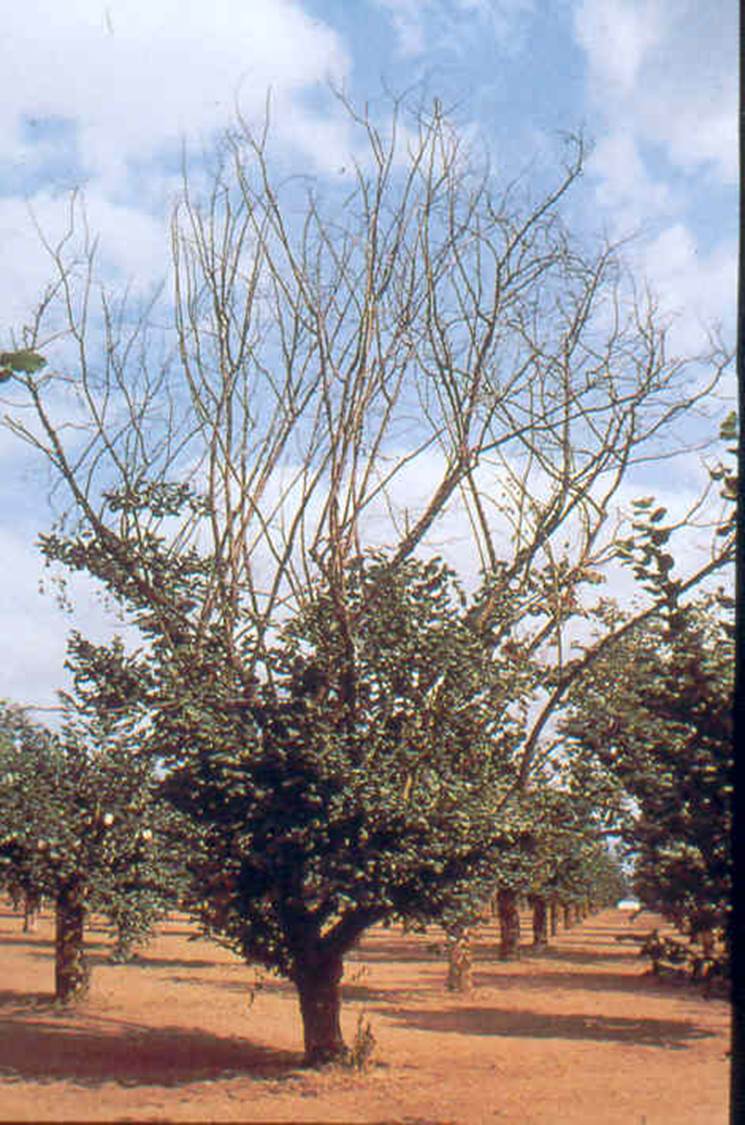
Hazelnuts have been commercially produced in Oregon since the early 1900s when they were called “filberts.” In 1981, Oregon “filbert” growers began referring to their crop as “hazelnuts” to be consistent with the rest of the world. Oregon’s hazelnut orchards, concentrated in the Willamette Valley, account for 99% of US production and 5% of world production. Eastern filbert blight is a destructive disease of hazelnut trees that is only present in North America. The disease is known as eastern filbert blight because a shrub harbors the disease in the eastern US. In the 1920s, growers tried to start a hazelnut industry in New York. Filbert blight destroyed the trees. In 1974, the disease was found for the first time in Oregon and has spread throughout the Valley. Without fungicide sprays, the blight would kill the hazelnut trees.

“Eastern filbert blight (EFB) is caused by the fungus Anisogramma anomala…it causes severe perennial cankers, branch die-back, and eventual death of nearly all cultivars of the commercially important European hazelnut, C. avellana. …The pathogen was inadvertently introduced into southwestern Washington in the 1960s and devastated commercial hazelnut orchards because control measures were lacking at the time. It is now widespread across the Willamette Valley of Oregon, where 99% of the U.S. hazelnut crop is produced. Diligent scouting for cankers, extensive pruning, and copious fungicide applications are necessary to continue production in the presence of the fungus.”

Authors: Molnar, T. J., et al.
Affiliation: Department of Plant Biology and Pathology, Rutgers University.
Title: A real-time PCR assay for early detection of eastern filbert blight.
Source: Plant Disease. June 2013. 97[6]:813-818.

Powdery Mildew of Grapes Must be Controlled for Wine Quality

Powdery Mildew On Grapes

Powdery Mildew On Grapes

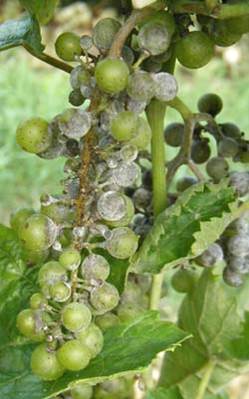
Powdery mildew exists wherever grapes are grown for wine. The fungus that causes grape powdery mildew is an obligate parasite, which means it must grow on grape tissue and will not parasitize any other species of plants. The fungus penetrates only the epidermal cells sending tubular suckers into them to absorb nutrients. The mass of fungal growth on grape skin give the impression that the grapes are sprinkled with flour. This impression is enhanced by the smell of moldy flour released by the diseased grapes. Fungicide sprays effectively control the incidence of powdery mildew of grapes from 99% to < 1% which is very important for the quality of wine.

“Analysis of wines made from powdery mildew-affected grapes has revealed that even slight infection leads to compositional changes, an oily mouthfeel and undesirable fungal/earthy flavours when compared with wines made from disease-free grapes.

The strongest link to the effect of powdery mildew was elevated ratings of ‘oily’ and ‘viscosity’ attributes in wines made from grapes with as little as 1-5% powdery mildew compared to wines made from disease free grapes.

…wines made from diseased grapes were rated as having more pronounced fungal, earthy and cooked tomato aroma attributes than wines made from uninfected grapes.

Juice from the most severely diseased grapes had a dusty and mushroom aroma and acid taste compared to the others.

When subjected to the heat test, wines made from grapes with severe powdery mildew showed greatest haziness, so there is the potential for spoilage of wine during storage due to haze.”

Authors: CRCV Update
Title: Powdery mildew impacting on wine quality
Source: Wine Industry Journal. 2004. 19[6]:71-75.

Fungicide Recommendations Are Being Made for Increasing African Groundnut Production

Fungicide Experiment: Ghana (top=untreated bottom=treated)

Fungicide Experiment: Ghana (top=untreated bottom=treated)

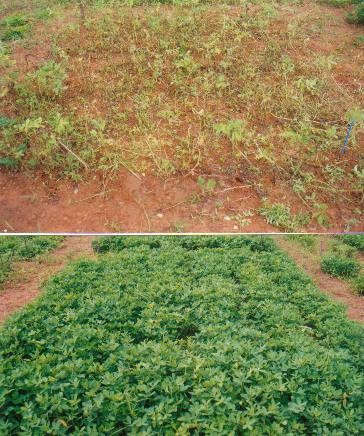
Peanuts (or groundnuts) are widely used as a food by Africans as they are a major source of protein. The productivity of peanut in Africa is very low which is particularly attributed to foliar diseases. Disease severities are so high in Africa that at harvest 80% of the leaves on peanut plants are defoliated. Research has shown that application of fungicides can successfully control diseases of peanuts in Africa and lead to substantial increases in yield.

“Lower productivity of peanut in West Africa is attributed to biotic factors (mainly foliar diseases)…

Farmers usually attribute leaf defoliation to maturing of the crop, and yield loss from foliar diseases is not recognized. Fungicide use is not a common practice in developing countries of this region partly because of lack of resources and lack of awareness of the extent of economic and yield benefits from application of fungicide.

Data on yield benefits under on-farm studies should be quantified to bring awareness to agricultural communities, and to improve access to capital resources to demonstrate that fungicide application can be economically viable with greater returns.

The objectives of our research were to quantify yield losses due to disease and to demonstrate the influence of fungicides and SSP fertilizer application on severity of leaf spot, dry matter production and pod yield of peanut crops grown in on-station and on-farm conditions in Northern Ghana, which is representative of the important peanut producing regions of West Africa.

Applications of fungicide were effective in controlling leaf spot and improved peanut pod yield on average by 48% in the three tested village sites under on-farm conditions and by about 40% under on-station conditions at two sites.

…farmers have an interest in adopting new technologies if they are certain of economic benefits. In view of the tremendous yield advantage, fungicide recommendations are being made to peanut farmers in this region.”

Authors: Naab, J. B., et al.
Affiliation: Savanna Agricultural Research Institute
Title: Response of peanut to fungicide and phosphorus in on-station and on-farm tests in Ghana
Source: Peanut Science. 2009. 36:157-164.