$17 Billion in Sales of Ornamental Plants in the US-Growers Have to Use Insecticides to Satisfy Consumers

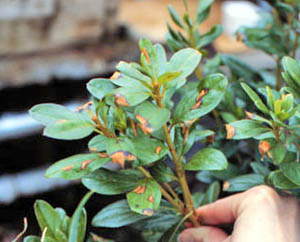
Azalea Leafminer

Azalea Leafminer

Ornamental plants are big business in the US-$17 billion in retail sales. Ornamental plants provide visual beauty and reduce the stagnation that occurs in everyday work environments. Ornamentals may have a profound effect on observers or occupants. Several studies have shown that ornamentals have a positive impact on an individual’s well-being and emotional stability and may improve productivity. When purchasing an ornamental plant, consumers demand that they be free of insects and insect damage.

“The intensive nature of production and aesthetic quality requirements of producing ornamental plants supports the necessity of using pesticides to manage arthropod pests. The use of pesticides is vitally important to the ornamental industry in order economically to prevent the multitude of arthropod pests from damaging plants and at the same time produce quality plant material that may be purchased by consumers/homeowners. Furthermore, the use of pesticides allows ornamental producers successfully to compete in national and international markets.

…a single arthropod pest can significantly damage or vector a disease, rendering a crop unmarketable. As such, ornamental producers cannot wait for arthropod pest populations to build up to a critical level, and so, in actuality, pesticides serve as an ‘insurance policy’ to manage or regulate the diversity of arthropod pests so that they do not damage ornamental crops.

The aesthetic value and the consumer demand for high-quality ornamental crops necessitates the application of pesticides in order to protect crops from the myriad of arthropod pests encountered in ornamental production systems.”

Authors: Bethke, J. A., and Cloyd, R. A.
Affiliations: University of California, and Kansas State University.
Title: Pesticide use in ornamental production: what are the benefits?
Source: Pest Management Science. 2009. 65:345-350.
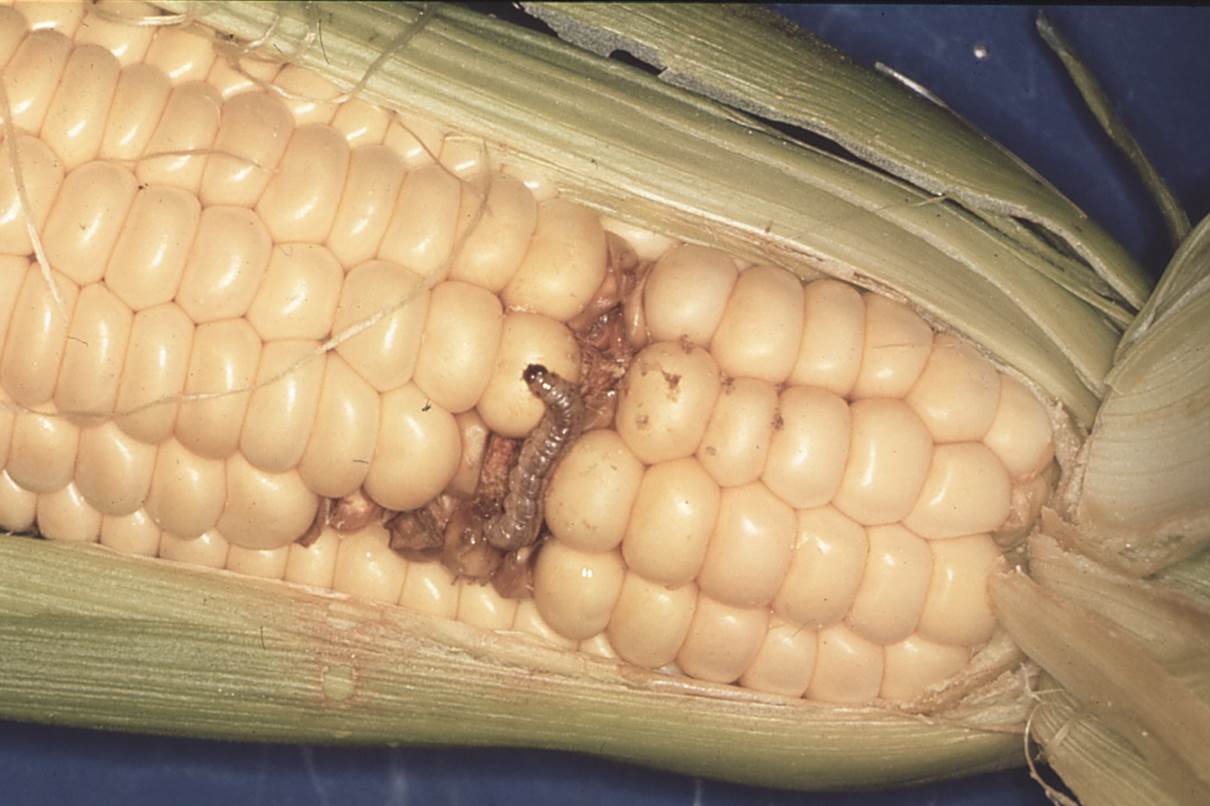
Tight Market Standards For Sweet Corn Necessitate Insecticide Sprays

Bugs in corn

Worms in sweet corn

Consumer surveys show that the lack of insect damage is the most important factor when deciding which sweet corn to buy. Processors and stores require larval infestations to be < 5-10% of sweet corn ears. To meet those standards, sweet corn growers throughout the U.S. must use insecticides.

[1]
”Minnesota is the second largest producer of processing sweet corn, Zea mays L., in the United States with an annual production of >53,000 ha; the state also produces ≈4,000 ha for fresh market. The European corn borer, Ostrinia nubilalis (Hübner), and corn earworm, Helicoverpa zea (Boddie), continue to be the most important insect pests of sweet corn in the upper Midwest. To minimize economic risks associated with insect damage in sweet corn, most growers rely on insecticides to manage these pests.

Most processors and fresh market growers require larval infestations and brown kernel incidence to be <5-10% of harvested ears.”

[2]
”Sweet corn is the most commonly grown vegetable crop in Pennsylvania. Most is grown for fresh-market. Stringent control is required to meet market standards and most acreage (~80%) is sprayed to control corn earworm, fall armyworm, and European corn borer.”

[1]
Authors: O’Rourke, P. K., and W. D. Hutchison.
Affiliation: Department of Entomology, University of Minnesota.
Title: Binomial sequential sampling plans for late instars of European corn borer (Lepidoptera: Crambidae), corn earworm (Lepidoptera: Noctuidae), and damaged kernels in sweet corn ears.
Source: J. Econ. Entomol. 2004. 97[3]:1003-1008.

[2]
Author: Fleischer, S.
Affiliation: Department of Entomology, Penn State University.
Title: Regional patterns in corn borer and fall armyworm populations: implications for management.
Source: 58th New Jersey Agricultural Convention and Trade Show. 2013 Proceedings. February 5-7. Pgs. 118-119.

Florida is Great for Growing Sweet Corn in the Winter, Insects Love Florida in the Winter Too

Florida sweet corn, w/o insecticides

Florida sweet corn, w/o insecticides

Florida Sweet Corn Production

Florida Sweet Corn Production

Florida is the #1 state in the production of fresh sweet corn with production occurring in winter months when the crop cannot be grown in states further north. Many insect species survive the winter and thrive in Florida. 98-99% of Florida’s sweet corn would be damaged by insects if insecticide sprays were not made. The importance of insecticides for Florida sweet corn is underscored by the realization that the crop was not grown in the state until synthetic chemical insecticides were introduced in the 1940s.

[1]“Florida ranks #1 nationally in the production and value of fresh market sweet corn, typically accounting for approximately 20 percent of both national sweet corn production and of U.S. cash receipts for fresh sales. A total of 589 million pounds of fresh sweet corn, valued at $189 million, was produced on 42,100 acres in Florida during the 2009-10 season. Nearly 20 percent of sweet corn producers overall total direct expenses are invested in pesticides and pesticide application costs. Florida’s warm, humid climate is ideal for the development of pest populations. Sweet corn grown in Florida is subject to damage from numerous insect, weed, disease, and nematode pests. Pesticide use is high and the crop may be sprayed daily in some cases.”

[2]”The first commercial production of sweet corn in Florida was reported in the 1947-48 season. The establishment of sweet corn as one of the major crops produced in Florida is attributed largely to successful control of insects with the newer insecticides. “

[1]
Author: McAvoy, G.
Affiliation: Regional Vegetable Extension Agent IV, University of Florida
Title: Sweet corn production in south Florida
Source: Proceedings of the 2012 Atlantic Coast Ag Convention & Trade Show, pp 66-68

[2]
Authors: Hayslip, N. C., et al.
Affiliation: Florida Agricultural Experiment Station, Ft. Pierce
Title: Corn earworm investigations in Florida
Source: Journal of Economic Entomology. 1953. 46[4]:574-583.

Hurricanes Increase the Need for Insecticides in Louisiana Sugarcane Fields

Fire Ant Killing Sugarcane Borer

Fire Ant Killing Sugarcane Borer

Louisiana is the top producing sugarcane state accounting for 40% of the nation’s sugarcane production. Approximately 3 billion pounds of raw sugar are produced annually by Louisiana sugar mills. The sugarcane borer is the most damaging insect pest of sugarcane in Louisiana. The larvae bore into the plant where they feed on the central tissue. Borers make tunnels up and down the stalk. The size and weight of the stalks are decreased. Sugarcane borers in Louisiana are controlled by an integrated system that consists of spraying insecticides, planting varieties with some resistance and by natural enemies of the borer. The most important natural enemy of the borer is the red imported fire ant. Typically, the predation of fire ants contributes an estimated savings of two insecticide sprays. However, when the sugarcane fields are flooded by hurricanes, the fire ants are negatively affected and insecticide use has to increase.

“On 24 September 2005, Hurricane Rita made landfall on the extreme southwestern coast of Louisiana near the border with Texas as a Category 3 hurricane.

Twelve thousand to 16,000 ha of sugarcane produced in south Louisiana were flooded by saltwater from Hurricane Rita storm surge.

During spring 2006, sugarcane growers and contracted agricultural consultants began observing that flooded areas seemingly had more [sugarcane borer] infestations, which might require earlier and more frequent insecticide applications for D. saccharalis control.

This study showed that growers had to treat more (2.4-fold increase) in zones impacted by the hurricane storm surge.

S. invicta [red imported fire ant] seemed to be negatively impacted 10-12 mo after the areawide habitat disruption caused by the storm surge flooding. When plunged into freshwater, S. invicta individuals gather and form floating clusters that can drift for more than a week without drowning. However… S. invicta is susceptible to saltwater, sinking within 30 min when in 3.5% saltwater (approximately equal to seawater), and within 48 h in 1% saltwater. …Susceptibility to saltwater flood and limited dispersal abilities may explain why S. invicta was negatively impacted by the storm surge and slow to recover back to prehurricane population levels.

This study suggests that Hurricane Rita disturbed the pest management stability between beneficial and pest anthropods for the subsequent production season, requiring additional insecticide applications…”

Authors: Beuzelin, J.M., et al.
Affiliations: Department of Entomology, Louisiana Agricultural Experiment Station, Louisiana State University Agricultural Center
Title: Impacts of Hurricane Rita storm surge on sugarcane borer (Lepidoptera: Crambidae) management in Louisiana.”
Source: Journal of Economic Entomology. 2009. 102[3]:1054-1061.

The Dilemma of Insect Fragments in Processed Tomatoes

Tomato Fruitworm Damage

Tomato Fruitworm Damage

The tomato fruitworm is the most serious insect pest of tomatoes in the US, feeding on fruit and contaminating it with insect parts, excrement and decay-causing organisms. Interest in spraying insecticides to control the fruitworm was accelerated in the 1930s by the finding of insect fragments in canned products, which were seized and destroyed as adulterated foods by the FDA. Today, insecticides are used to prevent widespread insect damage to tomatoes and tomato shipments for processing are rejected if more than 2% damage is found. Therein is the dilemma. If the standard was relaxed (say to 4%), tomato growers could probably make one less insecticide spray. However, consumers may not want more insect fragments in canned tomatoes and may actually want a tighter standard which would result in more insecticide sprays.

“All loads of processing tomatoes in California are evaluated by inspectors from the Processing Tomato Advisory Board, a marketing order, under the direction of supervising inspectors from the California Department of Food and Agriculture. A load of processing tomatoes is rejected if 2% or more of the tomatoes by weight have a worm or excreta in the flesh of the tomato.

The damage tolerance acceptable to consumers and industry could be changed accordingly. Increasing the tolerance might be expected to result in a reduced number of insecticide applications when used in conjunction with a careful monitoring program.

A reduction in the tolerance might also be considered, arguing that consumers would not tolerate even the present level of insect fragments which, as our results indicate, is possible to have in the final product.”

Authors: Zalom, F. G., and A. Jones.
Affiliation: Department of Entomology, University of California, Davis
Title: insect fragments in processed tomatoes
Source: Journal of Economic Entomology. February, 1994. 87[1]:181-186.

Rice Insect Pest Invades the World from the USA

Rice Water Weevil Larva

Rice Water Weevil Larva

The home of the rice water weevil is the southeastern US where the species feeds on
grasses in swampy areas. When rice plants were introduced into America, the
insect quickly found this new grass plant to its liking and has been feeding on
rice ever since. The weevils move into rice fields every year from nearby woods
and clumps of grass. Farmers have used insecticides since 1950 to control the
weevil populations in rice fields. The rice water weevil has spread from the
southeastern US to Louisiana, Texas, California, Japan, China and Italy where
it would decrease rice production without insecticide sprays.

“The rice water weevil, Lissorhoptrus oryzophilus, is the most destructive insect pest of rice in the United States. The insect is native to the southeastern United States but has, over the past 60 years, invaded important rice-growing areas in California, Asia and Europe and thus poses a global threat to rice production.

Small-plot research and sampling of commercial fields indicate yield losses from the rice water weevil would likely exceed 10% in many areas if no insecticides are used.”

Authors: Stout, M. J., et al.
Affiliations: Department of Entomology, Louisiana State University.
Title: The influence of rice plant age on susceptibility to the rice water weevil, Lissorhoptrus oryzophilus.
Source: Journal of Applied Entomology. 2013. 137:241-248.

Insecticide Use is Critical to Successful Tomato Production

Insect Damage: Tomatoes

Insect Damage: Tomatoes

Insecticides are generally used on close to 100% of tomatoes grown in eastern states to prevent damage from a large number of species that would feed directly on the tomatoes- significantly lowering their value. A study of tomatoes in Virginia revealed that uncontrolled insects lowered marketable yield by 33%. Insecticide cost ($230/A) prevented losses of from $3000-$7000/A.

“Insect pest management is critical to successful tomato production in the Mid-Atlantic U.S. Important pests each year often include the tomato fruitworm (= corn earworm), thrips, stink bugs, aphids, and spider mites.  Occasional pests also include armyworms, Colorado potato beetle, hornworms, cabbage looper, and leafminers. To control this complex of pests, insecticide usage is often intense on commercial farms. For instance, in Virginia, tomato growers make an average of 7 to 10 pesticide applications per crop.

Although IPM and biological control programs have been demonstrated, insecticides continue to be the chief management tool by which damaging insect pests can be controlled immediately and economically for conventional tomato producers. Because strict quality standards for produce coupled with high production costs are unlikely to change significantly, current and future tomato pest management strategies are likely to include an insecticide component.”

Author: Thomas P. Kuhar
Affiliation: Associate Professor – Vegetable Entomology, Virginia Tech
Title: Update on insect pest management for tomatoes
Source: 2011 Proceedings 56th New Jersey Annual Vegetable Meeting. January 11-13, 2011. Available at: http://njveg.rutgers.edu/assets/pdfs/2011-56th-NJ-Annual-Vegetable-Meeting-Proceedings.pdf

Deadly Biological Parasite of Citrus Pest Can’t Take the Heat of the San Joaquin Valley

Citricola Scale Damage

Citricola Scale Damage

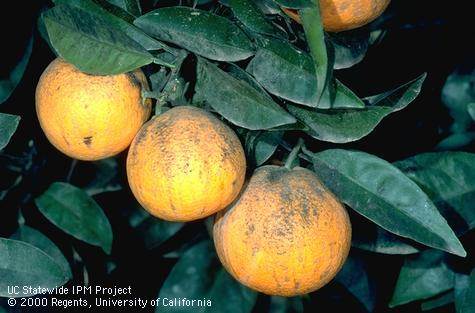
Certain scale insect species feed by sucking juices from citrus trees. Each mature citricola scale produces more than 1000 eggs which hatch into crawlers that settle on the trees. A severe infestation may reduce tree vigor, kill twigs and reduce flowering and fruit set. In southern California, citricola scale is not a problem because they are parasitized by a wasp that lays its eggs in the scale bodies. The wasp eggs hatch and the tiny wasps consume the insides of the scale. However, these deadly parasites are not effective in the San Joaquin Valley where 70% of California’s oranges are grown.

“Citricola scale is a voracious pest that in high numbers can dramatically reduce yield. A typical Valencia orange tree can produce 325 oranges per tree. If there are 10 citricola scale per twig, yields can drop by 70 fruit per tree, a yield loss of more than 20 percent.

The only effective control method in the valley is insecticide treatments. The parasitic wasp that is an effective biological control in Southern California citrus does not control the pest in the valley because of the high populations of scale produced under hotter valley conditions.

Oil will control citricola scale for organic growers, but it may take two applications per season. There is a list of registered foliar and systemic compounds on the UC IPM website.”

Author: Cline, H.
Affiliation: Western Farm Press
Title: Citricola scale valley’s No. 1 citrus pest
Source: Western Farm Press. Friday, 2012-09-28. Available at: http://www.westernfarmpress.com/orchard-crops/citricola-scale-valley-s-no-1-citrus-pest

Global Warming Likely to Result in Increased Insecticide Sprays in the Northeast

# of Insecticide Sprays for Sweet Corn (Today)

# of Insecticide Sprays for Sweet Corn (Today)

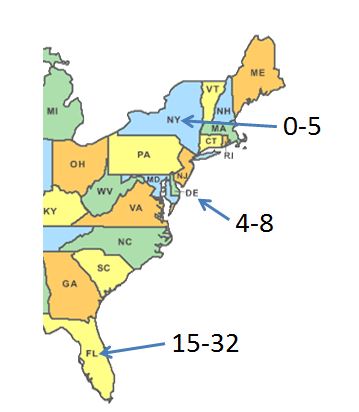
The U.S. is likely to warm substantially over the next 40 years. Along the eastern seaboard, average temperatures will increase in a northward direction. Future temperatures in New York State will be similar to current temperatures in the Carolinas. Increased temperatures and earlier onset of the growing season will reduce the winter mortality of insects, increase the rate of insect growth and increase the number of generations during the crop season. In response, insecticide applications are likely to increase in the northeast-a point recently made in a major climate change report from USDA.

“A warming trend is likely to lead to increased pesticide use in the Northeast due to earlier arrival of migratory insects, higher winter-time survival of insects that currently are only marginally adapted to the region, and more generations of insects within a single season.

With more pests shifting northward, generation times decreasing, and abundances increasing in the future, management costs are expected to increase due to more frequent application of pesticides. For example, pesticide applications to control lepidopteran pests (e.g., moths) on sweet corn decrease with increase in latitude from 15 to 32 times per year in Florida, four to eight times per year in Delaware, and zero to five times per year in New York. “

Author(s): Walthall, C.L., et al.
Affiliation: USDA
Title: Climate change and agriculture in the United States: effects and adaptation
Source: USDA, February 2013. Available at: http://www.usda.gov/oce/climate_change/effects.htm

Southern California Vineyards Recover Thanks to Insecticide Applications

Grapevines Destroyed in 1999

Grapevines Destroyed in 1999

Temecula Today

Temecula Today

In 1999, about one-third of the vineyards in Temecula Valley, Riverside County, California were destroyed due to Pierce’s Disease which is caused by a bacteria transmitted to grapevines by an insect-the glassy winged sharpshooter. The disease seemed destined to spread throughout Southern California. However, research demonstrated that a carefully-timed insecticide application would prevent the sharpshooter from transmitting the disease to grapevines. As a result of this insecticide use, the wine grape industry in Southern California has recovered and is prospering.

“Twelve years ago a Pierce’s disease epidemic in Southern California wine grapes prompted a multi-pronged local, state and federal attack to contain the disease spread and find a cure or treatment.

Riverside County agriculture officials declared a local emergency in 1999 and 300 acres of Temecula wine grape vines were destroyed after they were found to be infested with the glassy winged sharpshooter.

Emergencies were declared, a task force was formed, and in 2000 $22.3 million in federal financial assistance was secured to reduce pest infestations and support research.

Research found that the Southern California epidemics were almost entirely the result of vine-to-vine transmission…. A protocol of applying one carefully timed application of a persistent systemic insecticide such as imidacloprid virtually eliminates the vine-to-vine spread.

Ben Drake is a Temecula-area wine grape grower and vineyard manager who began seeing problems from PD in the Temecula Valley as early as 1997.

We’ve found that if we apply (imidacloprid) at the middle to the end of May, before the sharpshooter moves out of the citrus and goes into the vineyards, we get levels of the material into the plant high enough that when the sharpshooter flies over from the citrus groves to try it, they just fly back where they came from. Or, if they feed long enough, it will kill them.

But just look at the Temecula Valley now to understand what’s changed: From 12 wineries in 1999, the Temecula Valley Winegrowers Association website today lists more than 50 growers and 34 wineries…. A thriving agritourism industry has developed…. Existing wineries are expanding and new ones are under construction or in planning phases.”

Author: Christine Thompson
Affiliation: Reporter
Title: Grape growers urged to remain vigilant against sharpshooter pest
Source: Western Farm Press. 2011-12-12. Available at: http://westernfarmpress.com/grapes/grape-growers-urged-remain-vigilant-against-sharpshooter-pest